

Στον καλλιτεχνικό χώρο είναι πάντα ενδιαφέρουσα η εξερεύνηση εννοιών, όπως της “δημιουργικής κοινότητας” και της “κολεκτίβας”. Μέσα από τέτοιες περιπτώσεις μπορεί να παρατηρηθεί η δύναμη της δίκαιης συνεργασίας, αλληλοϋποστήριξης και σύμπλευσης μεταξύ καλλιτεχνών, οι οποίοι εργάζονται προς την επίτευξη ενός κοινού στόχου. Στην περίπτωση της ομάδας συνθετών “The Collective” αυτός ο στόχος δεν είναι άλλος παρά η προβολή της ποικιλομορφίας των σύγχρονων τεχνοτροπιών σύνθεσης και η ανάδειξη της ιδιαιτερότητας των ατομικών καλλιτεχνικών φωνών των μελών της, τα οποία διαφοροποιούνται ως προς την καταγωγή, τον γεωγραφικό χώρο δράσης τους και ως προς το συνθετικό τους όραμα. Η όλη σύλληψη φυσικά δεν θα ήταν ολοκληρωμένη χωρίς το αντίστοιχο δυναμικό ερμηνευτών, όπως το αμερικανικό σύνολο σύγχρονης μουσικής “No Exit”, το οποίο προάγει ως αυτοσκοπό του την κίνηση της avant-garde μουσικής σκηνής και την άμεση γνωριμία της με το ευρύτερο κοινό.
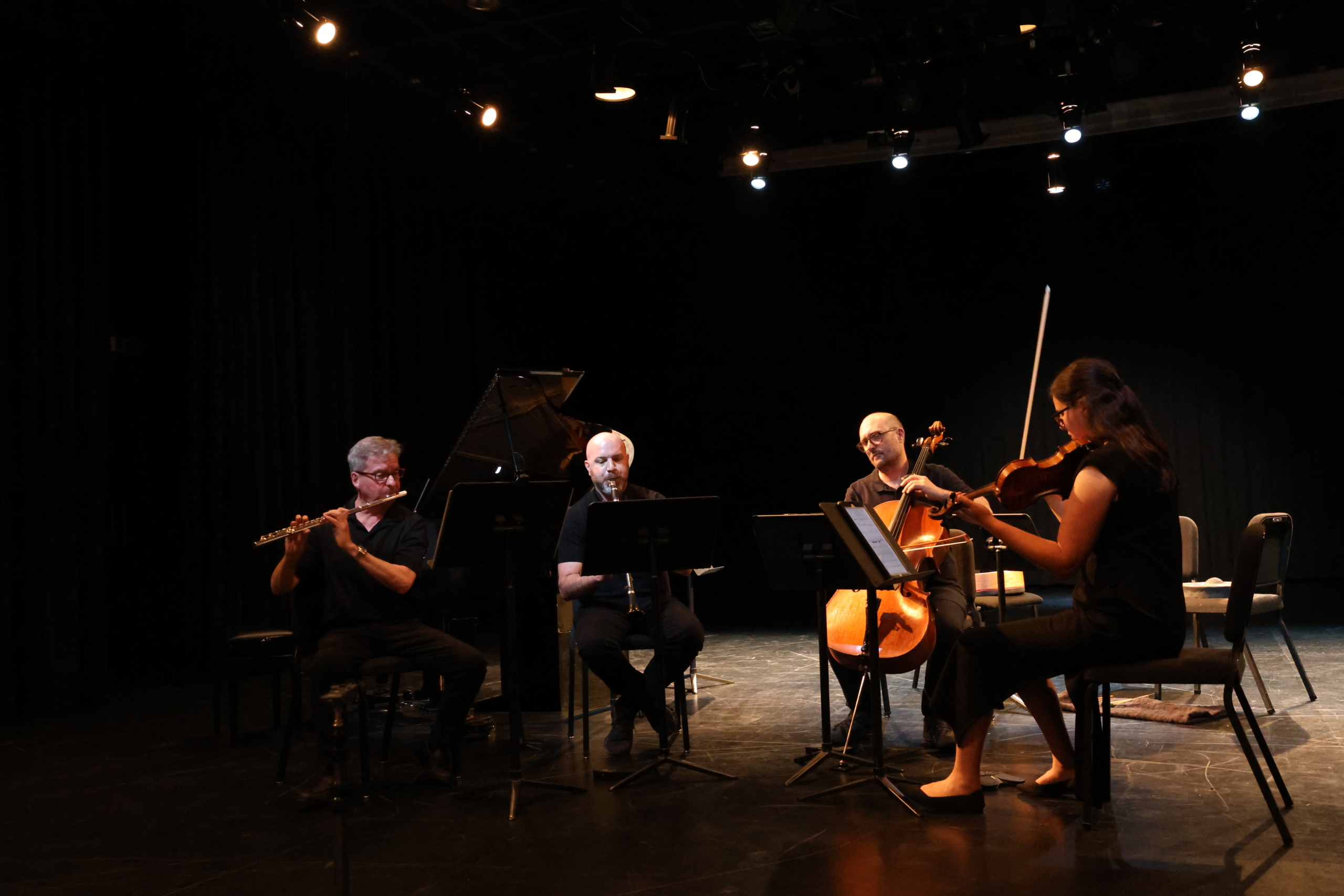
Στις 11/6, λοιπόν, στο Black Box Theater του Αμερικανικού Κολλεγίου Αθηνών, το σύνολο “No Exit” έδωσε την εναρκτήρια συναυλία της ευρωπαϊκής του περιοδείας, με πρώτο σταθμό την Ελλάδα! Αξίζει να σημειωθεί ότι η είσοδος ήταν ελεύθερη· χειρονομία που αποτελεί προέκταση της προσπάθειας του συνόλου να καταστήσει τη σύγχρονη έντεχνη μουσική προσβάσιμη σε όλους.
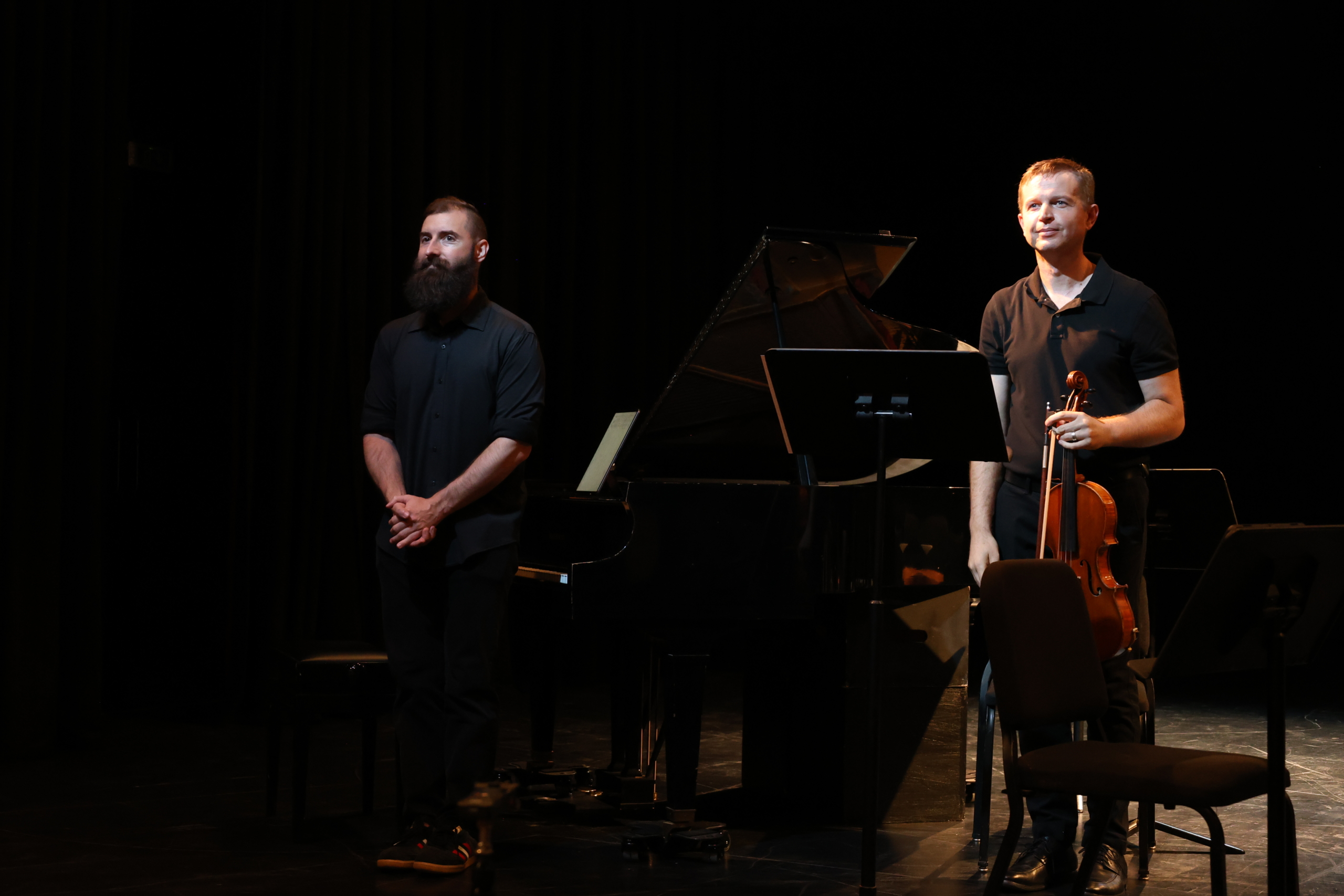
Τη συναυλία άνοιξε ο Έλληνας συνθέτης Σπύρος Μάζης (μέλος της ομάδας Collective), παρουσιάζοντας την ομάδα και το σύνολο “No Exit”, καθώς και τη σχέση ανάμεσά τους.
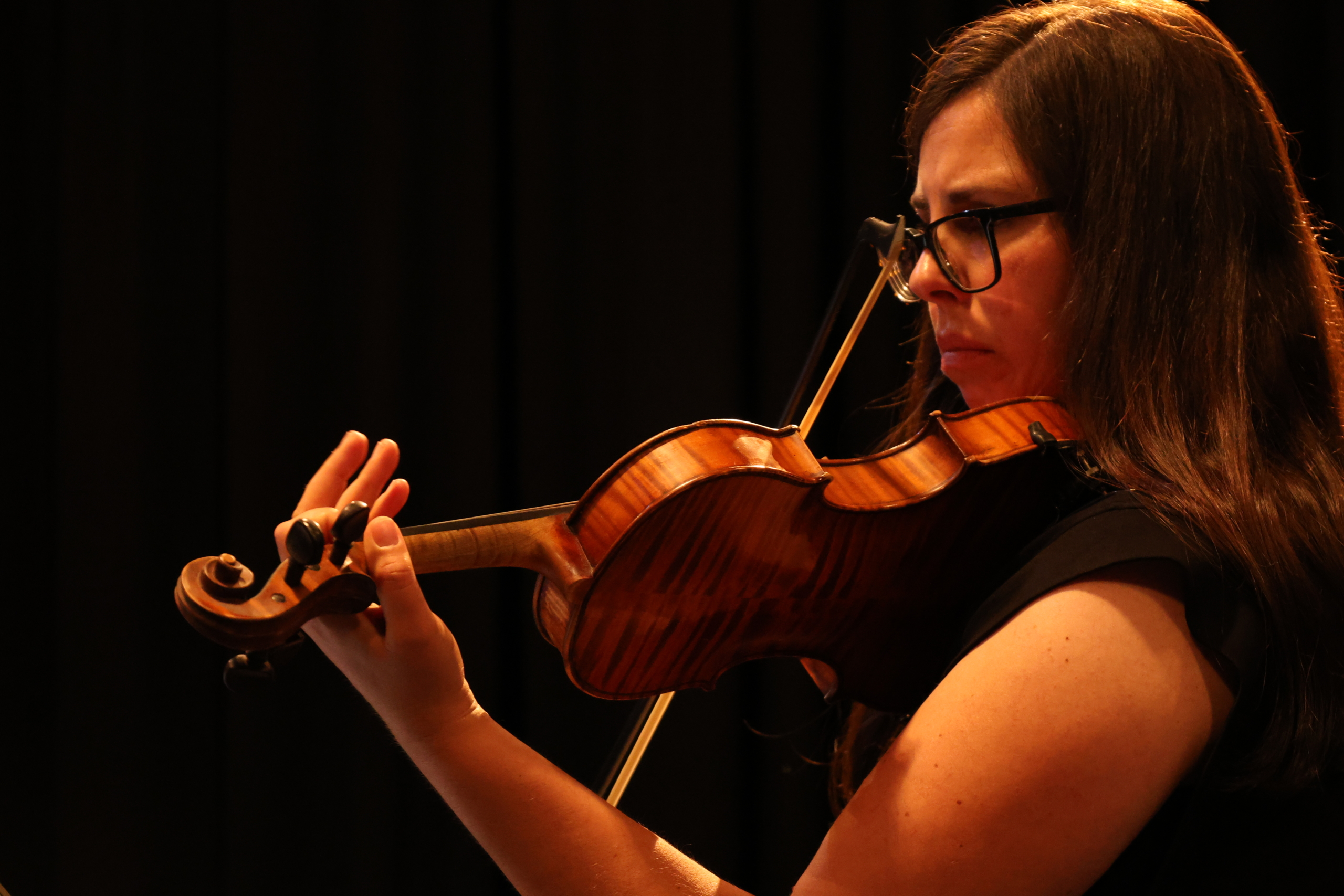
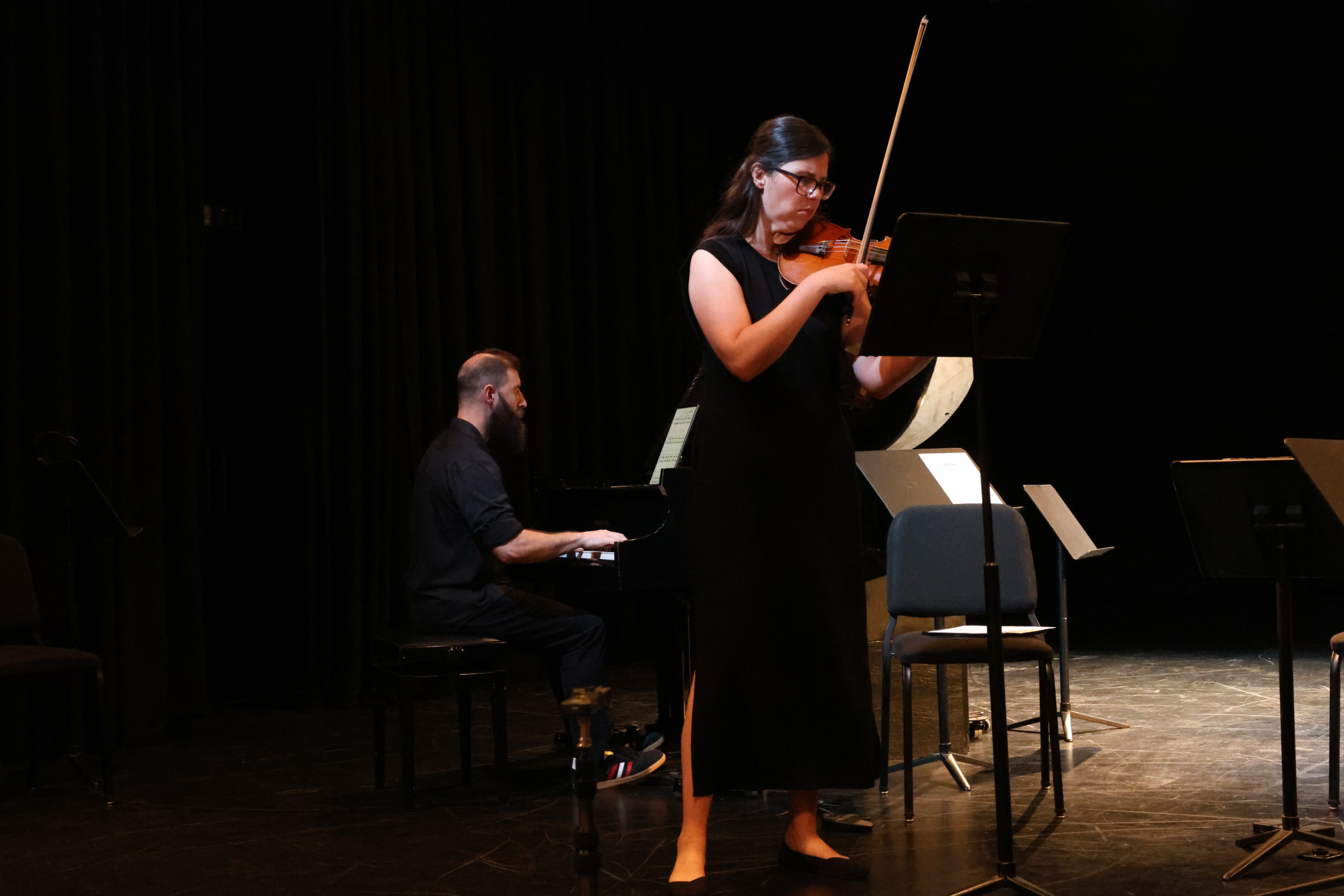
Η πρόθεση των εμπλεκομένων για αμεσότητα στην έκφραση της avant-garde μουσικής έγινε εμφανής ευθύς εξ αρχής, με το εναρκτήριο έργο Cadenza, για σόλο βιολί (2013/2014), της Agata Zubel. Όπως αναφέρει και η ίδια η συνθέτρια σε συνέντευξή της, η οποία αναρτήθηκε στις 22/5/2025 στην ιστοσελίδα του συνόλου “No Exit”, πρόκειται για ένα έργο “συναισθηματικής συμπύκνωσης”, το οποίο πλησιάζει μάλλον τη σκιαγράφηση χαρακτήρα θεατρικής παράστασης. Όντως, η συγκεκριμένη σύνθεση διακατέχεται από μία δραματική ένταση· απόρροια της εξερεύνησης των ακραίων συχνοτικών περιοχών του βιολιού και των αντιθέσεων στη δυναμική και στην υφολογία των μοτιβικών χειρονομιών, με συχνά ξεσπάσματα και με νευρικότητα στο φραζάρισμα. Όποιος και να είναι αυτός ο θεατρικός πρωταγωνιστής-βιολί της σύνθεσης φαίνεται να είναι αισθητά… προβληματισμένος! Το έργο ερμηνεύθηκε από την Cara Tweed και ακούστηκε απαιτητικότατο.
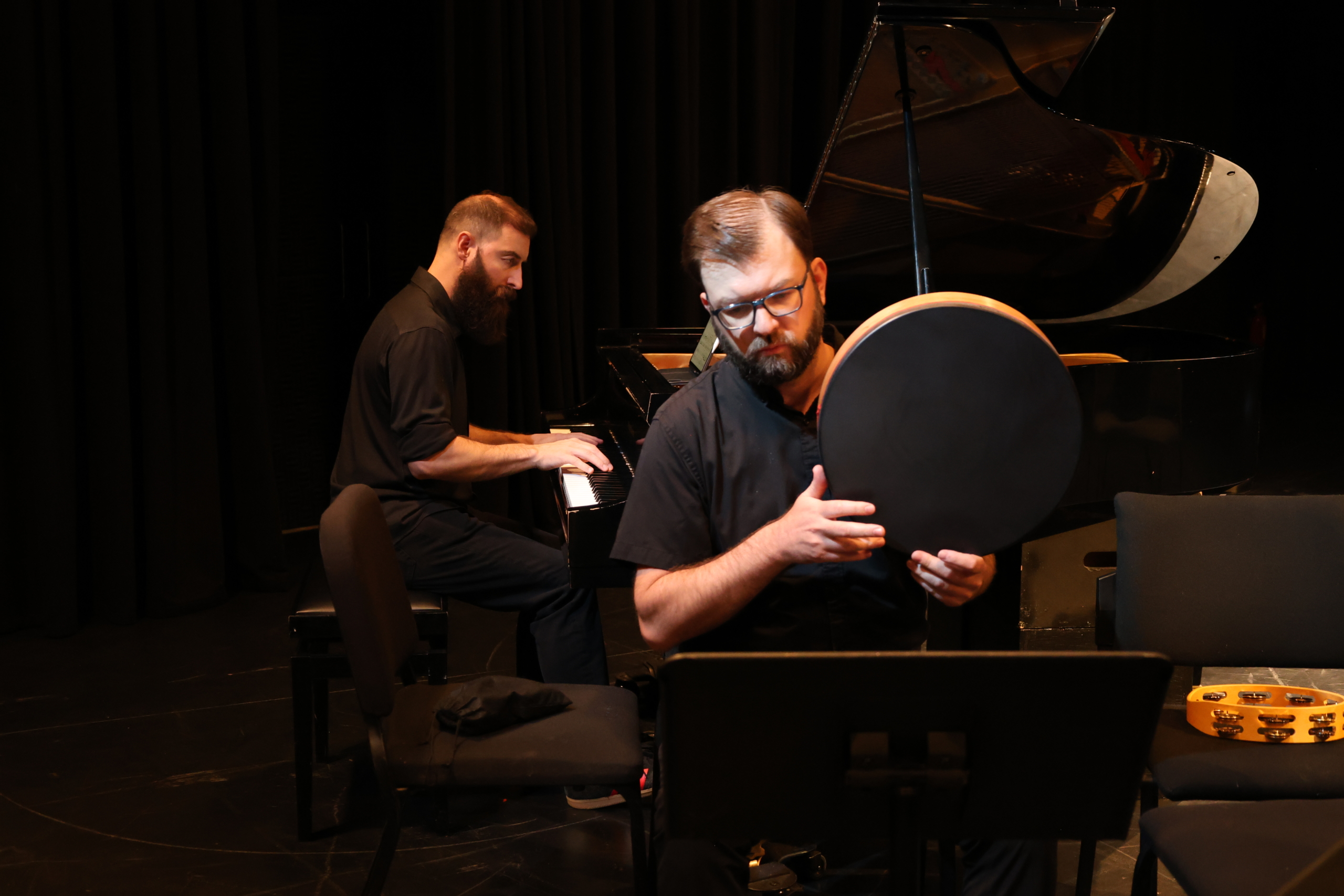
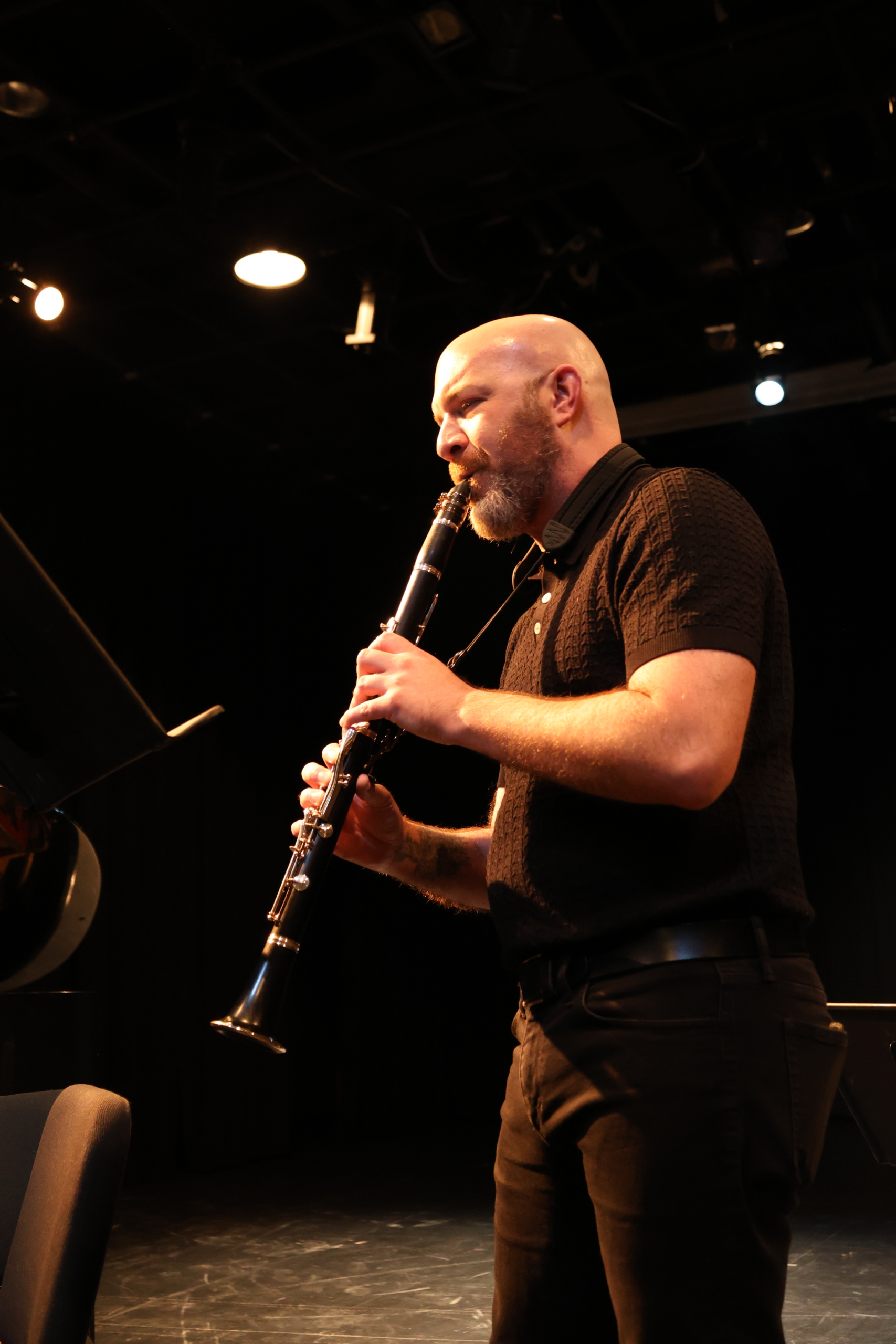
Ακολούθησε η ευρωπαϊκή πρεμιέρα του έργου Sareri Hovin Mernem, για κλαρινέτο, κρουστά και πιάνο (2024), του Edward Smaldone. Πρόκειται για σύνθεση βασισμένη σε αρμένικο τραγούδι, το οποίο εκφράζει και συμβολίζει κατά μία έννοια τα κοινά βάσανα των Αρμενίων. Το έργο παρουσιάζει απόηχους από τον χώρο της jazz και φαίνεται να έχει αποστασιοποιηθεί αρκετά από τη νοοτροπία των ατονικών ιδιωμάτων. Πάνω από μια ζεστή συνοδεία του Rob Kovacs στο πιάνο, ο Gunner Owen Hirthe ανέπτυσσε ευαίσθητα στο κλαρινέτο τη μελωδία του με αναφορά στο αρμένικο τραγούδι, ενώ ο Luke Rinderknecht στα κρουστά πότε έδινε ένα ατμοσφαιρικό ρυθμικό χρώμα, πότε αντιπαρέθετε μία υπερ-ενεργητικότητα με το κατά τα άλλα γαλήνιο άκουσμα και πότε ακολουθούσε/ εμπλούτιζε ρυθμικά τις άλλες δύο οργανικές γραμμές.
του Αμερικανικού Κολλεγίου Αθηνών. Φωτογραφία: Kim Sutton, Boldwolf Media
Στη συνέχεια ακούστηκε το έργο Five Haiku, για φλάουτο, κλαρινέτο, βιολί, βιολοντσέλο και πιάνο (2009-rev. 2020), του Έλληνα συνθέτη Σπύρου Μάζη. Στη συνέντευξή του στις 26/5/2025 στην ιστοσελίδα των “No Exit” η καλλιτεχνική ιδιοσυγκρασία του Μάζη τραβάει αμέσως το ενδιαφέρον: από την πλούσια κερκυραϊκή μουσική παράδοση, στους “φασματικούς” κόσμους του Murail, η πορεία του συνθετικού του υποσυνείδητου αποκαλύπτεται ιδιαίτερη. Αν και δηλώνει ότι οι θετικές επιστήμες παίζουν σημαντικό ρόλο στη σκέψη του, επιμένει πως τα νούμερα δεν μπορούν να “μιλήσουν” στο ακροατήριο, εάν δεν εισαχθεί πρώτα το ανθρώπινο συναίσθημα και πάθος. Ενδιαφέρον επίσης παρουσιάζει το σημείο, στο οποίο ο ίδιος αναφέρεται στη σημασία που απέκτησε για τα έργα του η συλλογική μουσικότητα που βίωσε από πρώτο χέρι στην Κέρκυρα, κάτι που ασφαλώς δεν μπορεί να είναι ασύνδετο τόσο με την τωρινή εμπλοκή του με την “κολεκτίβα”, όσο και με το έργο του που ερμηνεύθηκε. Στα Five Haiku ο φλαουτίστας (Sean Gabriel), ο εκτελεστής κλαρινέτου (Gunner Owen Hirthe), η εκτελέστρια βιολιού (Cara Tweed), ο βιολοντσελίστας (Nicholas Diodore) και ο πιανίστας (Rob Kovacs) βρέθηκαν σε μία συνεχή, αποκρυφιστική μουσική επικοινωνία και αλληλεπίδραση. Πολλές φορές η μουσική ήταν άκρως περιγραφική και εύστοχη: αποτυπώθηκαν άμεσα καταστάσεις, συναισθήματα, αλλά ακόμα και απλές εικόνες ή φυσικοί ήχοι, μέσω της απευθείας μίμησης ή μουσικής “μετάφρασής” τους. Ο συνθέτης και οι εκτελεστές, κατάφεραν εντέλει να μετουσιώσουν σε μουσική αυτή τη λογοτεχνική Zen οπτική των ποιημάτων του Matsuo Basho, μέσα από την απλή διαδοχή (και άρα ηχητική ακρόαση/ απλή παρατήρηση) ακριβώς αυτών των περιγραφικών μουσικών ήχων, ηχοχρωμάτων και σιωπών, που εμφανίζονταν και εξαϋλώνονταν αβίαστα, όπως οι φευγαλέες σκέψεις του νου, ερχόμενες καμιά φορά, λόγω ακριβώς της παροδικότητάς τους, σε έντονη αντίθεση και αντιπαράθεση η μία με την άλλη. Τα πέντε επιλεγμένα χαϊκού του Matsuo Basho (Winter Garden, Stillness, The Morning Glory, Heat Waves Shimmering, The Old Pond) απαγγέλθηκαν εναλλάξ από τους πέντε μουσικούς. Η όλη σύλληψη και ερμηνεία ήταν άκρως ατμοσφαιρική, επιδέξια και εντυπωσιακή, κάτι που φάνηκε να έχει αντίκτυπο και στο ακροατήριο!
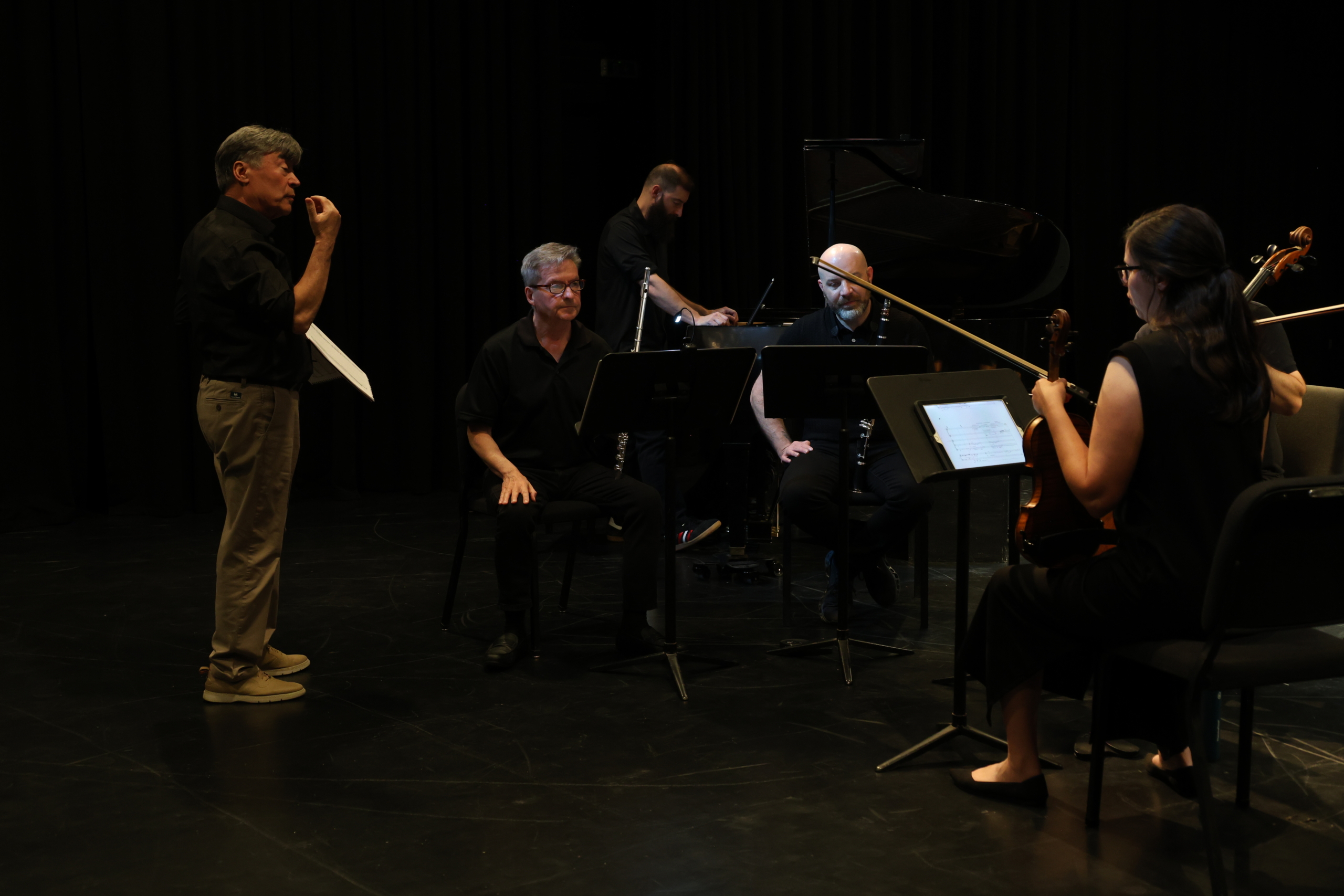
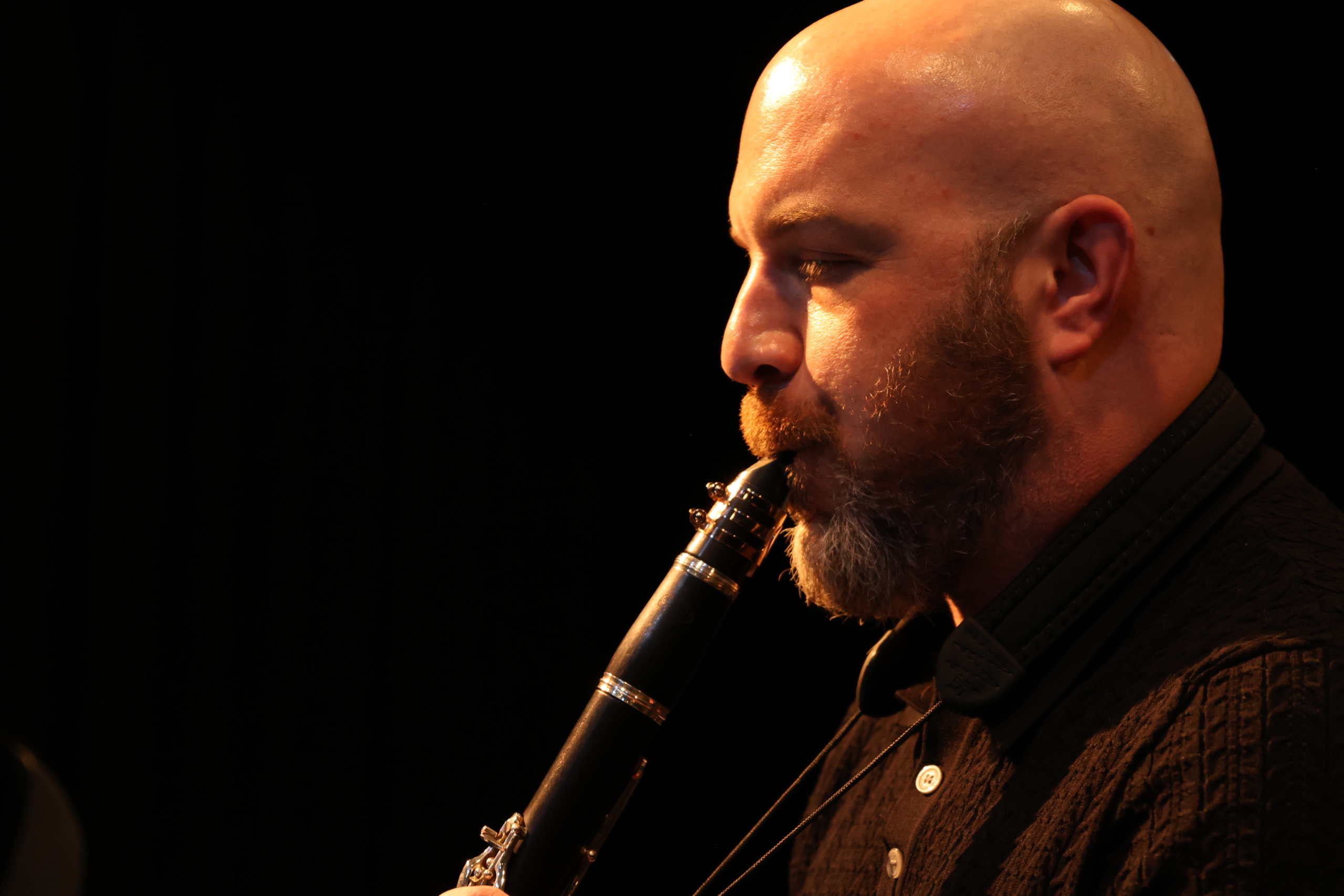
Το επόμενο έργο του προγράμματος τιτλοφορείται A brief comment on the current state of insanity, για κλαρινέτο και βιόλα (2017), της Amelia Kaplan, και δημιουργήθηκε ως αντίδραση στην εσωτερική διάσπαση των ΗΠΑ που ακολούθησε την εκλογή του Donald Trump ως προέδρου. Η διάδραση μεταξύ των δύο οργάνων –του κλαρινέτου (Gunner Owen Hirthe) και της βιόλας (James Rhodes)– έχει σκοπό να αποδώσει αυτή την κατάσταση. Αν και ο ακροατής θα περίμενε έναν ίσως ιδιαίτερα επιθετικό “τσακωμό”, τα όργανα έβγαλαν μία ομοιογένεια ως προς τη συνθετική τους σύλληψη και αισθητική. Ωστόσο, ένταση υπήρξε· αυτήν την εσωτερικευμένη, αισθητικά λειτουργική μουσική ένταση φαίνεται να εξυπηρετούσαν συγκεκριμένες χειρονομίες, όπως χρήση μοτίβων που θα μπορούσαν να συμβολίζουν μια αρνητική περιρρέουσα ατμόσφαιρα (π.χ. απειλητικά tremoli, glissandi προς τις βαθιές συχνότητες, νευρικότητα), στιγμιαίες εξάρσεις των δύο οργάνων ταυτόχρονα, κ.λπ.
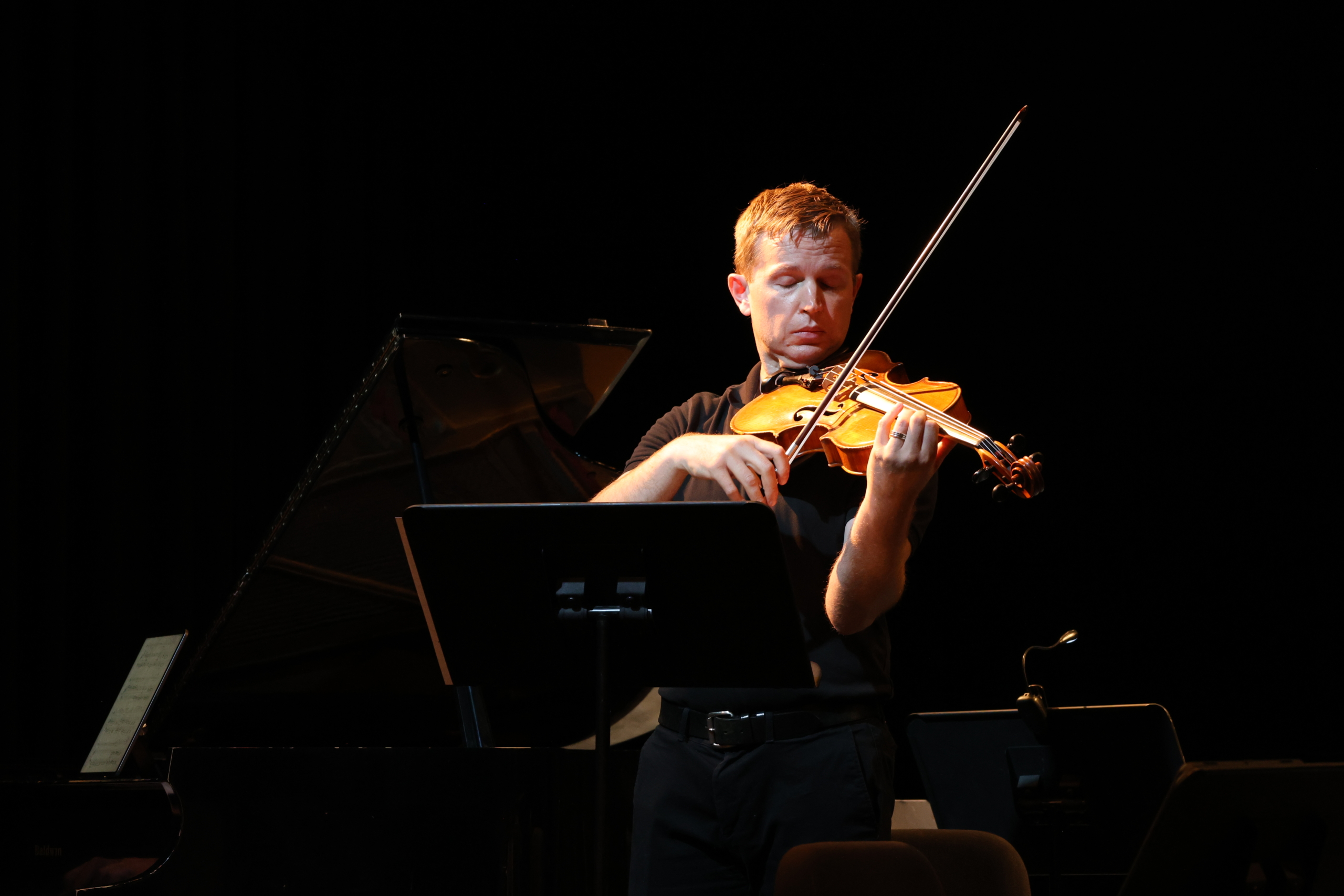
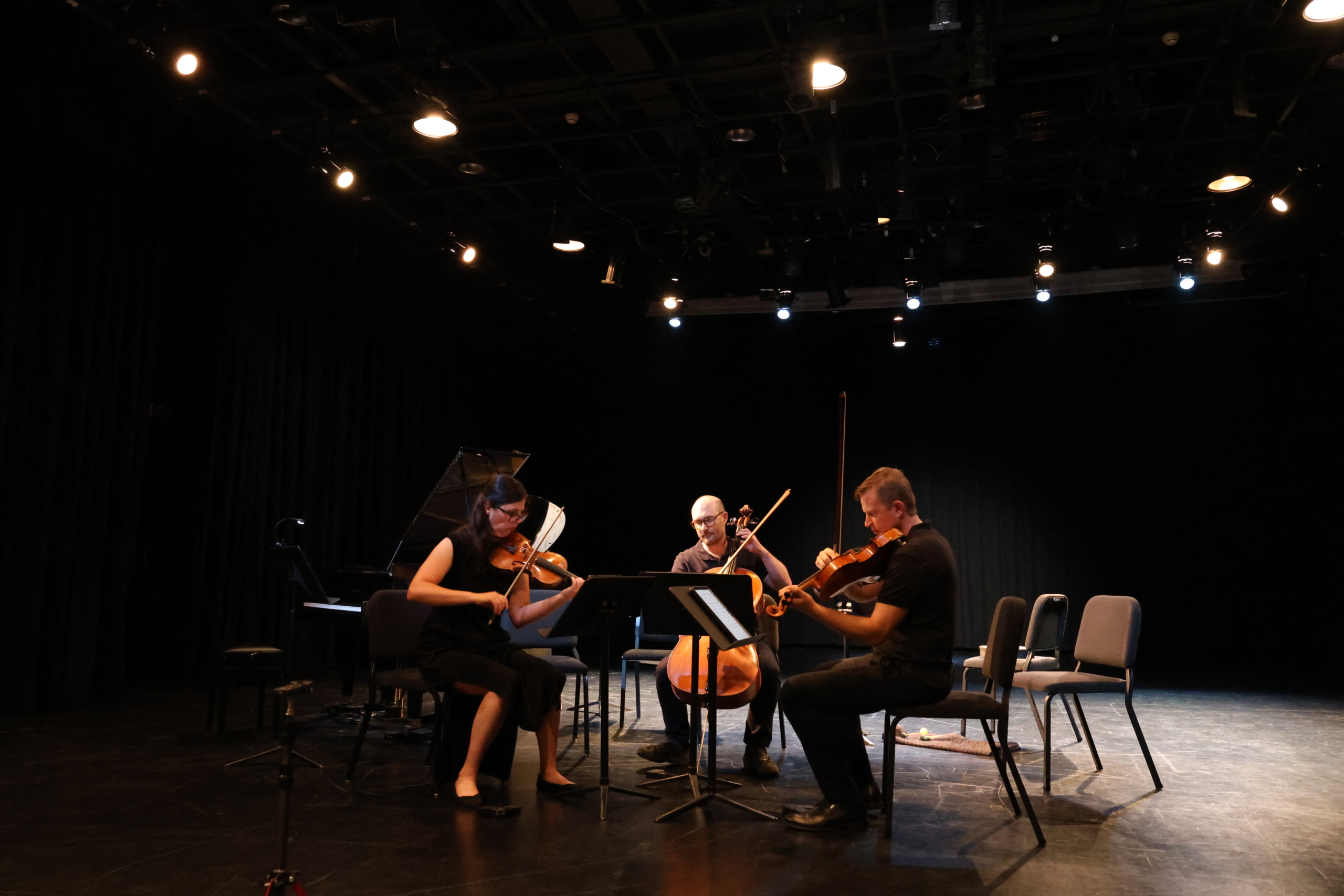
Το τέλος του πρώτου μέρους σηματοδοτήθηκε με την πρώτη παγκόσμια εκτέλεση του έργου Ricochet Ballet, για τρίο εγχόρδων (2024), του Jack Vees. Το έργο προέκυψε μέσα από τον συνδυασμό των συνθετικών προθέσεων του δημιουργού και των αναπόφευκτων επιρροών από τις προηγούμενες εμπειρίες του με την ενασχόλησή του με τη μουσική για σύγχρονα σύνολα χορού. Η Cara Tweed (βιολί), ο James Rhodes (βιόλα) και ο Nicholas Diodore (βιολοντσέλο) απέδωσαν τον “τσαχπίνικο” χαρακτήρα του έργου, με τα pizzicati και τα επιμέρους χαρακτηριστικά και τονισμούς των γραμμών των οργάνων, να παραπέμπουν σαν συνολικό άκουσμα σε μία σχεδόν συνεχή δράση “αναπήδησης” και χορού.
Μετά από το διάλειμμα το πρόγραμμα συνεχίστηκε με το έργο Still Clouds, για βιόλα και πιάνο (2024), του Douglas Knehans. Κεντρική ιδέα πίσω από το έργο αποτελεί η επαναδιατύπωση του μουσικού υλικού μίας σύνθεσης, η ακρόαση της οποίας παρομοιάζεται από τον συνθέτη με την παρατήρηση ενός κρυστάλλου από διαφορετικές προοπτικές. Ο Rob Kovacs (πιάνο) σκιαγράφησε ένα αιθέριο, σχεδόν “επιπλέον” (με τονικές ασάφειες και με κάποιες ενδείξεις τροπικότητας) αρμονικό πλαίσιο, το οποίο σαν υφή θύμισε σύγχρονα διαδεδομένα μουσικά ακούσματα, τα οποία έχουν αντλήσει ιδέες και από την πρωτοπορία των προηγούμενων σχετικά πρόσφατων δεκαετιών. Ο James Rhodes (βιόλα) διέγραψε επιτυχώς τη μελωδική διάθεση της σύνθεσης.
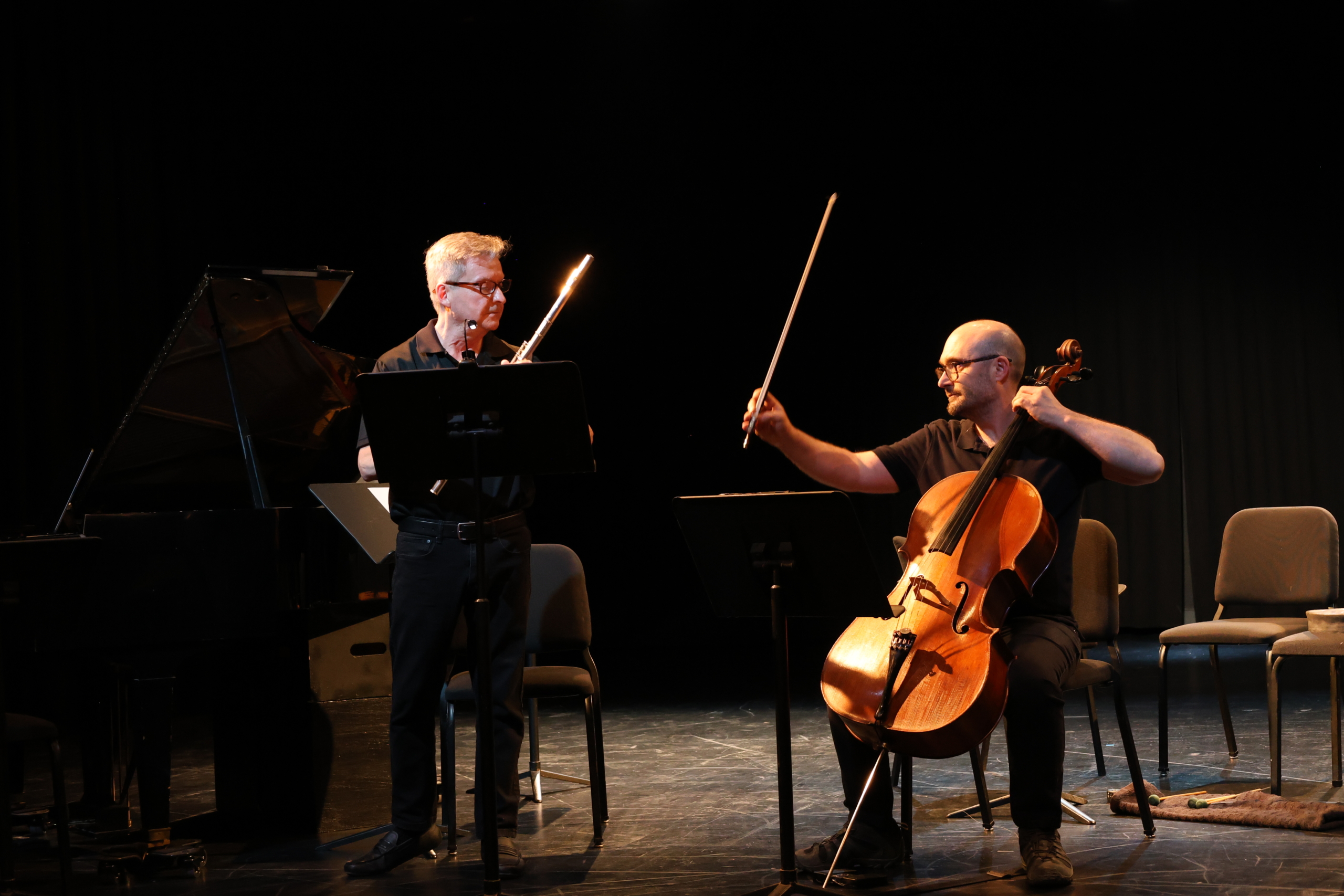
Έπειτα, ο Sean Gabriel (φλάουτο) και ο Nicholas Diodore (βιολοντσέλο) ερμήνευσαν το έργο The land of little rain suite, για φλάουτο και βιολοντσέλο (2023), από την βραβευμένη όπερα Why women went west, της Pamela Madsen. Πρόκειται για έργο εμπνευσμένο από τα βιβλία της γυναίκας συγγραφέως και μυστικίστριας Mary Austin και περιγράφει τα ταξίδια της στην Άγρια Δύση. Ως σύνθεση, η μουσική όντως απέπνεε μία αίσθηση μυστηρίου και περιπέτειας, η οποία, μαζί με το ηχόχρωμα των δύο επιλεγμένων οργάνων, ταίριαξε και με τα καθιερωμένα πρότυπα της μουσικής αποτύπωσης θεματολογιών περιπέτειας. Το τρίτο και τελευταίο μέρος (“Lost Borders-The Walking Woman”) παρουσίαζε έντονα την τάση αυτή για μουσική αποτύπωση της περιπέτειας και ειδικά της περιπλάνησης, με τον Diodore να επαναλαμβάνει “κυματιστά” περιπετειώδη σχήματα στο βιολοντσέλο, ενώ ο Gabriel ερμήνευε τη –με φανερή διάθεση εξερεύνησης– μελωδική γραμμή του φλάουτου.
Ακολούθησε το έργο Kiki wearing Tasha, για φλάουτο, κλαρινέτο, βιολί και βιολοντσέλο (2017), του Mathew Rosenblum, το οποίο είναι αφιερωμένο στη μνήμη του Ezra Sims, σημαντικού σημείου αναφοράς στον χώρο της μικροτονικής σύνθεσης. Οι εκτελεστές –Sean Gabriel (φλάουτο), Gunner Owen Hirthe (κλαρινέτο), Cara Tweed (βιολί), Nicholas Diodore (βιολοντσέλο)– επιδίωξαν μία ανάγλυφη και εκφραστική, ως προς την ανάδυση των διαφορετικών χρωμάτων και γραμμών των οργάνων, απόδοση, την οποία απαιτούσε άλλωστε και η ίδια η γραφή του έργου. Οι ιδιαίτερες αναφορές του έργου, όπως αυτής σε μουσική για spaghetti western, μπόρεσαν να γίνουν εύκολα αντιληπτές.
Το επόμενο έργο του προγράμματος ήταν το Leaving for NYC, για βιολί και πιάνο (2018), του ελληνικής καταγωγής συνθέτη Constantine Koukias. Το συγκεκριμένο έργο έχει συντεθεί ως φόρος τιμής στη μειονότητα Εβραίων των Ιωαννίνων, πολλά μέλη της οποίας αναγκάστηκαν κατά τις αρχές του 20ού αιώνα να αφήσουν τον τόπο τους, καταλήγοντας κυρίως στη Νέα Υόρκη, και κατά το 1944 μεγάλος αριθμός τους στάλθηκε από τα Ιωάννινα στο Auschwitz-Birkenau, από όπου επιβίωσε ένα πολύ μικρό ποσοστό. Το μέρος του πιάνου (Rob Kovacs) δημιούργησε ένα παραισθησιακό παγερό πλαίσιο με την επανάληψη ενός ελαφρά μόνο μεταβαλλόμενου μοτίβου, το οποίο επανέρχονταν ξανά και ξανά κυκλικά, σχεδόν εμμονικά (μία προειδοποίηση για την τάση “κυκλικότητας” που παρουσιάζει η ιστορία;) σε υψηλή τονική περιοχή του πιάνου· κάτι σαν συνεχή λαμπυρίσματα από θραύσματα γυαλιού (φέρνοντας συνειρμικά στο νου του ακροατή και τη “νύχτα των κρυστάλλων”). Πάνω από την ομιχλώδη και αιωρούμενη (όπως η συλλογική μνήμη) συνοδεία στο πιάνο, ακουγόταν μία αδιάλειπτη, δραματική μελωδία βιολιού (Cara Tweed). Το αποτέλεσμα ήταν στοιχειωτικό: σαν απεικόνιση ανθρώπων-φαντασμάτων.
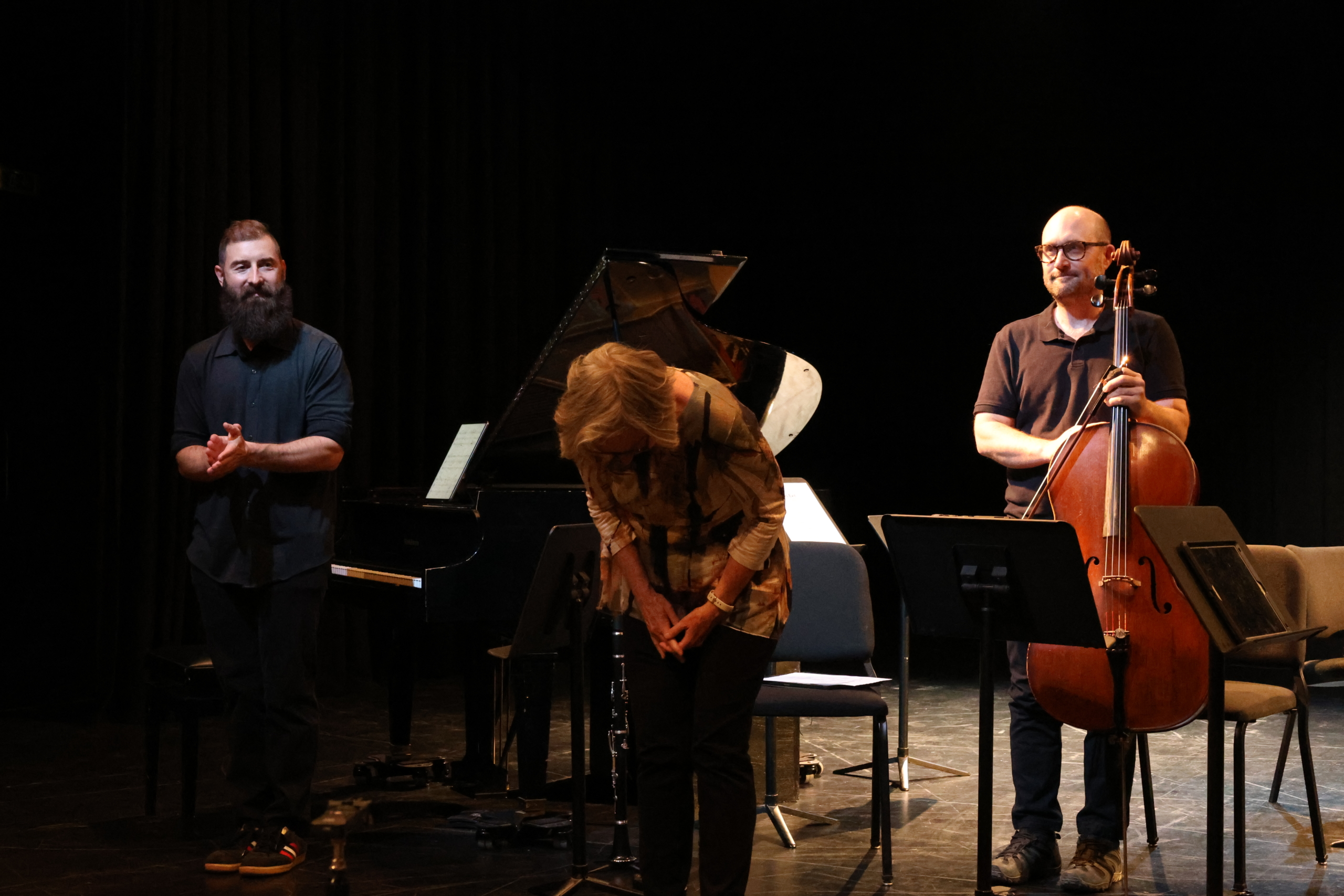
Οδεύοντας σιγά-σιγά προς τη λήξη της συναυλίας, ακούστηκε σε πρώτη ευρωπαϊκή εκτέλεση το έργο Chabot, για βιολοντσέλο και πιάνο (2024), της Cindy Cox, η οποία βρισκόταν στο ακροατήριο. Ο τίτλος του έργου προέρχεται από τη λίμνη Chabot στην Καλιφόρνια, όπου η συνθέτρια κατασκήνωσε μόνη για να διαλογιστεί και να εργαστεί πάνω στο συγκεκριμένο έργο, το οποίο επηρεάστηκε από το φυσικό τοπίο της λίμνης: τα πουλιά και ο ήχος του ανέμου στα δέντρα. Το έργο είναι αφιερωμένο στο σύνολο “No Exit”. Πρόκειται για άλλη μία ατμοσφαιρική σύνθεση. Ιδιαίτερο ενδιαφέρον είχε το παρατεταμένο sustain-εφέ στο πιάνο, το οποίο έδινε μία “ημι-ονειρική” διάσταση και μία αίσθηση πιο φυσικής ηχούς στο έργο. Αν και, διαβάζοντας στο πρόγραμμα τις λέξεις “διαλογιζόμενη”, “λίμνη”, “ήχοι πουλιών” και “άνεμος στα δέντρα”, ο ακροατής ίσως περίμενε μία σύνθεση γαλήνια στο σύνολό της, αυτό εδώ δεν ίσχυε παντού: το βιολοντσέλο (Nicholas Diodore), όσο και το πιάνο (Rob Kovacs), δημιουργούσαν σε πολλά σημεία την εντύπωση άγχους, έντασης και νεύρου. Γενικά, ο περίγυρος της λίμνης προσλήφθηκε πολύπτυχα: αποδόθηκε γαλήνια, αλλά και χρωματιστά, με ζωηρότητα και έντονα! Και αυτό ακριβώς ήταν ίσως ένα από τα ισχυρά σημεία γοητείας του έργου!
Η λήξη της συναυλίας δόθηκε με την ευρωπαϊκή πρεμιέρα του έργου 3 Literary Interludes, για φλάουτο, κλαρινέτο, βιολί, βιόλα, βιολοντσέλο, κρουστά και πιάνο (2025), του Timothy Beyer, ο οποίος αποτελεί συνδετικό κρίκο του Collective με το σύνολο “No Exit”, αφού διατελεί μέλος του πρώτου και καλλιτεχνικός διευθυντής του δεύτερου. Ο Beyer επίσης βρισκόταν στο ακροατήριο. Το έργο του αφορμάται από τα λογοτεχνικά ερεθίσματα του ίδιου: πρόκειται για μινιατούρες, με ισχυρό τον παράγοντα του αυτοσχεδιασμού, οι οποίες αντιπροσωπεύουν κάποια πτυχή του εκάστοτε αγαπημένου του μυθιστορήματος. Στο συγκεκριμένο έργο συμμετείχαν και τα επτά μέλη του συνόλου “Νo Exit”. Η πρώτη μινιατούρα αντιπροσώπευε την ιδέα της ψυχoλογικής προΰπάρχουσας βίας εντός των σκέψεων, πριν αυτή εξωτερικευτεί. Κατά τη διάρκεια της εκτέλεσης “ξεπετάγονταν” νευρικά sforzandi και ασύνδετα αιχμηρά/ νευρικά μοτίβα (μπερδεμένες σκέψεις που “ξεπετάγονται”), σταθερά χαμηλά drone (χαρακτηριστικά κινηματογραφικής μουσικής επένδυσης ταινίας τρόμου) δημιουργημένα με τύμπανο χειρός, κ.λπ. Γενικά, διαμορφώθηκε μία σκοτεινή, “σπασμωδική” και θορυβώδης μουσική ατμόσφαιρα, η οποία αντικατόπτριζε τον διαταραγμένο ψυχισμό ενός δολοφόνου. Η δεύτερη μινιατούρα πραγματεύεται τη σκέψη ότι, παρά την ψευδαίσθηση μιας πλαστής συλλογικότητας και κοινωνικότητας, ο άνθρωπος είναι κατ’ ουσίαν μόνος: κανένας δεν μπορεί να κατανοήσει ή να βιώσει με ακρίβεια την υποκειμενικότητα του άλλου. Η μουσική ατμόσφαιρα ήταν μυστηριώδης, με τον Gabriel να ερμηνεύει εύστοχα και ευαίσθητα την –αναλόγου χαρακτήρος– μελωδική γραμμή του φλάουτου, πάνω από τον ηχοχρωματικό ψίθυρο των υπόλοιπων οργάνων, και έπειτα να φεύγει αργά και τελετουργικά από το οπτικό πεδίο του κοινού (όπως κάθε άνθρωπος μόνος πορεύεται στη ζωή και τελικά μόνος αποχωρεί από αυτήν). Η τρίτη συντομότατη μινιατούρα ασχολήθηκε με την αναζήτηση νοήματος απέναντι στον θάνατο, μέσα από το στοιχείο της έντασης. Το έργο ήταν αρκετά θορυβώδες, δίνοντας την αίσθηση ενός χαοτικού βουητού, με ακατάπαυστες σαρωτικές ανιούσες κλίμακες, οι οποίες έφεραν όντως στο νου την “καταιγίδα” του Tolstoy από το μυθιστόρημά του Ο θάνατος του Ιβάν Ίλιτς και τη σύγχυση στο μυαλό του ομώνυμου ήρωα.
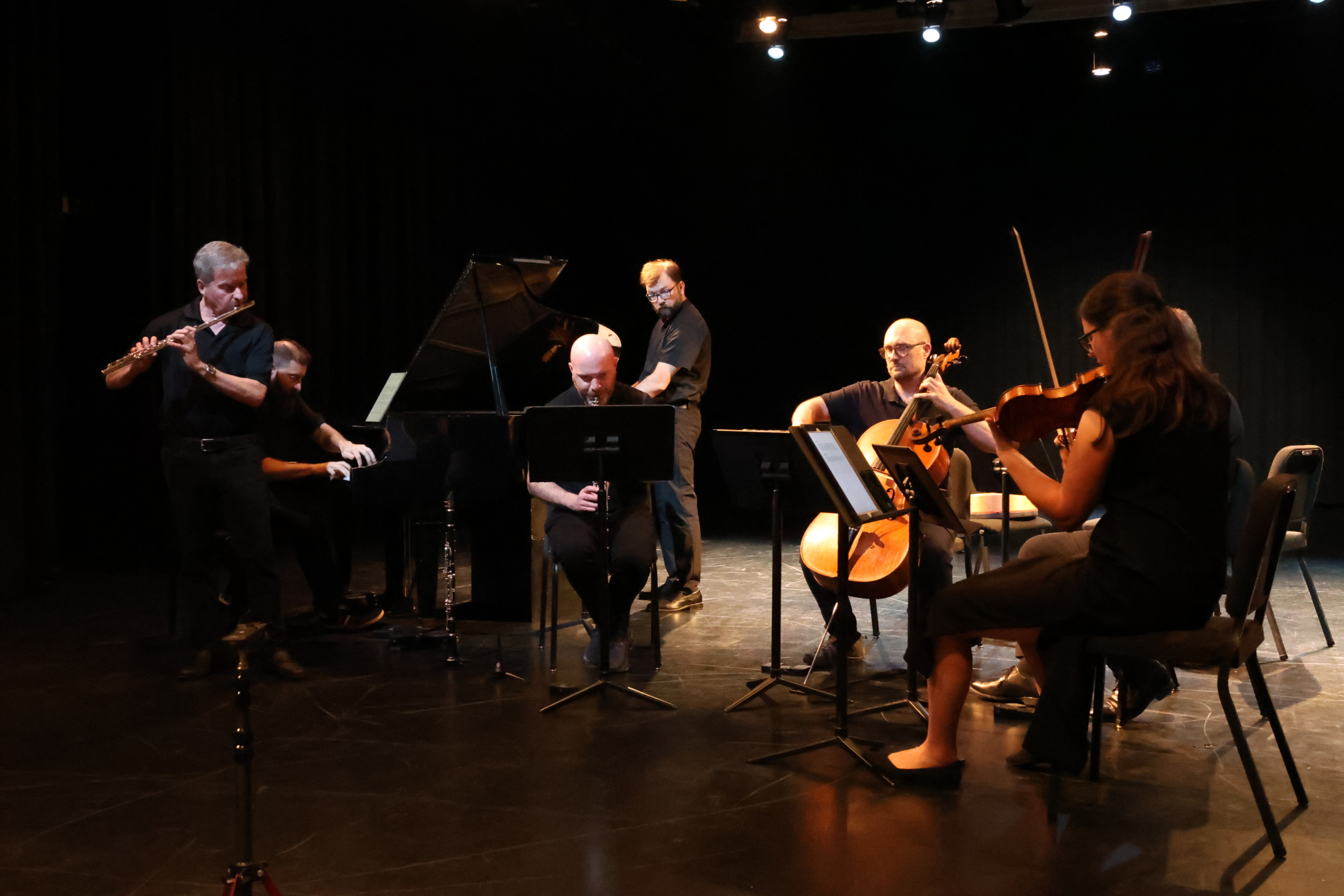
Στη σημερινή εποχή υπάρχουν πολλοί συνθέτες, πολλοί ερμηνευτές και πολλές συναυλίες σύγχρονης μουσικής παγκοσμίως, από τις οποίες ανά καιρούς “περνάνε” πολλοί ακροατές. Αυτό όμως που ξεχώρισε στη συγκεκριμένη συναυλία ήταν η αμεσότητα στην έκφραση των συνθέσεων που παρουσιάστηκαν. Κάποιοι σύγχρονοι και σχετικά σύγχρονοι συνθέτες μαστίζονται από τον χρόνιο φόβο (ή μάλλον καλύτερα “φοβία”!) του να μην ακουστούν αρκετά πρωτοποριακοί, αποφεύγοντας οποιαδήποτε αναφορά σε γνωστές μορφές έκφρασης και ανακαλύπτοντας κάθε φορά άλλες. Ωστόσο, κατ’ αυτόν τον τρόπο, ο σύγχρονος ακροατής δεν είναι σε θέση ποτέ να παγιώσει και να καταλάβει τις νέες χειρονομίες έκφρασης, διότι διαρκώς διαφοροποιούνται. Οι συνθέσεις της συγκεκριμένης συναυλίας αντιθέτως κατάφεραν να “αγγίξουν” το ακροατήριο, παραμένοντας βαθιά πρωτότυπες. Οι συνθέτες δεν φοβήθηκαν να χρησιμοποιήσουν γνώριμες εκφραστικές χειρονομίες ή ακούσματα από τη συνθετική τους παλέτα, καθώς και δεν απέφυγαν να εκφράσουν ό,τι είχαν να πουν άμεσα/ εμφανώς/ απτά/ περιγραφικά, ακόμα και αν αυτό που είχαν αναλάβει να εκφράσουν ήταν ακριβώς κάτι το εσωστρεφές. Με αυτόν τον τρόπο η συνθετική ομάδα “The Collective” και το σύνολο “No Exit” έδωσαν τη δυνατότητα στο κοινό να εμβυθιστεί στη μουσική τους και να ακολουθήσει πραγματικά την αφήγηση ή ιδέα του κάθε έργου. Τέλος, αξίζει να σημειωθεί ότι όντως παρουσιάστηκαν διαφορετικά και ποικιλόμορφα συνθετικά ιδιώματα, τα οποία αντικατόπτριζαν διαφορετικές τάσεις της σημερινής σύνθεσης (κάτι που έχει ιδιαίτερο ενδιαφέρον, αφού δίνει τη δυνατότητα στον ακροατή να παρατηρήσει κάπως συγκεντρωτικά τη σύγχρονη δημιουργία), καθώς και την πιο προσωπική μουσική γλώσσα του κάθε συνθέτη, ο οποίος συμμετείχε με κάποιο έργο του στη συναυλία.
–ENGLISH–
“No Exit” ensemble performs compositions of “The Collective” at the Black Box Theater of the American College of Greece!
It is always interesting to explore concepts such as “creative community” and “collective” within the art world, because through such aspects, the power of fair collaboration and mutual support between artists working towards a common goal can be observed. In the case of the group of composers, called “The Collective”, this goal is none other than promoting the diversity of contemporary composition and the individuality in the artistic voices of each one of its members, who differ in terms of: their origin, the geographical area in which they are active and their compositional vision. Of course, the whole concept would not have been complete without the corresponding performance resources, such as the American new music ensemble “No Exit”, which promotes the enrichment of avant-garde music and the direct acquaintance of contemporary composition with a wider audience.
On June 11, at the Black Box Theater of the American College of Athens, “No Exit” gave the opening concert of their European tour, the first stop being Greece! It is worth noting that there was no entrance fee; a gesture that must be an extension of the ensemble’s effort to make contemporary music accessible to everyone.
The concert opened with Greek composer Spiros Mazis (member of “The Collective”), presenting both “The Collective” and “No Exit”, as well as the relationship between them.
The intention for immediacy in the expression of avant-garde music became apparent from the very beginning, with the opening composition being Agata Zubel’s Cadenza, for solo violin (2013/2014). As the composer herself mentioned in an interview, which was posted on 22/5/2025 on the website of “No Exit”, Cadenza is a piece of emotional concentration, and is rather close to outlining a character in a play. Indeed, the composition was possessed by dramatic intensity; a result of exploring the frequency extremes of the violin and the contrasts in the dynamics and motifs, with frequent outbursts and aggressive/energetic phrasing. Whoever this violin-protagonist is, they seem to be particularly… troubled! The composition was performed by Cara Tweed and sounded quite demanding.
This was followed by the European Premiere of Edward Smaldone’s Sareri Hovin Mernem, for clarinet, percussion, and piano (2024). It is a composition based on an Armenian song, which expresses and symbolizes in a sense the common suffering of Armenians. The work is reminiscent of jazz sounds and seems to have distanced itself quite clearly from the mentality of atonal idioms. Over the warm accompaniment of Rob Kovacs on the piano, Gunner Owen Hirthe sensitively developed his melody (with reference to the Armenian song) on the clarinet, while percussionist Luke Rinderknecht sometimes gave color to the piece, sometimes juxtaposed an overly energetic sound with the otherwise serene atmosphere and other times he followed/enriched the other two instrumental parts.
The next piece performed, was Greek composer Spiros Mazis’ Five Haiku, for flute, clarinet, violin, cello and piano (2009-rev. 2020). When reading his interview from 26/5/2025 on “No Exit’s” website, one’s attention is immediately caught by Mazis’ artistic temperament: from the rich Corfiot musical tradition to the “spectral” worlds of Murail, the path of his compositional subconscious is revealed to be very interesting. Although he states that positive science plays an important role in his thinking, he insists that numbers cannot “speak” to the audience unless human emotion and passion are introduced first. Another interesting part of the interview is the one, in which he refers to the importance of collective musicality in Corfiot musical life and how this has affected his works; something that certainly cannot be irrelevant to his current involvement with “the Collective” and to the piece that was performed. In Five Haiku the flutist (Sean Gabriel), the clarinet player (Gunner Owen Hirthe), the violinist (Cara Tweed), the cellist (Nicholas Diodore) and the pianist (Rob Kovacs) found themselves in a continuous, occult musical communication and interaction. Many times, the music was highly descriptive and apt: situations, emotions, or even simple images and sounds of nature were directly imitated or “translated” musically. The composer and performers managed to transmute into music the literary Zen perspective of Matsuo Basho’s poems, through the simple succession (and simple observation) of precisely these descriptive musical sounds, tone colors and silences, which appeared and then were effortlessly vaporized, like fleeting thoughts of the mind, contrasting at some points each other, precisely because of their transience. Matsuo Basho’s five selected haiku (Winter Garden, Stillness, The Morning Glory, Heat Waves Shimmering, The Old Pond) were recited alternately by the five musicians. The whole concept and interpretation was highly atmospheric, skilled and impressive, which seemed to have an impact on the audience as well!
The next work on the program was Amelia Kaplan’s A brief comment on the current state of insanity, for clarinet and viola (2017), and was created as a reaction to the internal divide in the United States that followed the election of Donald Trump as president. The interaction between the two instruments – the clarinet (Gunner Owen Hirthe) and the viola (James Rhodes) – is intended to render this situation. Although the listener would have expected a perhaps particularly heated argument, the instruments produced a uniformity in terms of compositional conception and aesthetics. However, there was in fact internalized, aesthetically functional musical tension, which seems to derive from specific gestures, such as patterns that could symbolize a negative surrounding atmosphere (e.g. threatening tremoli, glissandi towards deep frequencies, aggressiveness/abruptness), momentary outbursts of the two instruments at the same time, etc.
The first half ended with Jack Vees’ Ricochet Ballet, for string trio (2024), receiving its World Premiere. The work emerged from the combination of the composer’s intentions and the inevitable influences from his previous experiences with music for contemporary dance ensembles. Cara Tweed (violin), James Rhodes (viola) and Nicholas Diodore (cello) seemed to have understood the “playful” character of the work: the pizzicati, the individual characteristics of the instrumental lines and their accents referred as a whole to an almost continuous action of “bouncing” and dancing.
After the intermission, the program continued with Douglas Knehans’ Still Clouds, for viola and piano (2024). The central idea behind the work is the reinterpretation of the musical material of a composition: listening to this piece was described by the composer as being similar to the observation of a crystal from different perspectives. Rob Kovacs (piano) outlined an ethereal, almost floating (with tonal ambiguities and with some hints of modality) harmonic context, whose texture was reminiscent of modern widespread sounds, which have also drawn ideas from the avant-garde of previous relatively recent decades. James Rhodes (viola) outlined successfully the melodic mood of the composition.
Then, Sean Gabriel (flute) and Nicholas Diodore (cello) performed The land of little rain suite, for flute and cello (2023), from Pamela Madsen’s award-winning opera Why women went west. It is a work inspired by the books of the woman writer and mystic Mary Austin and describes her travels in the Wild West. As a composition, the music did exude a sense of mystery and adventure, which, along with the timbre of the two selected instruments, also matched the established standards of musical depiction of adventure themes. The third and final part (“Lost Borders-The Walking Woman”) presented strongly this tendency for musical depiction of adventure and especially wandering, with Diodore repeating “wave-like” adventurous shapes on the cello, while Gabriel interpreted the explorative melodic line of the flute.
This was followed by Mathew Rosenblum’s Kiki wearing Tasha, for flute, clarinet, violin and cello (2017), which is dedicated to the memory of Ezra Sims, who was an important point of reference in the field of microtonal composition. Performers – Sean Gabriel (flute), Gunner Owen Hirthe (clarinet), Cara Tweed (violin), Nicholas Diodore (cello) – approached a textured and expressive rendering, the instrumental colours and lines emerging outwards. This approach seemed to be required by the character of the work itself. The references of the work, such as the reference to spaghetti westerns, were easily perceived.
The next work on the program was composer of greek origin Constantine Koukias’ Leaving for NYC, for violin and piano (2018). This work has been composed as a tribute to the Jewish minority of Ioannina, many of whose members were forced to leave their homeland at the beginning of the 20th century, ending up mainly in New York, and in 1944 a large number of them were sent from Ioannina to Auschwitz-Birkenau, from where a very small percentage survived. The piano part (Rob Kovacs) created a hallucinatory icy framework by repeating only a slightly shifting pattern, coming back over and over again in a circle, almost obsessively (a warning about history’s tendency to repeat itself?) in a high register of the piano; something like constant flashes of shards of glass (also bringing to the mind of the listener “Kristallnacht”). Above Kovacs’ foggy and floating (like collective memory) piano accompaniment, Cara Tweed’s uninterrupted, dramatic violin melody could be heard. The result was haunting: like a depiction of ghostly figures.
Slowly approaching the end of the concert, Cindy Cox’s composition Chabot, for cello and piano (2024), received its European Premiere, with the composer being present at the concert. The title of the work refers to Lake Chabot in California, where the composer camped alone to meditate and work on this particular piece, which was influenced by the natural landscape of the lake: the birds and the sound of the wind in the trees. This work is dedicated to the ensemble and is also quite atmospheric. Of particular interest was the extended sustain effect on the piano, which gave a “semi-dreamy” dimension and a sense of more natural echoes to the work. Although, when reading the words “meditating”, “lake”, “sounds of the birds” and “wind in the trees” in the program notes, the listener might have expected a composition peaceful in its entirety, this was not the case everywhere: the cello (Nicholas Diodore), as well as the piano (Rob Kovacs), created in many places the impression of anxiety, tension and aggressiveness. In general, the rendering of the surroundings of the lake was multifaceted: the surroundings were described as calm, but also colorful, vivid and intense! And that was perhaps one of the piece’s strongest charms!
The concert ended with the European Premiere of Timothy Beyer’s 3 Literary Interludes, for flute, clarinet, violin, viola, cello, percussion and piano (2025). Beyer is something like a connecting link between the Collective and “No Exit” ensemble, since he is a member of the Collective and the artistic director of the ensemble. He was also present at the concert. His work is inspired by his personal literary stimuli: it constitutes of three miniatures (with a strong improvisation factor), each of which represents an aspect of one of his favorite novels. All seven members of the “No Exit” ensemble took part in the performance of this particular composition. The first miniature represented the idea of psychological pre-existing violence within one’s thoughts, before it becomes externalized. During the performance, aggressive sforzandi and disconnected sharp/nervous patterns could be heard (confused thoughts that just “pop out”), fixed low drones (features of a film score in a horror film) could be observed being created with a hand drum, etc. A dark, “spasmodic” and noisy musical atmosphere was formed, which clearly reflected the disturbed psyche of a murderer. The second miniature deals with the idea that, despite of the illusion of a false sociability, man is essentially alone: no one can accurately understand or experience the subjectivity of the other. The musical atmosphere was mysterious, with Sean Gabriel aptly and sensitively interpreting the also of mysterious character melodic line of the flute, above the tone colour whispers of the other instruments, and then slowly and ritually leaving the audience’s field of vision (as every human being walks through life alone and finally departs from it alone). The third brief miniature dealt with the search for meaning in the face of death, through the element of intensity. The piece was quite noisy, giving the feeling of a chaotic hum, with incessant sweeping upward scales, which did bring to mind Tolstoy’s “storm” from his novel The Death of Ivan Ilyich and the confusion in the mind of the title character.
Nowadays there are many composers, many performers and many concerts of contemporary music worldwide, which many listeners attend from time to time. However, what distinguished this particular concert from the rest, was the lack of artificiality in the compositions presented and the immediacy in their expression. Some contemporary and relatively contemporary composers are plagued by the chronic fear (or rather “phobia”!) of not sounding avant-garde enough, avoiding any reference to familiar forms of expression and discovering others each time. However, this way, the modern listener will never be able to consolidate and understand the new gestures of expression, because they are constantly differentiated. The compositions and interpretations of this particular concert, on the contrary, managed to “speak” to the audience, while remaining profoundly original. The composers were not afraid to use familiar expressive gestures or sounds from their compositional palette, and they did not shy away from expressing what they had to say in a direct, tangible and descriptive way (even if what they had undertaken to express was precisely something introverted). This way, “The Collective” and “No Exit” ensemble gave the audience the opportunity to immerse themselves in their music and really follow or understand the narrative or idea of each work. Finally, it is worth noting that different and diverse compositional idioms were indeed presented, and reflected the different tendencies in today’s composition (which is particularly interesting, since it gives the listener the opportunity to observe contemporary creation in a somewhat concentrated manner), as well as the more personal musical language of each composer, who participated with one of their works in the concert.
