
Claudio Monteverdi, a towering genius of the early Baroque period, completed ten known operas (three remained incomplete during his lifetime), most of which are unfortunately lost. The three operas that have come down to us—L’Orfeo (1607), Il ritorno d’Ulisse in patria (1640), and L’incoronazione di Poppea (1643)—are all staples of the core operatic repertoire. L’Orfeo, based on a libretto by Alessandro Striggio (the Younger)—son of the prominent Renaissance composer Alessandro Striggio (the Elder)—was first performed on 21 February 1607 during the Carnival season in Mantua, and is the earliest opera regularly staged in modern times. It is a work in which the composer explicitly highlights the emotions of the text, serving as a fine example of dramatic monody. Monteverdi’s touching score has survived nearly intact through two printed editions published in 1609 (Venice, Amadino) and 1615 (reprinted with a significant number of corrections). It requires approximately 41 instruments and offers explicit indications as to which instrumental groups should be used throughout the work. It should be noted that the 1609 score ends with the more optimistic rescue of Orfeo by the god Apollo, whereas the original 1607 libretto replaces this ending with the tragic murder of Orfeo by the Bacchantes. In any case, one cannot be certain if the composer ever wrote music for the conclusion of the 1607 text.
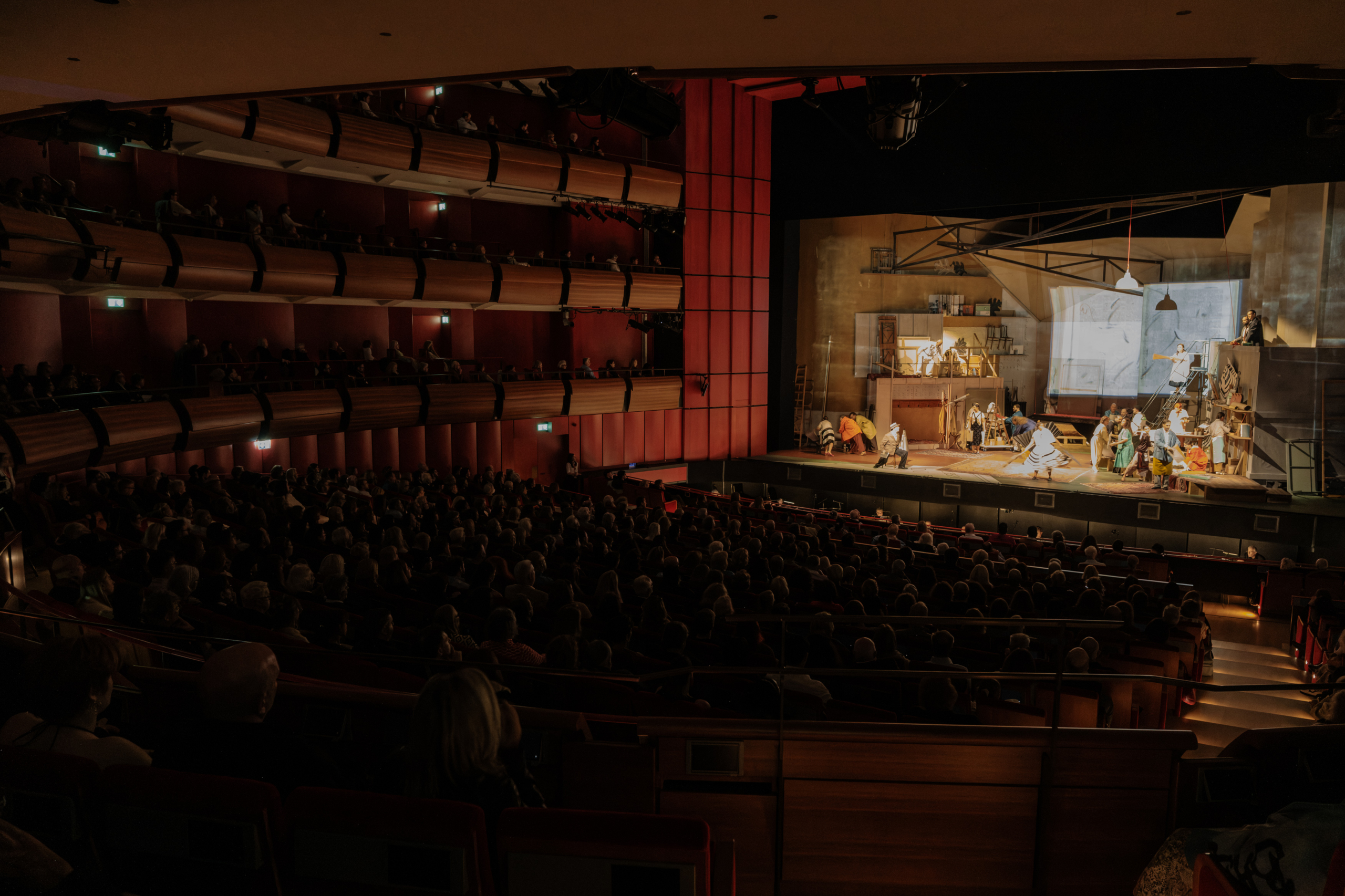
On 30 October, at the Greek National Opera, I attended the Greek premiere of the by now well-known production helmed by the celebrated contemporary South African artist, filmmaker, and director William Kentridge. This staging is a high-profile co-production between the Glyndebourne Festival, the Greek National Opera, and the Metropolitan Opera.
Kentridge has worked in opera since 1998, and it is worth noting that his very first operatic venture was Monteverdi‘s final opera, Il ritorno d’Ulisse in patria. Making the most of a talented creative team—including Luc De Wit (associate director and revival director), Greta Goiris (costume designer), Gregory Maqoma (choreographer), Thulani Chauke (choreography revival), Urs Schönebaum (lighting designer), Janus Fouché (video designer), and Kim Gunning (video controller)—he created a theatrical vision that possessed all of his familiar, trademark qualities.
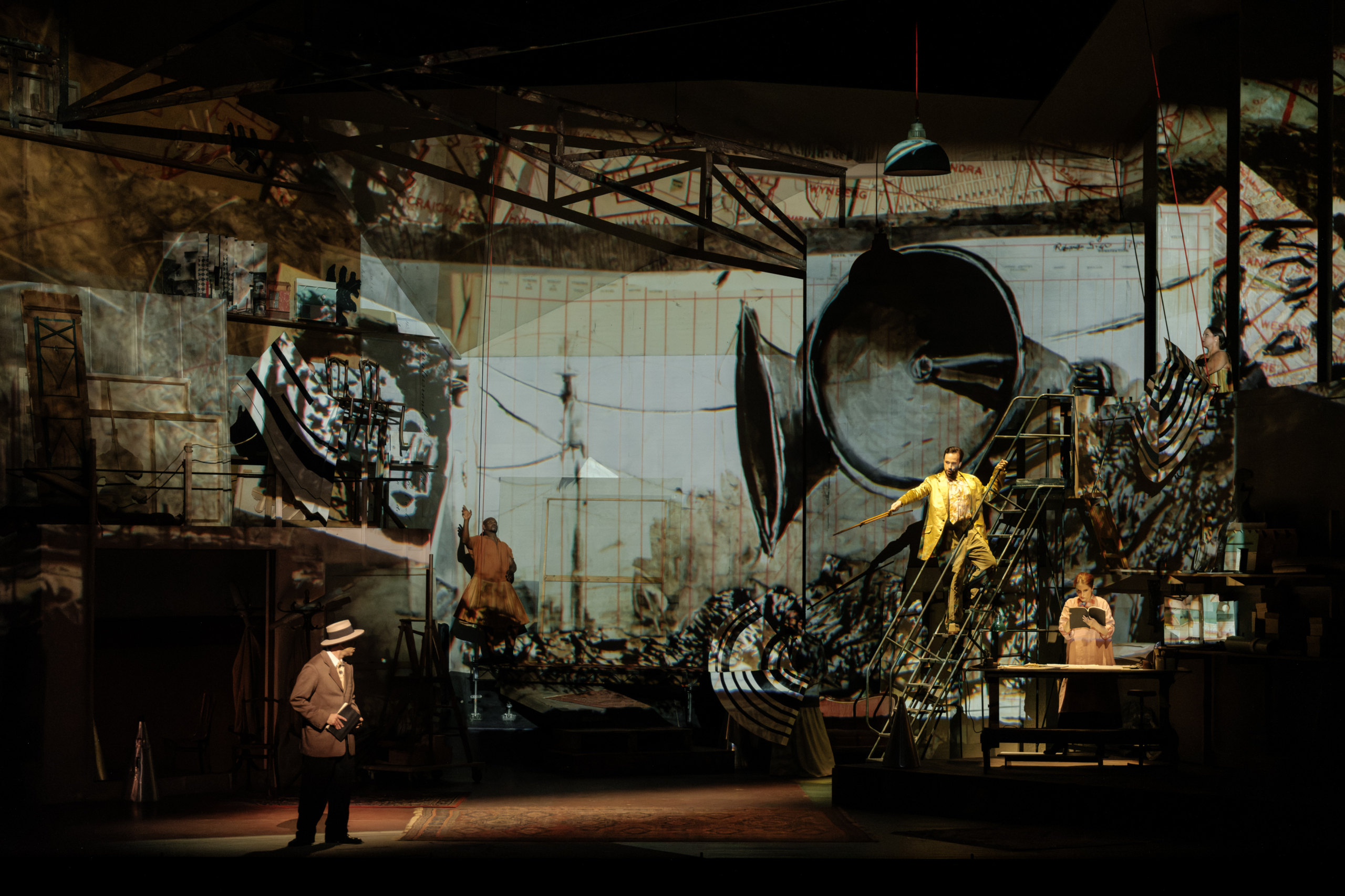
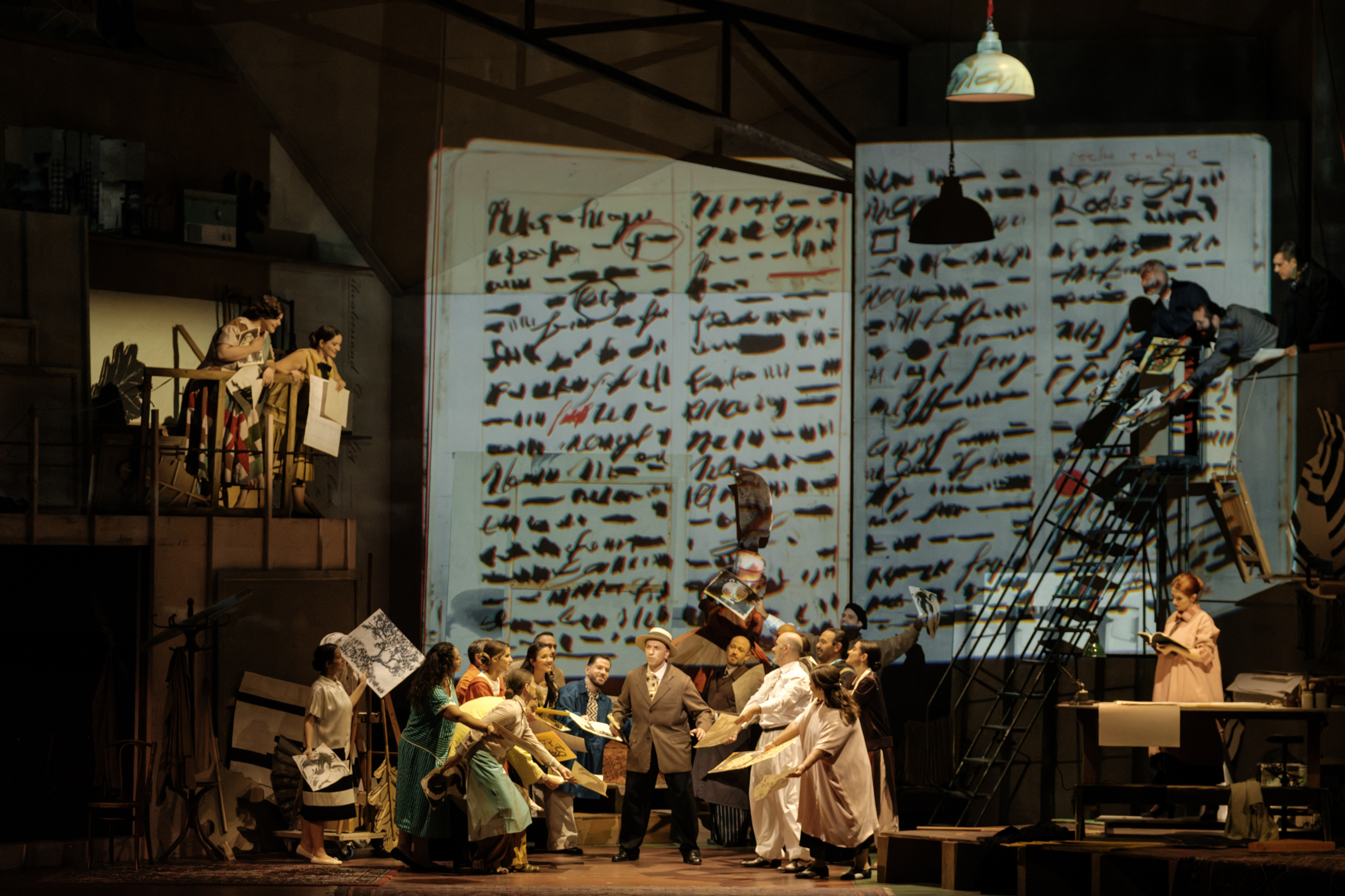
The staging successfully narrowed the gap between ancient myth and the modern age, placing the action at the dawn of the 20th century. A central feature was a female figure (Maria Kostraki) positioned on the right of the stage and meticulously engaged in the real-time mimesis of writing and drawing, seemingly birthing the live projections.
Within this palimpsestic scenographic space, Kentridge’s signature charcoal technique establishes a fluid stage architecture that beautifully informs the performance’s dramatic pace. Departing from the constraints of traditional cel animation, the projected films depend on an organic cycle of evolutionary modification, where individual surfaces are systematically drawn over, partially erased, and continuously reconfigured in real time. Because this effacement remains deliberately incomplete, the residual carbon smudges and smoky silhouettes left behind create a haunting architecture of shadows—a device that serves as a poignant visual analogue for transience, remembrance, and the fatal irreversibility of Orpheus’s backward glance. Set against this metamorphic canvas, the singers navigated the stage like living figures caught inside an evolving, hand-drawn picture book, resurrecting the ancient Greek myth with refreshing originality and exceptional dramatic poise. Kentridge personally oversaw the revival in Athens, an involvement that undeniably enhanced the overall artistic execution of the evening.
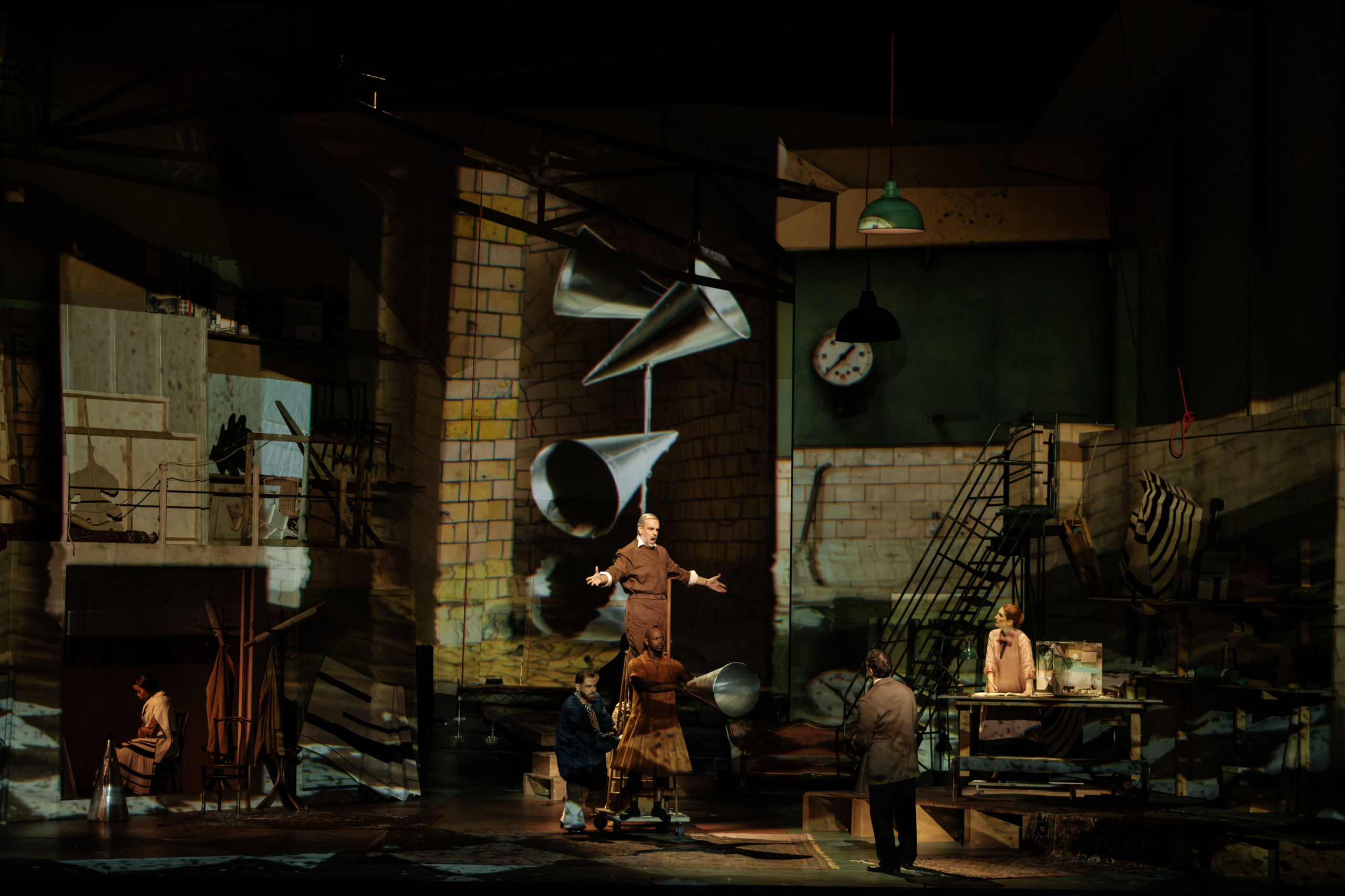
For this Athenian staging, a musical realisation re-orchestrated and arranged by the distinguished American composer Nico Muhly—originally commissioned by the Santa Fe Opera, where it received its world premiere on 29 July 2023—was used. The 1609 and 1615 printed editions of L’Orfeo document a flexible early-Baroque instrumentarium rather than a fixed orchestral schema, which ultimately obliges contemporary interpreters to execute extensive editorial choices when filling out the score. Although critical consensus generally dictates that performers should strictly adhere to the original score’s instrumentation, an alternative approach is occasionally justified. Having closely studied Monteverdi’s intentions, Muhly sought to establish an artistic dialogue with the Baroque master, utilising a contemporary orchestra to articulate his personal conceptualisation of the work and project his own distinct orchestrational ideas. Last summer at the Glyndebourne Festival, during a highly acclaimed staging of this same production, the Orchestra of the Age of Enlightenment performed the original musical text to great critical warmth. Whilst purists might not agree with all of the modern arranger’s choices, he nevertheless delivered a genuinely interesting and tasteful version that we could admire, offering a fresh perspective while remaining fundamentally respectful of the period style. The cast members were clearly inspired by this setting and brought out the characteristics of their respective roles in a superb manner.
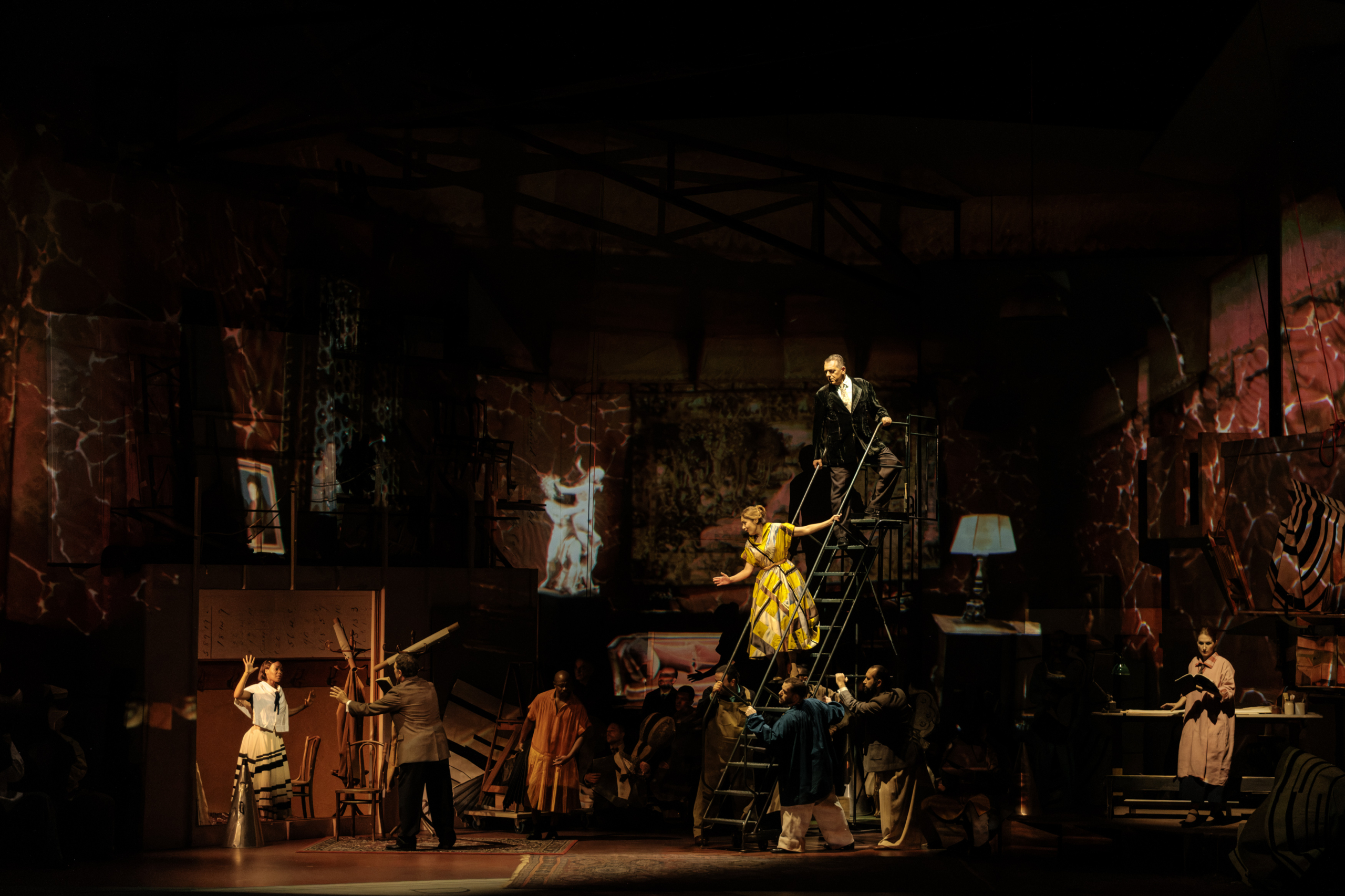
Christos Kechris gave a fine performance as Orfeo, singing the tragic title role with intense grief and dramatic pathos and delivering his long scenes with musical and vocal technique of a high order. His challenging coloratura passages were successfully executed, underlining the anguish of this tormented, archetypal hero. Maria Kostraki, in the roles of La Musica, Euridice (even though Euridice is central to the narrative, her character’s role is extremely brief, with only a few bars in Act I and Act IV) and Echo, and Maria Mitsopoulou, as Ninfa, sang with great delicacy of phrasing. Mary-Ellen Nesi was vocally and scenically impressive as La Messaggera and Speranza. She drew upon the profound knowledge gained from her long international career as a remarkable Baroque mezzo-soprano, having collaborated with famous period ensembles and conductors. Marios Sarantidis, an excellent singing actor with a warm tone and commanding presence, delivered a well-rounded and majestic Caronte, splendidly accentuating the text. Theodora Baka, possessing a fresh, generously projected voice of distinctive quality, offered a stylishly phrased and compelling Proserpina. Petros Magoulas, dressed in an 1910s-era elegant evening attire, distinguished himself as a dark and imposing Plutone. He always performs with authority, investing his whole heart into everything he sings, and it was a true privilege to see him perform this role. In the secondary roles, Yannis Kalyvas (Pastore I/Spirito), Sotiris Triantis (Pastore II/Spirito), Angelo Kydoniefs (Pastore III/Spirito), Georgios Papadimitriou (Pastore IV/Spirito), Nikos Kotenidis (Apollo), Panagiotis Priftis, and Konstantinos Karageorgiou (Due spiriti) were equally skilful and characterful. The presentation was further elevated by the dancers, with Nosiphiwo Samente beautifully portraying the silent physical Euridice, alongside Thulani Chauke, who was striking in the modern choreography that he executed.
Conductor Konstantinos Terzakis led the singers and the responsive Orchestra and Chorus of the Greek National Opera with attention to detail. He secured a balanced performance, handling the structural elements of this masterpiece with care and awareness whilst constantly shedding light on Monteverdi’s sublime, dramatically potent vocal lines, as well as supporting Muhly’s colourful orchestration, harmonic nuances, and textures.
