
The Barocktage (Baroque Days) at the Staatsoper Unter den Linden is an annual festival that brings together beloved Baroque and some early Classical works with rarely heard treasures from the same period. First launched in the 2018–2019 season by then-Intendant Matthias Schulz with a focus on Monteverdi and Rameau, it has since become a cherished part of the house’s calendar. Following a pandemic cancellation in 2020 and a brief pause during the 2025–2026 season, it ran every autumn from 2021 to 2024 and now makes a welcome return for 2026–2027, running from 7 to 27 November.
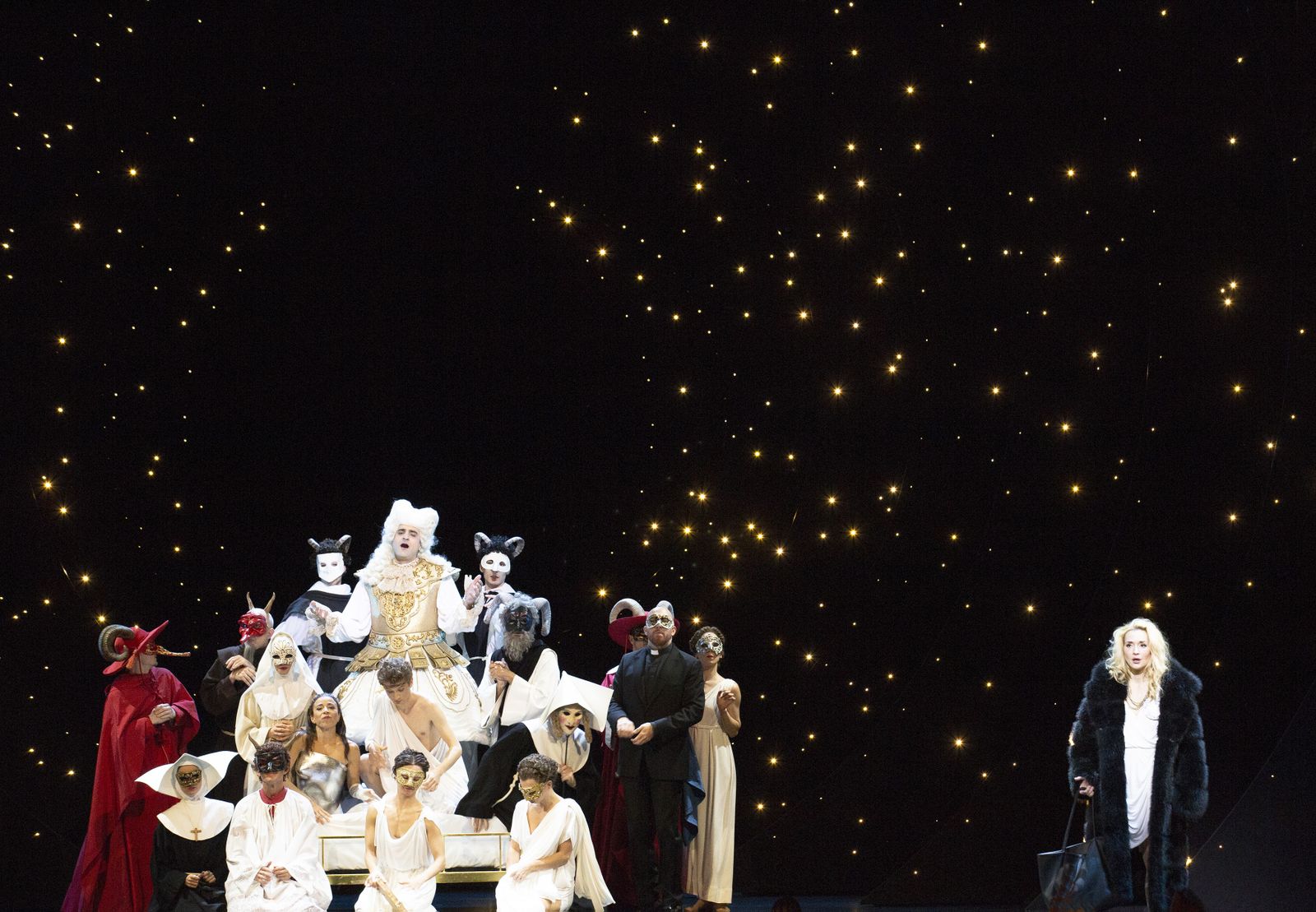
On 8 November, in the magnificent main auditorium of the Berlin opera house, I attended the Berlin premiere of Francesco Cavalli’s seminal 1651 masterpiece, La Calisto, presented during the festival. This was a co-production with the MusikTheater an der Wien (which first opened in Vienna in September).
Cavalli numbered among the most gifted and successful pupils of Monteverdi—alongside colleagues such as Giovanni Rovetta, and within a broader Venetian circle that included Cavalli’s own pupil Barbara Strozzi as well as Monteverdi’s German admirer Heinrich Schütz—whose influence is readily discernible across both his theatrical and sacred oeuvre.
Cavalli’s La Calisto is a key work in early Baroque music history, marking the shift of opera from an aristocratic court spectacle to a commercially successful public art form in mid-seventeenth-century Venice. By combining elevated tragedy with low comedy, the score hastened the development of distinct, lyrical aria forms out of continuous recitative. Furthermore, Giovanni Faustini’s libretto challenges conventional gender roles and divine authority through clever use of disguise and vocal cross-dressing, reflecting the libertine culture of the Venetian Republic. Following more than three centuries of neglect, the opera’s 1970 revival at Glyndebourne—and its later adoption by the historically informed performance movement—secured the place of seventeenth-century Venetian opera in the standard international repertoire.
At the helm of her superb ensemble L’Arpeggiata and the esteemed Akademie für Alte Musik Berlin, Christina Pluhar delivered a vibrant, colourful and authoritative reading of the majestic score—using her own richly instrumented realisation—replete with unexpected turns. Her direction was at once characterful, assertive, and exquisitely lyrical. With acute musicality, instinct, and taste—and supported by musicians of the highest calibre, including Marco Vitale providing spirited keyboard continuo—she deftly balanced the opera’s tragic and comic veins, no small feat. The hand-picked instrumentalists of both ensembles responded with evident enthusiasm to her incisive conducting.
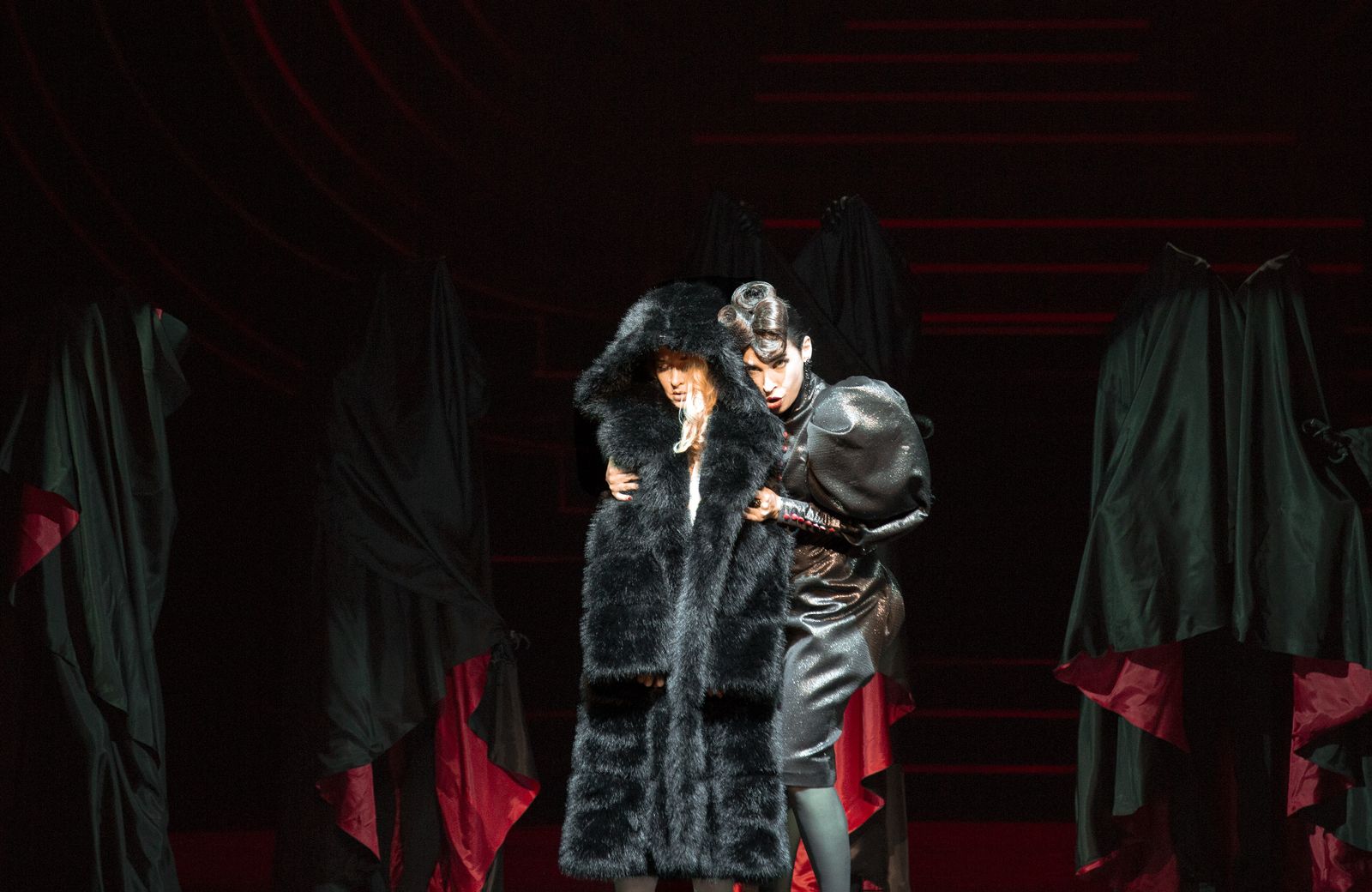
At the forefront of a formidable cast stood Vera-Lotte Boecker, offering a captivating and superbly sung Calisto whose luminous timbre and stage presence suited the title role to perfection. She was ably supported by Milan Siljanov’s splendidly comic Giove, who seduces Calisto whilst disguised as the goddess Diana, executing his falsetto passages as the deity with remarkable aplomb. Giuseppina Bridelli was imperious and domineering as Giunone, delineating with acute musical and theatrical intelligence the catastrophic jealousy directed towards her unfaithful consort. She conveyed all the menace and vengeful fury with which she transforms the unfortunate Calisto into a bear and summons the Furies to torment her, prior to Giove’s apotheosis alongside the nymph into the heavens as the constellation Ursa Major. Luciana Mancini offered an expressive and richly vocalised Diana.
Marcel Beekman proved thoroughly entertaining in the en travesti part of Linfea, the older nymph in the retinue of the virgin goddess who secretly yearns for love and matrimony. Beekman sang in falsetto with delightful tongue-in-cheek grace and a masterful command of the early Baroque idiom, his comedic impact heightened by a prosthetic nude fat suit. Arnaud Gluck, a remarkably young countertenor of refined musicianship and dramatic poise, portrayed a graceful, agile, and tender Endimione, the shepherd hopelessly enamoured of Diana. The remaining roles were delivered with flair and theatrical brio by Renato Dolcini (Mercurio), Jake Arditti (Satirino), David Tricou (Pane), and João Fernandes (Silvano).
Choreographed by Beate Vollack, the dancers performed with exquisite eloquence, bringing élan to their mythological roles and, with those portraying the satyrs, an arousing erotic vigour: Ann-Kathrin Adam, Lara Bonnel, Stephanie Carpio, Jackson Carroll, Martina Consoli, Lorenzo Galdeman, Filip Löbl and Yannick Neuffer.
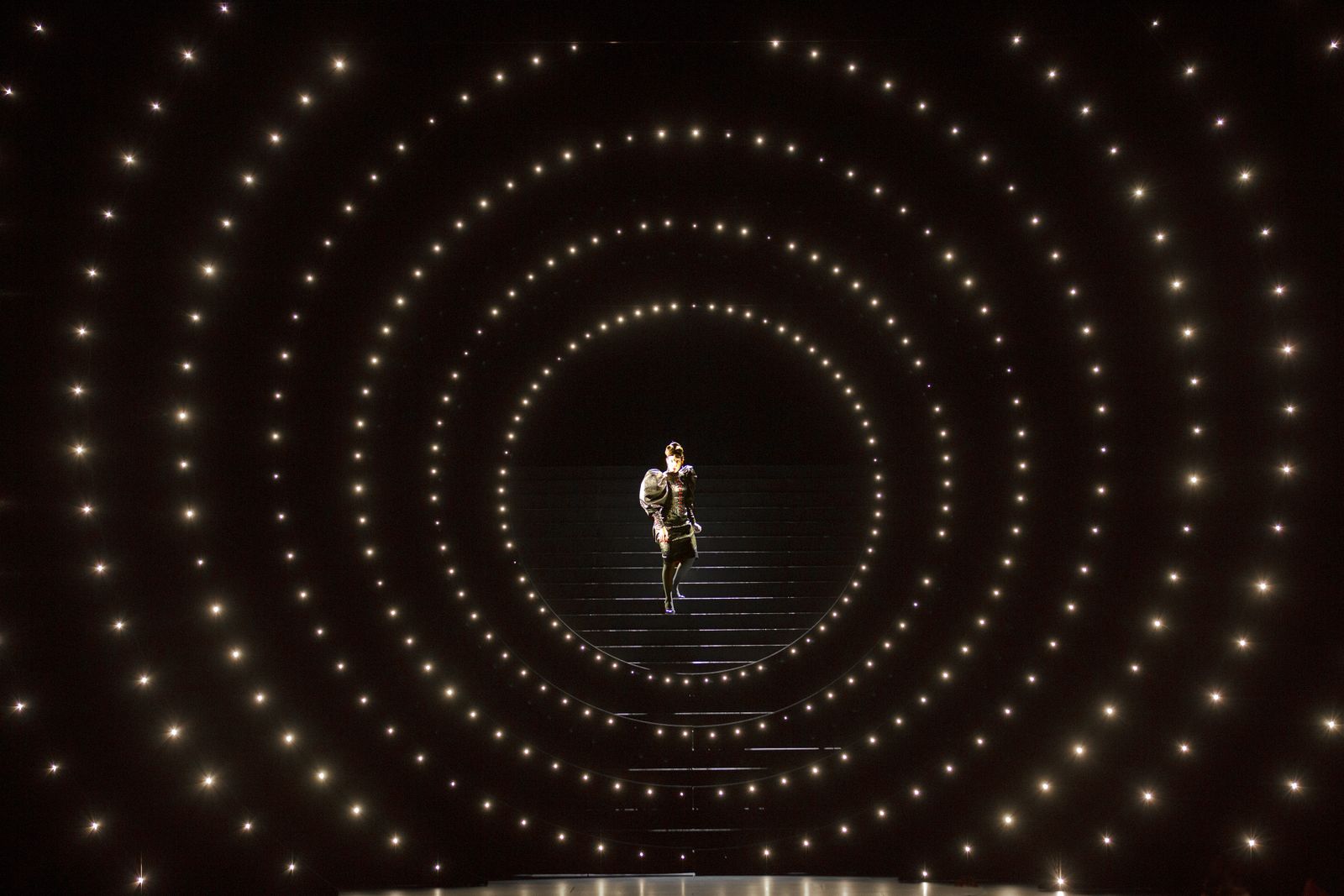
Stefan Herheim’s conceptually inventive direction breathed vitality into every bar of the score with abundant imagination, illuminating the dramatic, solemn, tragicomic, sardonic, sensual, and poignant dimensions of this masterwork. In doing so, his staging highlighted the enduring resonance of both the classical myth and Faustini’s fertile libretto. His vision was skilfully realised through Silke Bauer’s ingenious scenography, Yashi’s fanciful and stylistically eclectic costumes, Roman Hagenbrock’s smart video projections, and the finely sculpted lighting design co-created by Herheim and Karl Wiedemann. Rich in visual invention, sophisticated sensuality, and dry humour, this was, in every respect, a thoroughly accomplished staging.
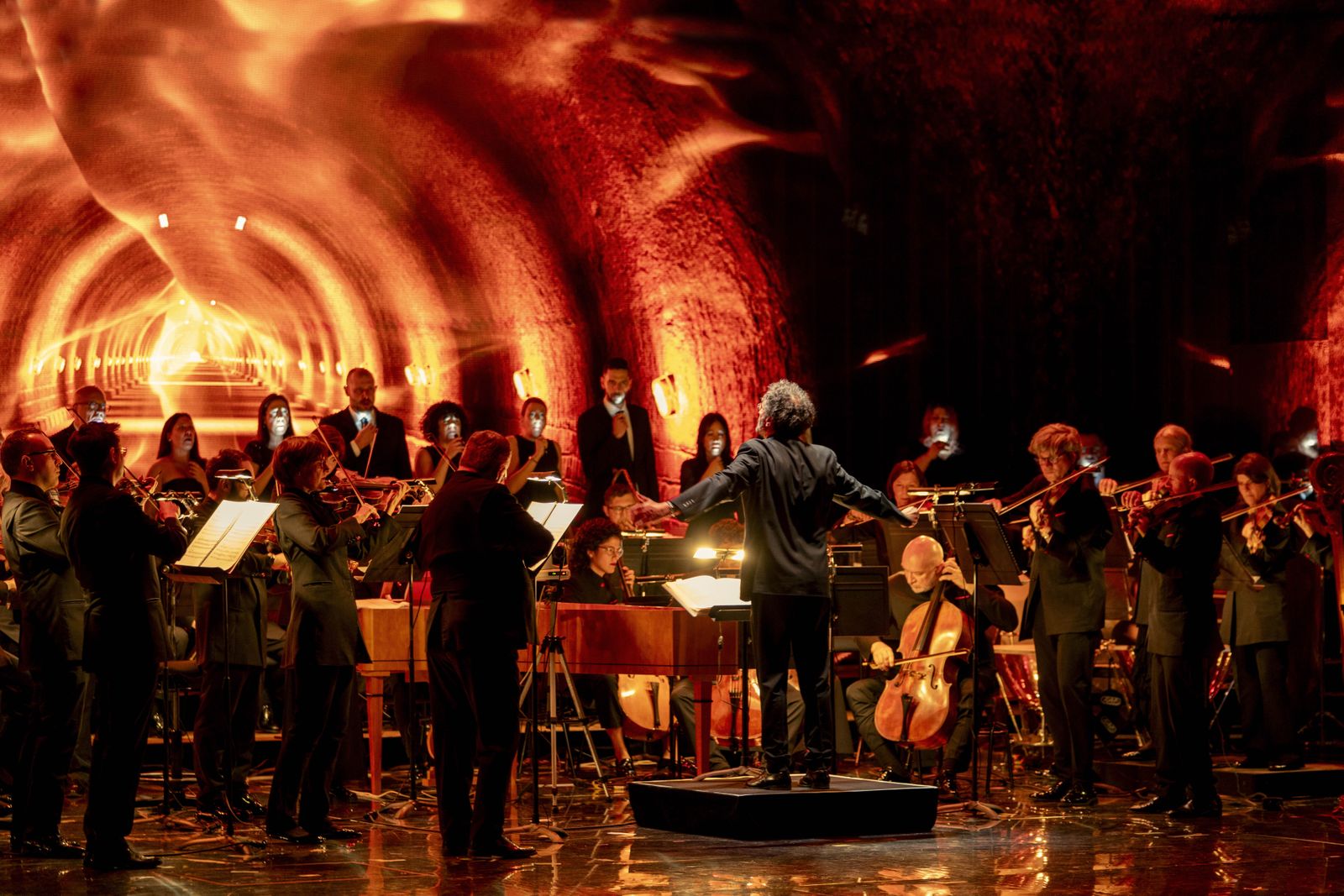
The following week, on 14 November, on the very same stage, I witnessed a performance of Christoph Willibald Gluck’s Orfeo ed Euridice, which was a production of the Monte-Carlo Opera, with semi-staging by Davide Livermore, built around Italian star mezzo Cecilia Bartoli, who across her long career has demonstrated her admiration of Gluck.
Standing as Gluck’s most celebrated and widely performed stage work, Orfeo ed Euridice premiered in Vienna in 1762 as an Italian azione teatrale set to a libretto by Ranieri de’ Calzabigi and conceived specifically for the alto castrato Gaetano Guadagni. For the 1769 royal wedding celebrations in Parma, Gluck condensed the score into a single-act adaptation with reduced instrumentation, positioning it as the concluding instalment of his tripartite occasional entertainment Le feste d’Apollo and transposing the title role upward to accommodate the soprano castrato Giuseppe Millico. For the 1774 Paris premiere (Orphée et Euridice), Gluck substantially revised the work for the haute-contre Joseph Legros using Pierre-Louis Moline’s expanded French adaptation of Calzabigi’s text. The evolution was further shaped in 1859, when Hector Berlioz synthesised elements of both the Viennese and Parisian scores into a French edition tailored to the vocal compass and dramatic sensibilities of mezzo-soprano Pauline Viardot, laying the groundwork for the hybrid editions frequently heard today.
For this production, Bartoli and her conductor, Gianluca Capuano, selected the 1769 Parma edition as their musical foundation, introducing several modifications and additions—most notably a radical alteration to the closing scene, alongside Baroque-style ornamentation. Rather than resolving with the customary lieto fine and the celebratory chorus Trionfi Amore, the dramaturgy dispenses with the deus ex machina altogether. Following Euridice’s second death after the lovers have gazed upon one another, Bartoli—portraying Orfeo in a state of terrible panic—performs the opening of Che farò senza Euridice at a rushed, violent tempo before subsiding into a conventional pace. The production then concludes with a reprise of the opening mourning chorus, Ah! se intorno a quest’urna funesta, establishing a tragic circular frame. Given these substantive musical and dramatic interventions—which will surely astonish purists—the resulting performing edition might justly be termed the‘Bartoli version’ .
It is worth noting that this adapted version premiered in May 2023 at the Salzburg Whitsun Festival fully staged, directed by Christof Loy and conducted by Capuano, returning for six further performances during the Salzburg Summer Festival that August. Between November 2024 and November 2026, Bartoli and Capuano brought a concert and semi-staged incarnation of the production—featuring Les Musiciens du Prince – Monaco and Il Canto di Orfeo—to more than twenty additional performances across major European venues, including Paris, Luxembourg, Zurich, Cremona, Barcelona, Madrid, Graz, and Amsterdam, before arriving at the stage of Berlin’s Staatsoper Unter den Linden.
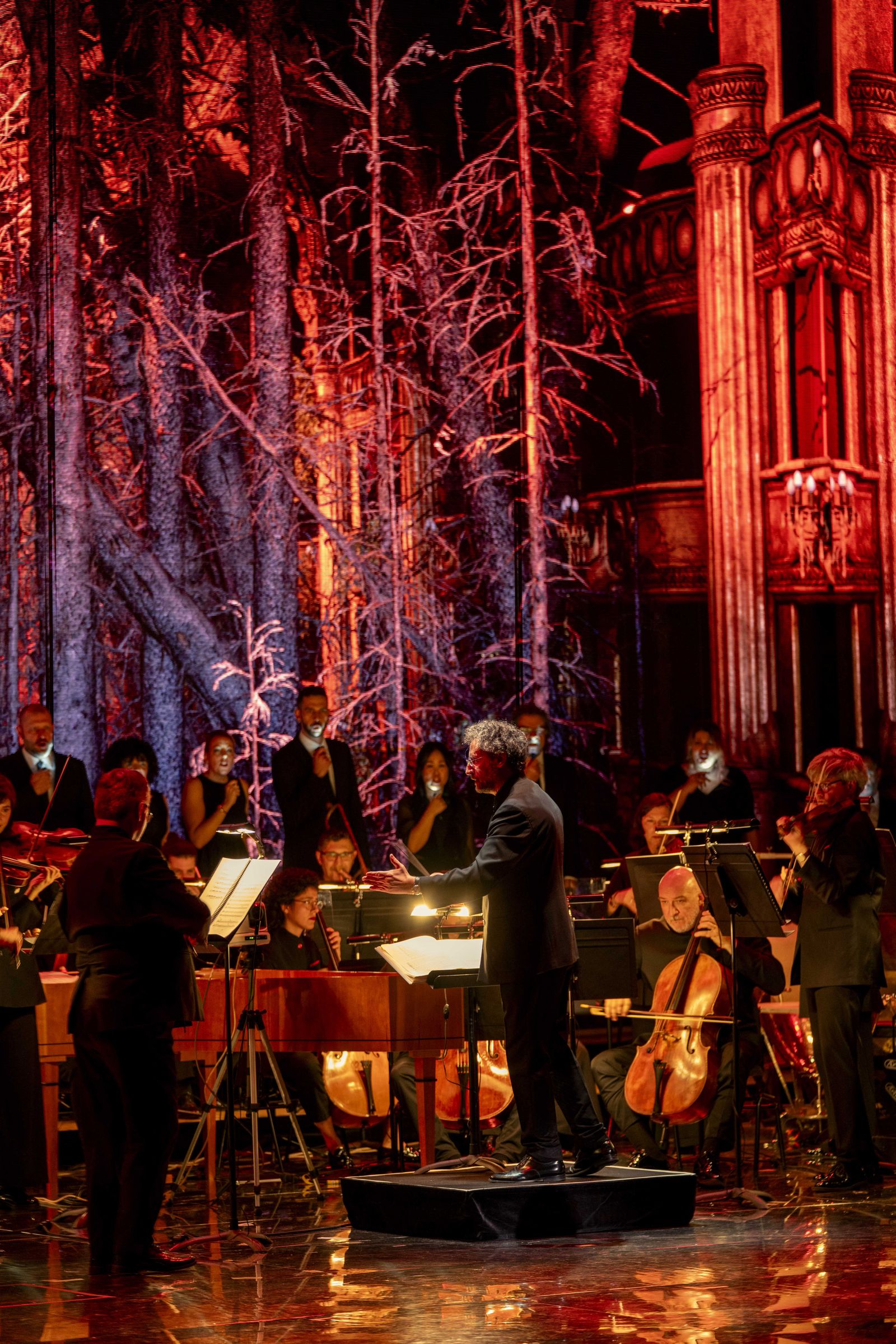
Upon entering the hall, one was immediately confronted with a large projection screen displaying ominous black clouds in motion, obscuring the light that lay above them. Designed by the studio D-Wok, video projections continued throughout the opera, establishing the atmosphere. In addition to the clouds, the visuals included—among other elements—waves, a forest set within a period-style opera house, various shadows, and a butterfly flying through the sky, symbolising the soul of Euridice. As the opera unfolded, the lighting played a major role in shaping the emotional weight of the staging, particularly during the more solemn scenes, where it was dimmed low to deepen the sense of sorrow and intimacy.
Bartoli sang and portrayed her role with the stature of a great tragedian, embodying every nuance of Orfeo’s torment and his longing to reunite with his beloved Euridice. Renowned throughout her career as an extraordinary singing actress, she was afforded ample expressive scope over the course of the evening to display her singular artistry, frequently inflecting her phrasing with heightened timbral colour and expressive breath. Expanding the spatial boundaries of the performance, she sang not only from the stage but also from some of the auditorium’s boxes, drawing remarkably close to the audience; indeed, the present writer had the distinct pleasure of experiencing her artistry at close quarters when she sang from the very box in which he was seated. Her distinctive, characterful voice was in top form, deployed with consummate skill to serve the dramatic tension of the score.
Although Bartoli naturally commanded the evening as its undisputed prima donna, Mélissa Petit, in her dual roles as Amore and Euridice (dressed as a bride for the latter), proved an engaging and radiant presence alongside her, offering a performance distinguished both vocally and dramatically by an exceptionally silvery, mellifluous timbre and an assured sense of style. The musical chemistry between them—especially in the Scene V dramatic recitative, ‘Vieni, segui i miei passi’, and the great duet that follows, ‘Vieni, appaga il tuo consorte!’—was compelling and moving. The orchestral introduction opening this scene (which served as the curtain-raiser to Act III, Scene 1 in the 1762 Vienna original) received an electrifying, whip-fast reading from Capuano’s orchestra, underscoring all the drama and tension of the moment.
Both the chorus, Il Canto di Orfeo (prepared by Jacopo Facchini), and the period-instrument ensemble Les Musiciens du Prince – Monaco, under the impassioned direction of Capuano, were exemplary, performing at an equally elevated artistic level. Capuano elicited playing and singing that matched Bartoli’s potent theatrical instincts and commanding stage authority with comparably incisive phrasing. Dynamic contrasts and fluctuations of tempo—such as the rapid tempi in the Dance of the Furies, which grew progressively faster, more menacing, and sharper—were delineated with remarkable expressive force. Even though the Dance of the Furies (adapted from Gluck’s 1761 ballet Don Juan) was incorporated into the opera later than the 1769 Parma version—having been added for the 1774 Paris revision—it was a joy to hear it performed with such breathtaking intensity. The same applied to the Dance of the Blessed Spirits with its famous flute solo, likewise expanded for the 1774 Parisian score, which was heard in a beautifully shaped reading featuring the refined contribution of the orchestra’s distinguished principal flautist, Jean-Marc Goujon, whom this reviewer has admired previously across repertoire from diverse periods of music history. During the Chorus of the Furies, the singers positioned themselves within the orchestra, giving their utmost to project the terror of this harrowing scene.
As Bartoli has yet to release a commercial audio recording of Gluck’s much-loved opera, one can only hope that—alongside her upcoming film adaptation for the Opéra de Monte-Carlo and Unitel, directed and written by Livermore and Paolo Gep Cucco, and co-starring Petit—her rendering will eventually find its way onto disc.
Ultimately, this year’s Barocktage has reaffirmed the Staatsoper Unter den Linden’s pre-eminent standing in the European early-music world, demonstrating an uncompromising commitment to both scholarly curiosity and musical verve.
