

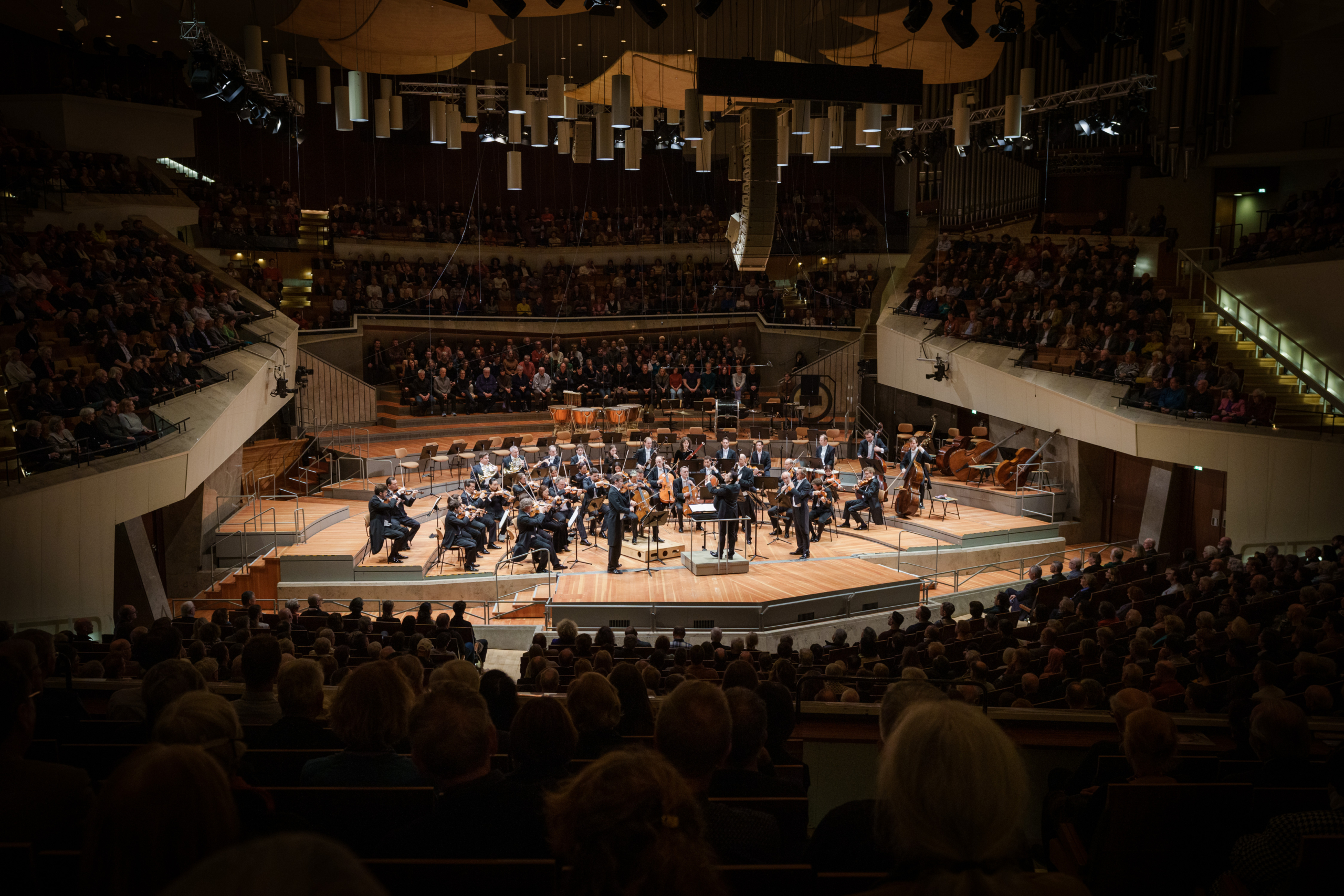
It is scarcely possible to grasp the complete spectrum of the singular qualities of the Berliner Philharmoniker—an ensemble of the highest artistic cultivation—solely through the extensive, acclaimed discography accumulated over its history; one must experience its authentic sound and interpretative immediacy inside its landmark concert hall. Serving as the orchestra’s primary acoustic vessel since the opening of Hans Scharoun’s auditorium in 1963, the Philharmonie has fundamentally shaped the ensemble’s tonal identity. For the citizens of Berlin, hearing these musicians regularly is a distinct privilege; for those who do not reside in the German capital, it remains a rare occasion.
It has been announced that the hall will undergo an extensive renovation beginning in 2032, a project expected to require its closure for approximately eight years. This projected timeline has prompted public debate, particularly regarding why refurbishing the structure should take more than twice as long as its original construction between 1960 and 1963. In any event, the orchestra will be obliged to relocate to an interim venue—with the hangars of the former Tempelhof Airport currently the leading candidate—and an official announcement is awaited in due course.
On 7 November, I attended a performance by the Berliner Philharmoniker under Andrés Orozco-Estrada, who stepped in for Iván Fischer. The evening opened with a spirited account of Joseph Haydn’s Sinfonia concertante in B-flat major, Hob. I:105, composed in 1792 during the composer’s first London sojourn at the invitation of Johann Peter Salomon. Here, the solo parts were taken by four of the orchestra’s own principal players: Noah Bendix-Balgley (violin), Bruno Delepelaire (cello), Jonathan Kelly (oboe), and Stefan Schweigert (bassoon). Their execution possessed distinct chamber-music qualities, marked by polish, elegance, and lucid articulation, while the orchestra accompanied its colleagues with evident collegiality. The opening Allegro was played with poise and vitality, as the soloists negotiated Haydn’s bold harmonic modulations and deft contrapuntal exchanges with clarity. They effectively captured how his characteristic optimism occasionally yields to a darker, more dramatic undercurrent through sudden shifts into minor keys—a poignant touch reflecting Wolfgang Amadeus Mozart’s influence following his death in December 1791. The central Andante unfolded with sustained lyricism, while the concluding Allegro con spirito was delivered with effortless wit, bringing Haydn’s harmonic, melodic, and developmental inventiveness clearly to the fore.
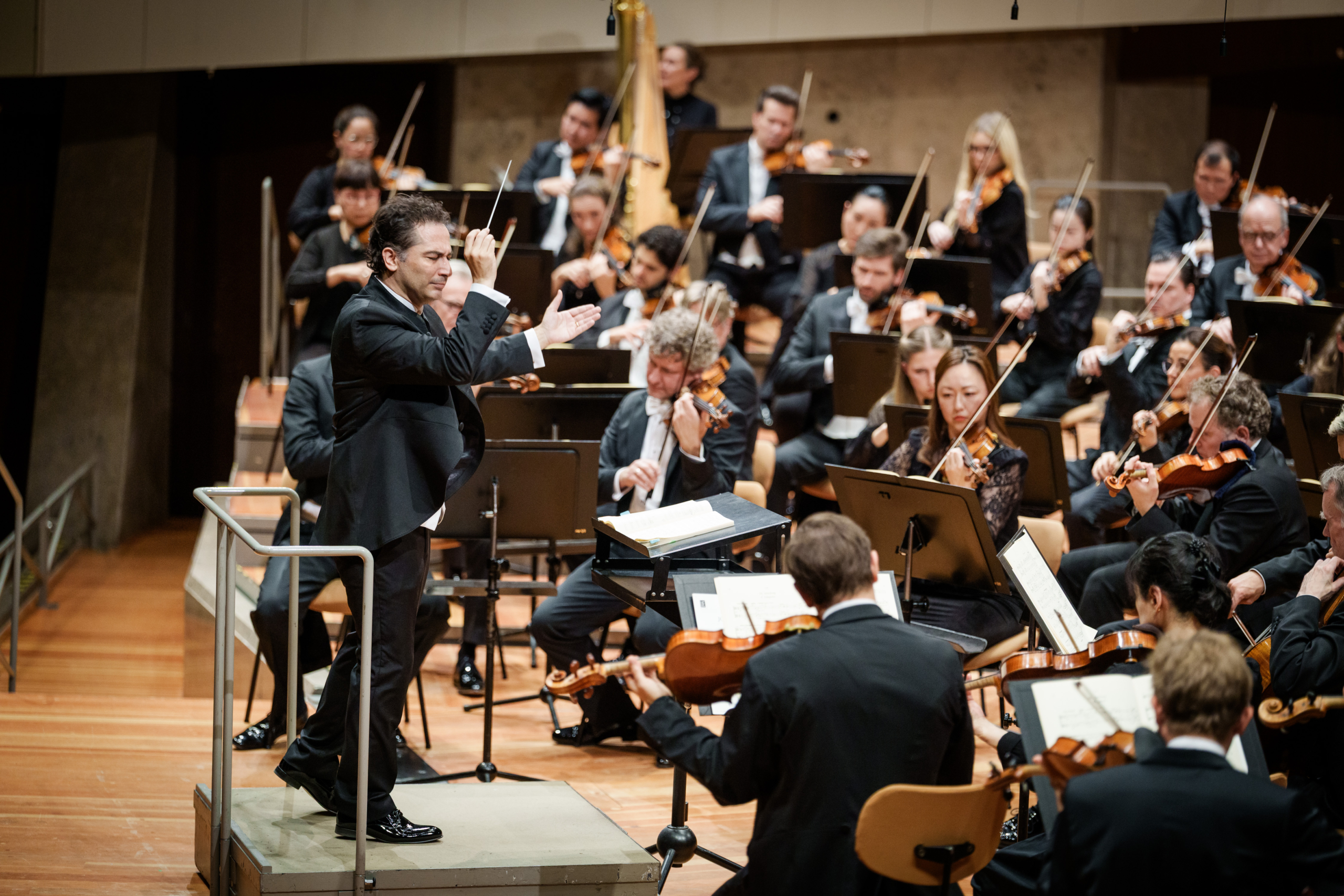
Gustav Mahler’s Symphony No. 5, composed between 1901 and 1902 and first performed on 18 October 1904 in Cologne with the Gürzenich Orchestra under the composer’s own direction, occupied the second half of the programme. It was in this work that Fischer had wished to position the double basses centrally behind the woodwinds, believing this arrangement to reflect Mahler’s intentions—a layout he has regularly adopted with other ensembles and had previously implemented with the Berliner Philharmoniker during his 2022 performances of the First Symphony. On this occasion, however, the orchestra declined, and the collaboration was consequently cancelled. In an official statement, the Berliner Philharmoniker announced that the withdrawal had been mutually agreed upon after both parties failed to reach a consensus on the seating arrangement: although the central placement of the double basses had been trialled in 2022, the orchestra concluded that in the Philharmonie, the absence of rear walls to project the bass resonance into the auditorium, combined with compromised sightlines among the musicians, created acoustic and practical difficulties they were unwilling to repeat.
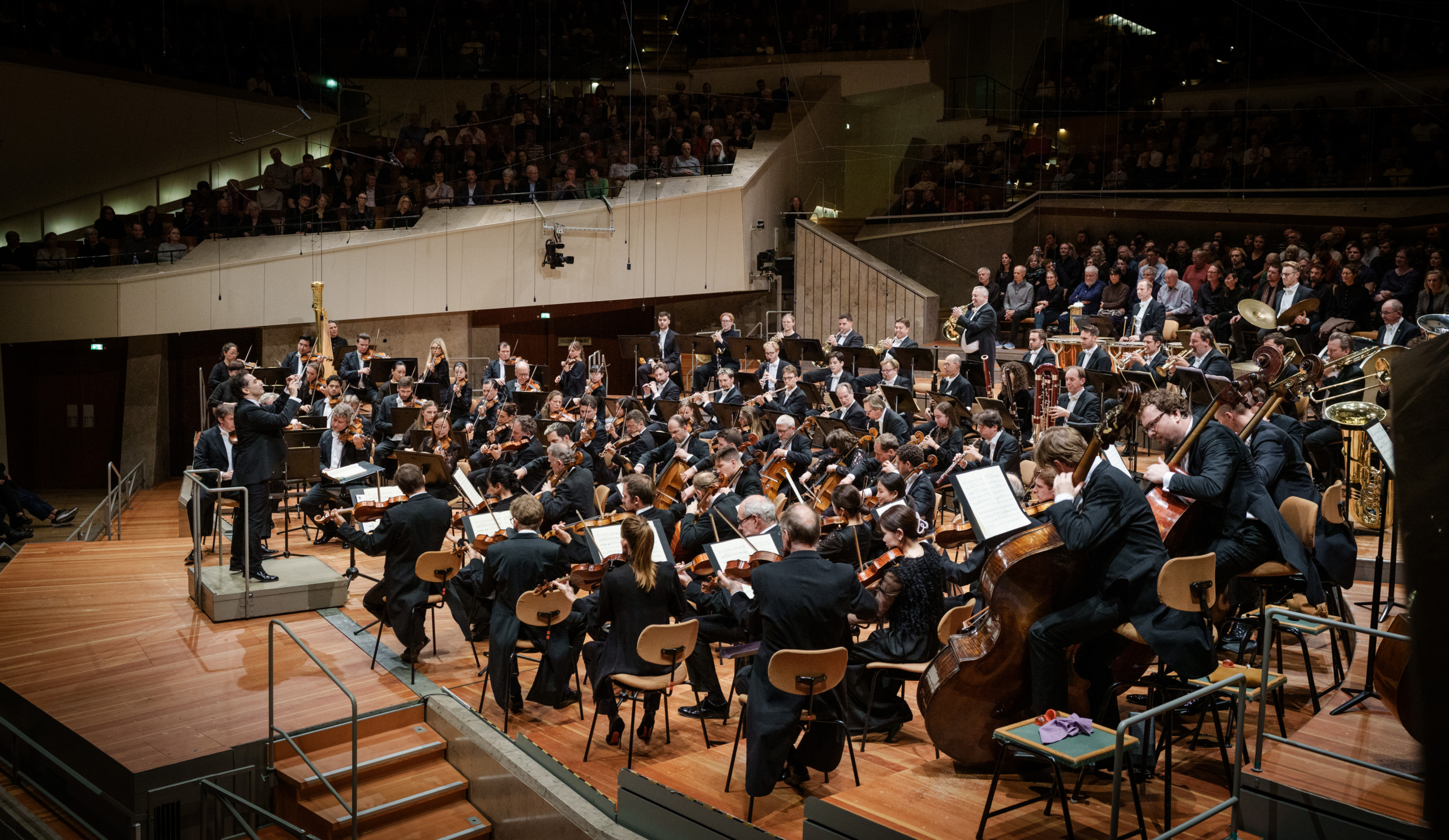
Mahler’s Fifth is a cornerstone of the repertoire that the orchestra has performed frequently under numerous conductors throughout its history. I clearly remember hearing the ensemble play this work at the Megaron (the Athens Concert Hall) on 25 May 1993, during its inaugural visit to Greece under Claudio Abbado, who was then still relatively early in his tenure as chief conductor—an extraordinarily compelling reading. On this recent evening as well, the orchestra demonstrated its idiomatic authority and thorough command of the score, adhering closely to the composer’s detailed markings in a powerful account under Orozco-Estrada. The first movement, Trauermarsch—inaugurated with sovereign poise by principal trumpet Guillaume Jehl—and the second, Stürmisch bewegt, mit größter Vehemenz, were gripping and laden with tragic weight. The Scherzo maintained rhythmic momentum across its span, while the Adagietto—perhaps Mahler’s most celebrated movement, written as a declaration of love for his future wife, Alma—was rendered with restraint and poignancy, the harp and strings blending seamlessly. The fifth and final movement, Rondo-Finale, was executed with exuberant energy and orchestral virtuosity of the highest order, as Mahler’s intricate contrapuntal writing achieved both clarity and drive. Over the course of the night, the burnished strings and accomplished woodwinds—and above all the brass—projected with notable richness, with principal horn Stefan Dohr performing his demanding solo passages standing during the finale. It was an interpretation that did full justice to Mahler’s structural imagination and psychological complexity.
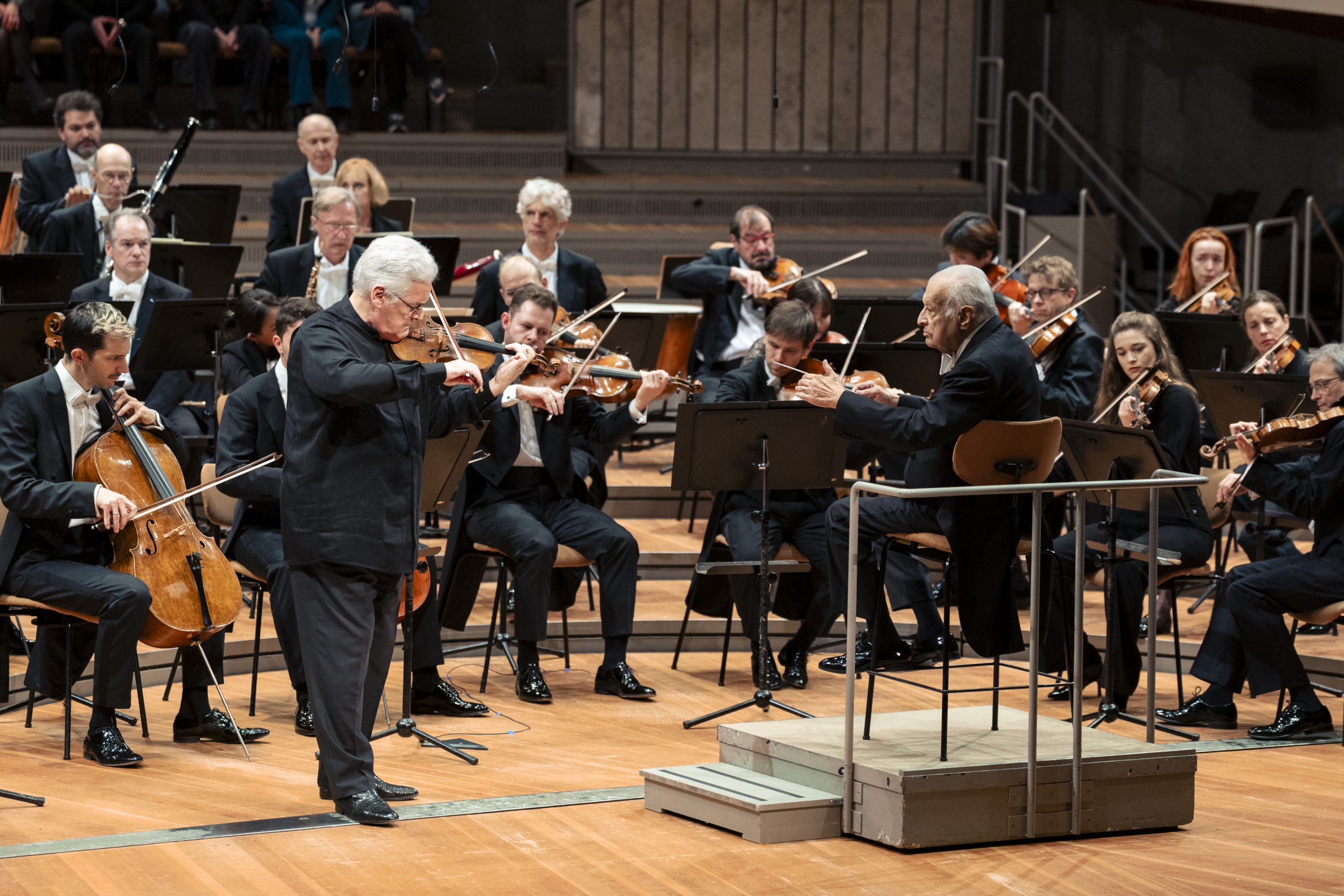
On 12 November, I returned to the Philharmonie for another special performance of the Berliner Philharmoniker, led by a renowned maestro of the older generation, Zubin Mehta.
The orchestra, whose double basses were positioned on the left of the stage, responded to the visibly frail Mehta—who arrived at and departed from the rostrum in a wheelchair—with notable energy, commitment, and warmth. Their longstanding rapport yielded an urgent, vital reading of the Overture to Mozart’s Le nozze di Figaro, followed by Max Bruch’s Violin Concerto No. 1 in G minor, Op. 26. Completed in its definitive form in 1868 with the counsel of Joseph Joachim—who championed the revised work at its Bremen premiere—the concerto remains a mainstay of the Romantic repertoire, prized for its rhapsodic opening Vorspiel, deeply lyrical Adagio, and fiery, Hungarian-inflected Finale. In the solo part, Pinchas Zukerman offered a richly expressive, songful account. The violinist’s tone remains voluminous, plush, and warm-hued, evoking an earlier tradition of string playing. Without apparent effort, he spun broad, expansive phrases underpinned by a generous vibrato. Turning frequently towards the conductor and collaborating seamlessly with the ensemble, Zukerman appeared to play directly for—and in tribute to—Mehta, honouring an exemplary artistic partnership spanning more than forty years. As an encore, he walked over to stand beside the principal flautist Emmanuel Pahud, to offer the intimate first movement, Andante, from the Duet in E minor for flute and violin, Wq 140, by Carl Philipp Emanuel Bach.
The second half of the programme concluded with a robust, engaging, and cohesive performance of Antonín Dvořák’s Symphony No. 7 in D minor, Op. 70. Commissioned by London’s Philharmonic Society, the work was composed between December 1884 and March 1885 and received its acclaimed premiere at St James’s Hall on 22 April 1885, with Dvořák himself conducting. Having collaborated with Mehta over many decades, the orchestra possesses an intuitive grasp of his musical intentions; this mutual understanding was evident throughout the performance, as a minimal gesture or a mere glance from the podium sufficed to convey his direction. The lyrical warmth of Dvořák’s writing in the second movement (Poco adagio), alongside its dramatic impetus in the first (Allegro maestoso) and fourth (Allegro) movements, and its buoyant rhythmic drive in the third (Scherzo: Vivace), were realised with clarity and structural insight. The orchestra’s sonorities—consistently lustrous and transparent—projected across every movement.
Led by concertmaster Daishin Kashimoto—seated immediately beside Bastian Schäfer, one of the ensemble’s longest-serving members, having joined its ranks in early 1987 during the final years of Herbert von Karajan’s tenure—and supported by principal violist Amihai Grosz alongside a distinguished wind and brass section featuring Pahud (flute), Albrecht Mayer (oboe), Dominik Wollenweber (cor anglais), Schweigert (bassoon), and horn players Yun Zeng and Sarah Willis, the musicians gave of their finest. Together, they secured a deeply memorable concert marked by the distinctive intensity that the Berliner Philharmoniker constantly brings to the concert platform.
