
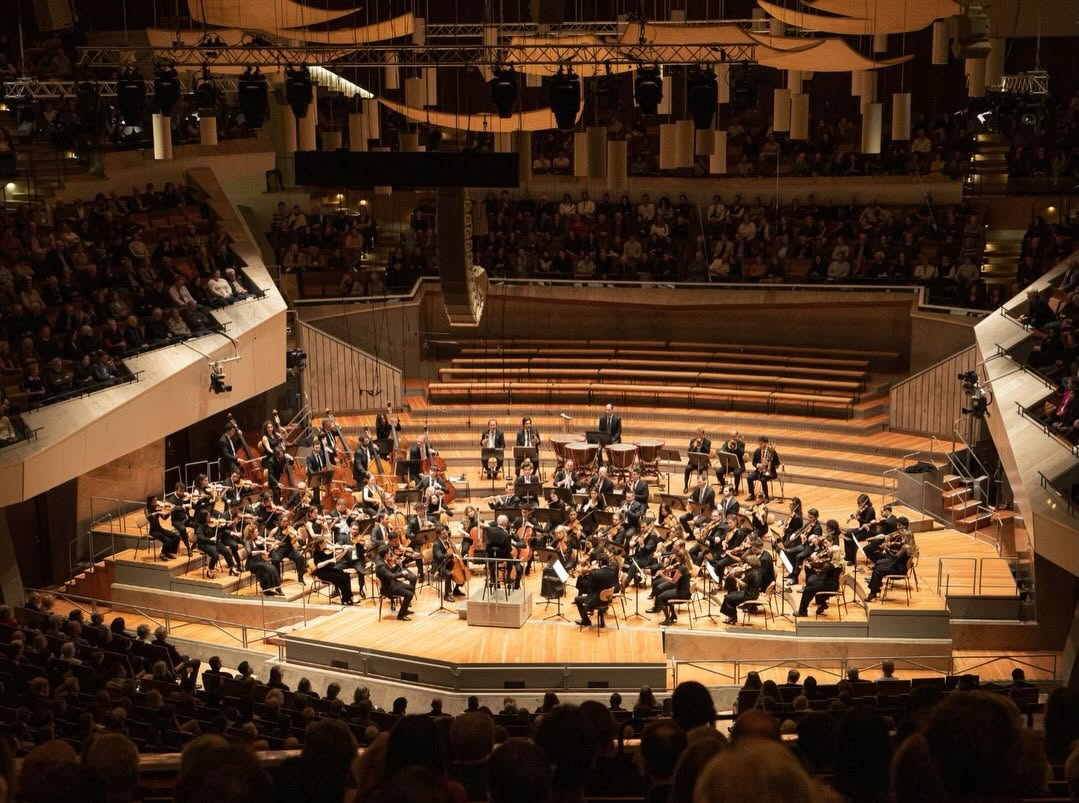
At a time when opportunities for open dialogue across the Middle East feel ever more fragile, the sight of the West-Eastern Divan Orchestra assembling on the stage of the Philharmonie Berlin carried unmistakable weight.
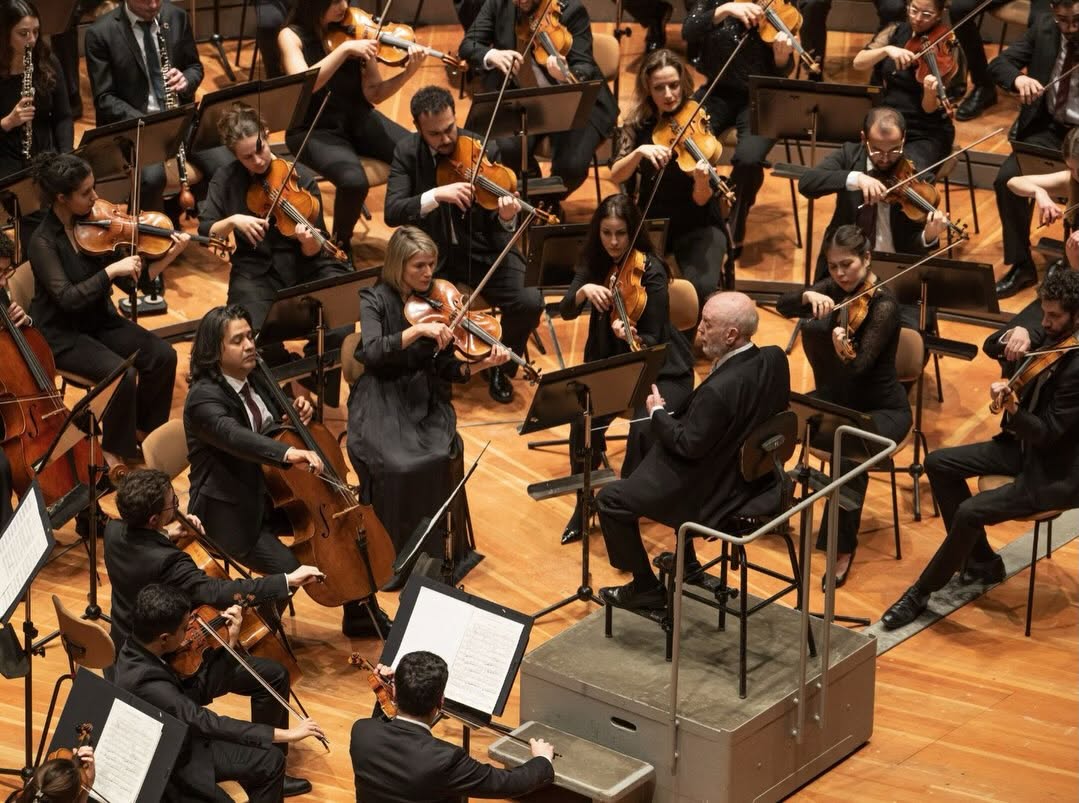
On 11 November, under the direction of its co-founder Daniel Barenboim, the ensemble opened the inaugural West-Eastern Divan Festival—a multi-day residency shared between the Philharmonie and the Pierre Boulez Saal. In one of his increasingly rare podium appearances, Barenboim guided the musicians through a programme that proved both intellectually engaging and deeply affecting.
Founded in 1999 by Barenboim and the Palestinian-American literary theorist Edward Said, the ensemble unites young musicians from Israel, Palestine, and the wider Arab world (alongside Spain) to encourage intercultural exchange through collective musical practice. Taking its name from Johann Wolfgang von Goethe’s 1819 poetic anthology West–östlicher Divan, the initiative evolved from a summer workshop in Weimar into an internationally acclaimed orchestra headquartered in Seville. This humanist project gained a permanent home in 2016 with the inauguration of Berlin’s Barenboim–Said Akademie—incorporating the Frank Gehry-designed Pierre Boulez Saal, which opened the following year—where conservatoire training is paired with a humanities curriculum designed to foster mutual recognition through serious artistic study.
Featuring works by three composers especially close to Barenboim’s heart, the programme began with a lucid, steadily paced account of Ludwig van Beethoven‘s Leonore Overture No. 3, Op. 72b. Beethoven‘s noble writing and lyrical breadth were handled with supple warmth, particularly in the score’s tender, reflective passages. In the driving Presto coda, the violins articulated the rapid scalar figures with crispness and collective agility, giving real dramatic urgency to a cultivated reading marked by formal clarity.
Next came a spaciously conceived reading of the Prelude and Liebestod from Richard Wagner’s Tristan und Isolde, WWV 90. Barenboim’s deep affinity with the latter score—born of more than four decades of conducting Wagner’s operas—was evident throughout. Having made his Bayreuth Festival debut with Tristan und Isolde in 1981 and returned to the work there in 1993, he went on to lead landmark performances of the opera at the Staatsoper Unter den Linden during his long tenure as General Music Director, at Teatro alla Scala in Milan to open the 2007–08 season, and for his belated Metropolitan Opera debut in New York in 2008. Although his physical gestures are now pared back to an austere minimum, he succeeded in communicating his overarching architectural vision, alongside the long-breathed phrasing of the music, to his young players. Composed largely of emerging artists, the ensemble responded with remarkable dedication, expressive warmth, and technical assurance, supported by Michael Barenboim’s steady leadership as concertmaster.
In the second half, the orchestra offered a dignified interpretation of Franz Schubert’s Symphony No. 9 in C major, D 944, The Great (catalogued as No. 8 in German editorial practice following the Neue Schubert-Ausgabe). Adopted at unhurried tempi, the reading lent each phrase gravity, poise, and structural coherence, as the players realised their conductor’s conception faithfully, bringing out the orchestral textures and expansive melodies with idiomatic sensitivity. Indeed, Barenboim’s inward understanding of Schubert’s musical language stems not merely from the symphonic canon, but equally from the composer’s solo piano repertoire and the Lieder he has accompanied alongside numerous distinguished singers over the course of his career.
Familiar though the regret may be, the thought of the symphonies Schubert did not live to write still carries a quiet ache—even beside the astonishing wealth of music he completed before his thirty-second year. Yet his surviving music remains supreme in its breadth of vision, structural design, and radiant melodic beauty, and above all in its depth of feeling. Those very qualities came vividly to life on the Philharmonie stage, where Barenboim and his ensemble delivered a deeply moving performance.
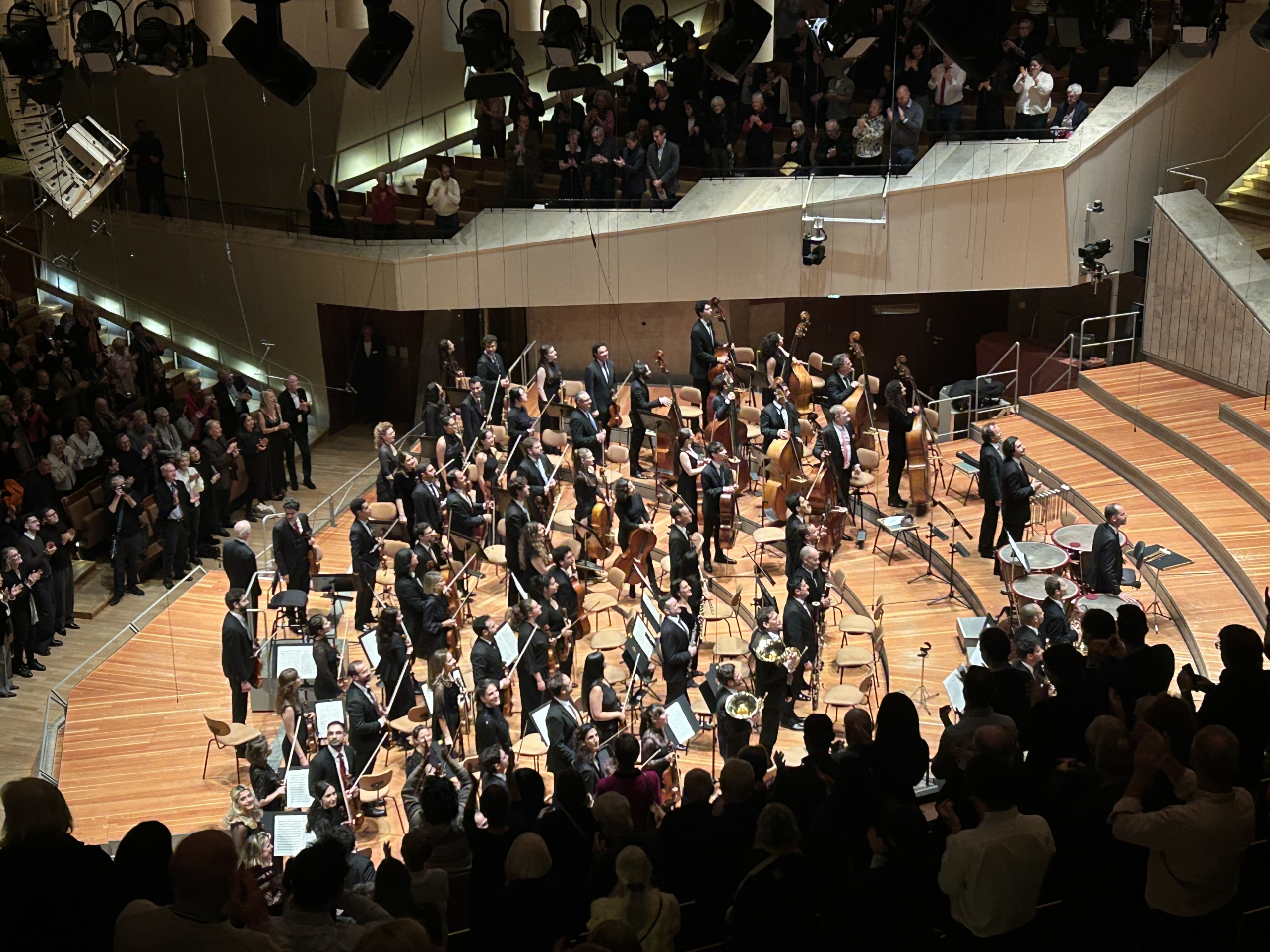
At the close of the evening, in a touching moment of filial attentiveness, Michael Barenboim gently reminded his father to have the musicians turn and acknowledge the listeners seated behind the stage—a feature of the Philharmonie’s in-the-round seating, which places the audience on all sides of the platform.