

Whilst the United States possesses a vast assemblage of exceptional orchestras, critical consensus still measures symphonic excellence against the historic “Big Five”. This select group establishes the foundational framework of American orchestral playing, spanning the New York Philharmonic (founded in 1842), the Boston Symphony Orchestra (1881), the Chicago Symphony Orchestra (1891), the Philadelphia Orchestra (1900), and The Cleveland Orchestra (1918).
Founded within the expanding cultural milieu of the American Midwest in 1918, The Cleveland Orchestra developed from a regional civic initiative into an internationally recognised standard for symphonic performance. Its early institutional identity emerged during the music directorship of Nikolai Sokoloff (1918–1933), while the rigorous administrative and artistic demands of Artur Rodziński (1933–1943) and the wartime tenure of Erich Leinsdorf (1943–1946) accelerated its structural growth. The ensemble consolidated its status within the international orchestral hierarchy during the twenty-four-year tenure of George Szell (1946–1970). Through an unyielding commitment to absolute discipline, Szell cultivated the celebrated ‘Cleveland sound’—a sonic ideal defined by exemplary fidelity to the score, absolute rhythmic and tonal homogeneity, as well as an organic flexibility reminiscent of chamber music, characteristics which were crystallised by the acoustic renovation of Severance Hall in 1958 (the Szell Shell). This highly demanding aesthetic framework was further sculpted thanks to the contribution of associate conductor Rudolph Ringwall and chorus director Robert Shaw, who contributed decisively to the consolidation of the superlative vocal and technical standards of its newly established choral ensemble at the time.
This tradition of analytical exactitude was complemented during the influential Boulez era (1970–1972), when Pierre Boulez served as principal guest conductor and musical advisor, infusing the orchestra with twentieth-century clarity and a modernist focus. Although his formal duties were limited to this brief period, Boulez’s broader artistic presence in Cleveland expanded through a series of appearances spanning nearly half a century, from 1965 until his final farewell to the podium of the Cleveland Orchestra in 2010. This multi-decade partnership culminated in a critically acclaimed discography for Deutsche Grammophon, yielding definitive interpretations of seminal works by Hector Berlioz, Gustav Mahler, Claude Debussy, Maurice Ravel, Igor Strawinsky and Olivier Messiaen that continue to exemplify the highest standards of orchestral precision.
Over subsequent decades, this standard of artistic mastery was sustained and expanded into broader stylistic territories by music directors Lorin Maazel (1972–1982) and Christoph von Dohnányi (1984–2002). Today, this institutional lineage culminates in the quarter-century era of Franz Welser-Möst. As his twenty-five-year tenure draws to a close with the 2026–27 farewell season, Welser-Möst concludes his term as the longest-serving music director in the orchestra’s history.
Although The Cleveland Orchestra is the youngest of the Big Five, the refinement of its sound and this well-established tradition of ensemble flexibility and meticulous precision have led many critics to note that it rivals the standards of the most prestigious European orchestras.
Recently, the ensemble marked its debut performances in Greece, appearing first in Thessaloniki and ultimately in Athens. This historic visit concluded a major European tour that had been placed in severe jeopardy by a sudden musicians’ strike. Driven by disputes over wage recovery, workplace safety, and hiring input, the abrupt walkout had forced the immediate cancellation of home performances in Cleveland. A swift weekend resolution not only secured a fair three-year contract—granting musicians annual 5% wage increases and a voice in the audition process—but it also rescued the international tour. The compromise allowed the ensemble to depart just days later, embarking on a rigorous nine-country itinerary through Hamburg, Dortmund, Luxembourg City, Paris, Brussels, Bratislava, Linz, Budapest, Vienna, Ljubljana, Thessaloniki, and Athens, ultimately preserving an important chapter of international cultural diplomacy.
In Thessaloniki, the orchestra appeared at the Thessaloniki Concert Hall on 20 October, presenting a programme that featured the Introduction and Finale from Richard Strauss‘s opera Daphne, Op. 82, and Dmitri Shostakovich‘s Symphony No. 8 in C minor, Op. 65. The very next evening, 21 October, they performed a completely different programme in Athens. The concert in Thessaloniki—as well as the first half of the Athens performance—was conducted by Welser-Möst.
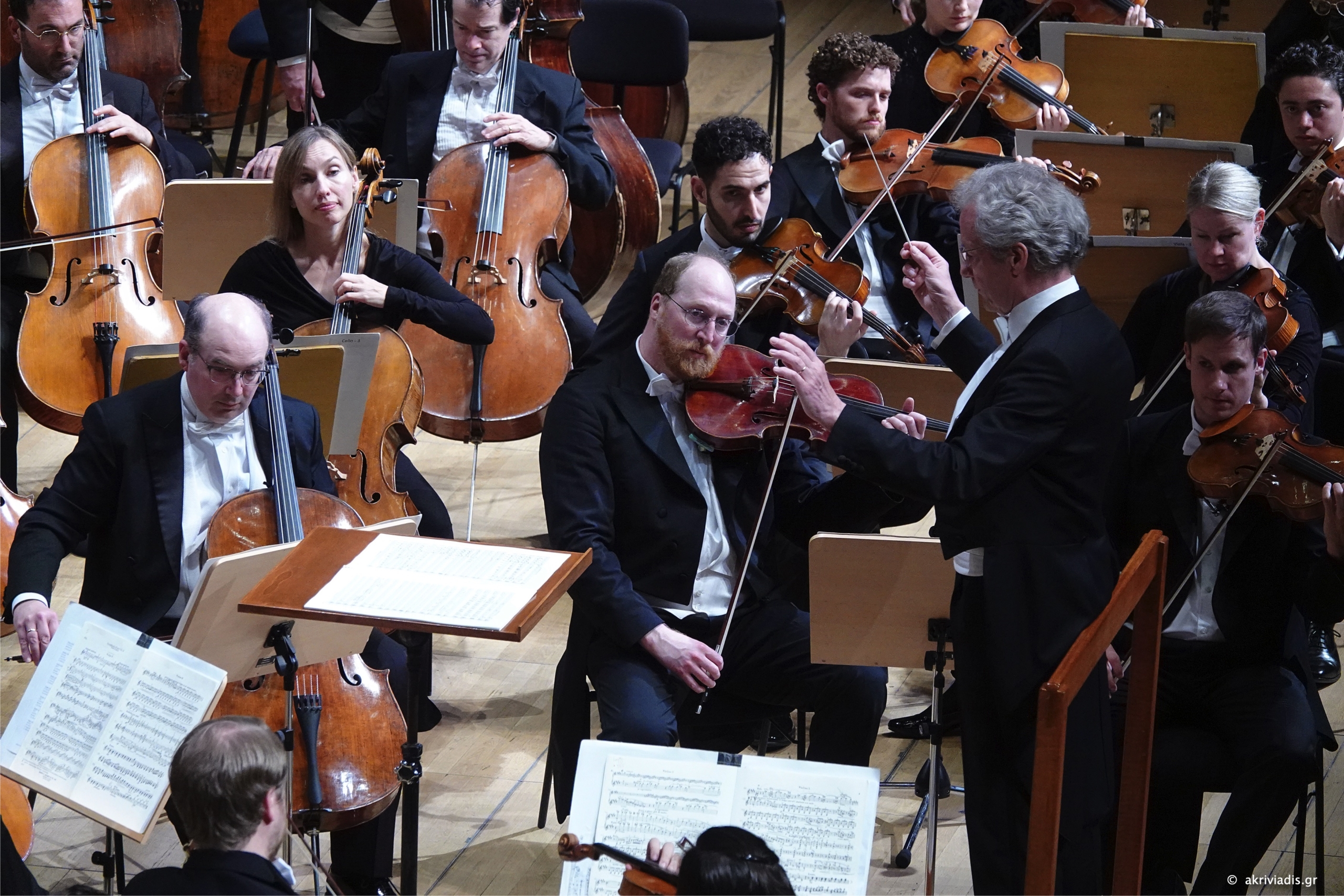
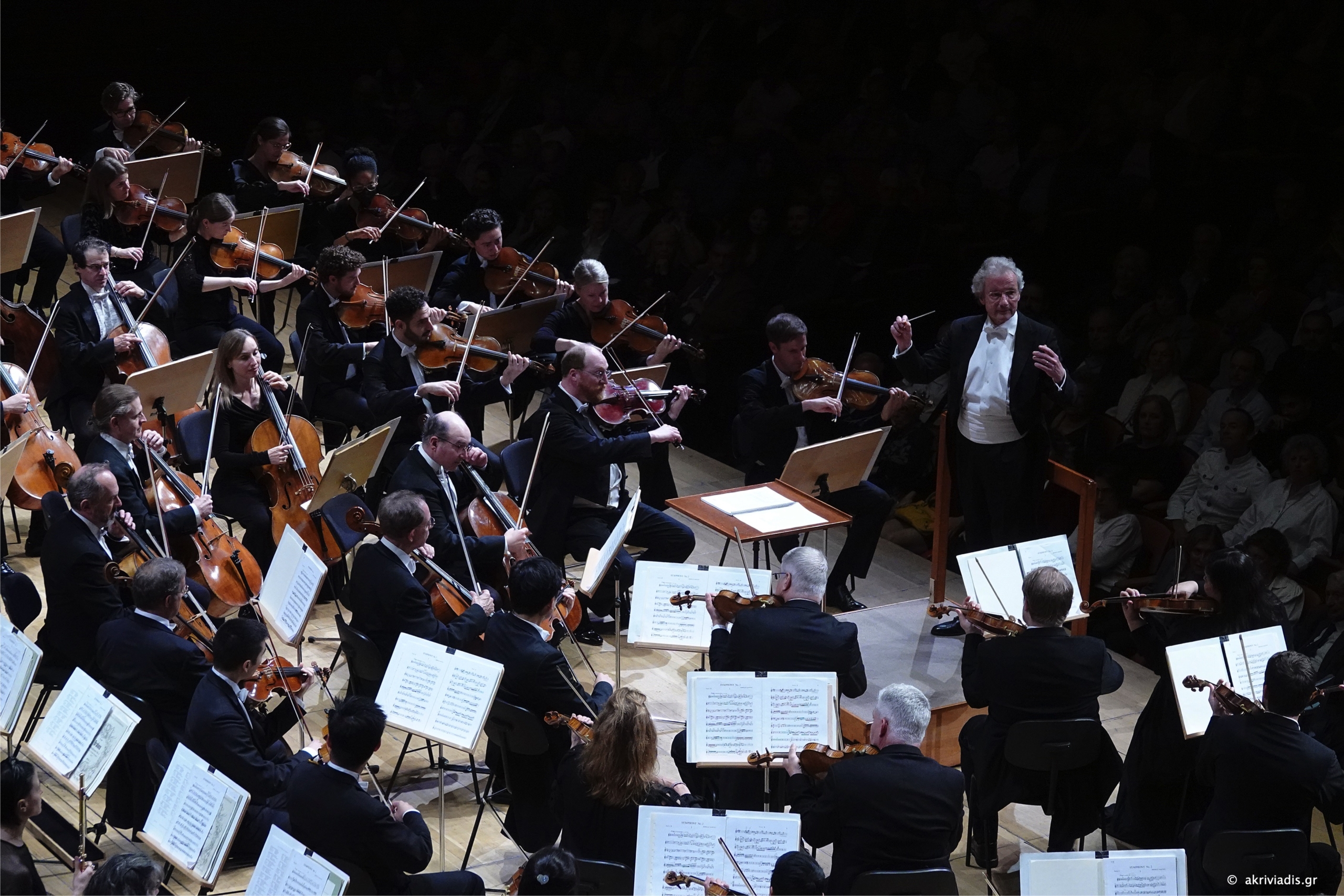
Regarding the Athenian concert, which this reviewer had the pleasure of attending, the evening opened with Franz Liszt‘s Symphonic Poem, Orpheus, S. 98. This is the fourth and shortest of the composer’s symphonic poems, lasting approximately eleven minutes, and was completed in 1854 to serve as an overture to Christoph Willibald Gluck‘s opera Orpheus and Eurydice (Orfeo ed Euridice, 1762).
Welser-Möst and his orchestra sensitively illuminated the nobility of Liszt‘s writing, with the ensemble’s distinct tonal palette and expressive qualities apparent from the outset. The splendid legato and clarity of texture were immediately striking. Furthermore, the meticulous contributions of the two harpists—especially during the fourteen bars where they execute the enchanting arpeggios representing Orpheus’s lyre—alongside exquisite solo interventions from the horn, concertmaster, cello, and woodwinds (cor anglais, oboe, and clarinet in A) proved invaluable to the high calibre of the interpretation.
Next, the orchestra performed Bohuslav Martinů‘s Symphony No. 2 in D major, H 295, composed in 1943 during the Czech composer’s exile in Darien, Connecticut, and commissioned by the Czech immigrant community in Cleveland. Welser-Möst successfully highlighted the inherent beauty of the score, particularly in the opening Allegro moderato, projecting its broad melodies and rich textures. The dynamic shading, the masterful exploration of harmonic balance, the nostalgic introspection of the Andante moderato, and the rhythmic brio of the final two movements (Poco allegro and Allegro) all assumed their ideal interpretative dimensions. The maestro demonstrated once again his proven ability to sculpt orchestral sound and explore deep dynamic nuances with rare, exceptional results.
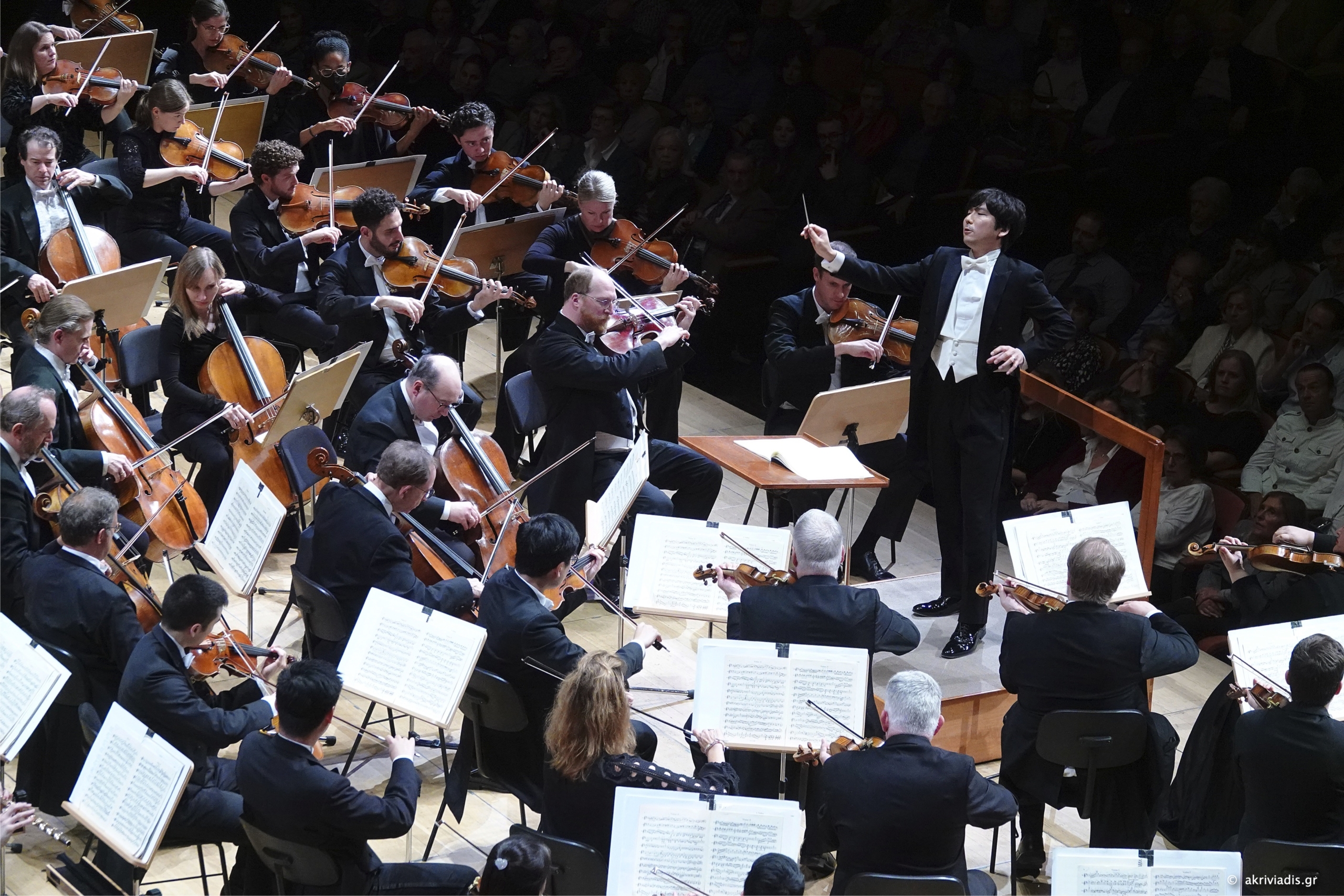
Before the second half of the evening commenced, the artistic director of the Athens Concert Hall (Megaron), Janis Vakarelis, announced that due to the sudden illness of the maestro, the remainder of the concert would be conducted by his assistant, Taichi Fukumura. Although the audience expressed surprise, they subsequently gave a warm welcome to the Tokyo-born, Boston-raised substitute.
The second part of the concert was dedicated to Johannes Brahms‘s Symphony No. 2 in D major, Op. 73, written during the summer months of 1877 while the composer holidayed by the Austrian lake Wörthersee in the resort of Pörtschach. Much like the Martinů work heard earlier, this symphony is permeated by an ardent and optimistic lyrical disposition, making their pairing inspired rather than accidental.
Having collaborated repeatedly with Fukumura, The Cleveland Orchestra offered him its absolute best. The orchestra’s full-bodied sound—velvety and sweet where required (such as in the Adagio non troppo) and structurally profound—brought depth to Brahms‘s masterpiece. The performance won over the audience through its absolute concentration and emotional intensity. Notable highlights included the robust handling of the first movement’s Allegro non troppo sonata architecture, the delicate treatment of thematic transformations in the Allegretto grazioso, and the triumphant character of the concluding Allegro con spirito.
Fukumura, who was named the new assistant conductor on April 30, 2025, and assumed his duties with the start of the 2025-2026 concert season, has clearly flourished under the mentorship of Welser-Möst, proving his remarkable talent. Displaying baton precision and great inner tension, he occasionally chose brisk tempi in the fast movements while allowing the long, lyrical phrases to flow generously—most notably at the opening of the Adagio non troppo second movement—leaving an excellent impression.
We feel deeply grateful for this exceptional concert experience and extend our heartfelt wishes for a swift recovery to the distinguished Austrian maestro.
