

By Elena Fiedeldey*
Continuing the critical reference to this year’s edition of Music Biennale Zagreb (MBZ 33), it is time for a musical tour through its rich program of contemporary music concerts.
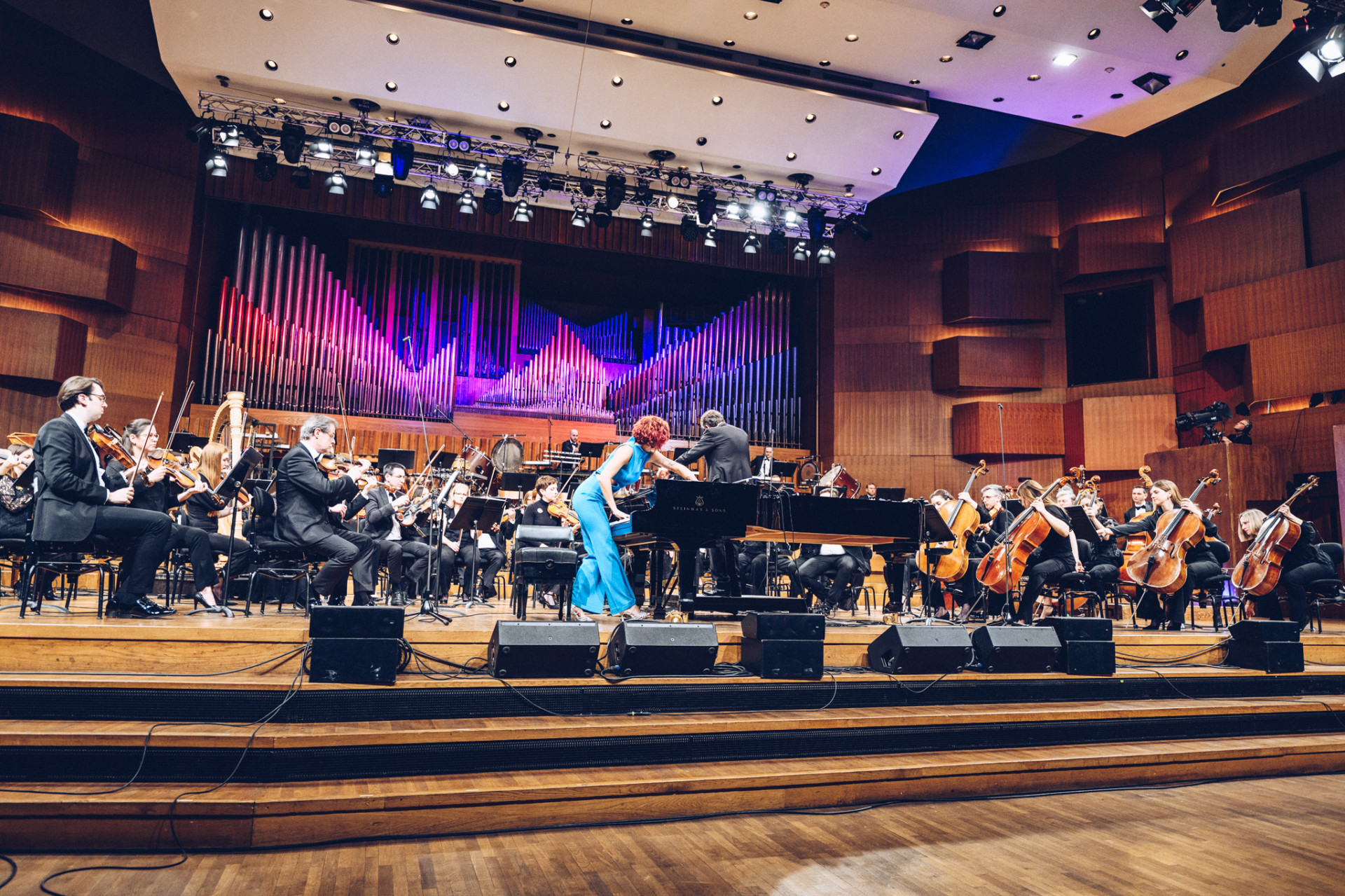
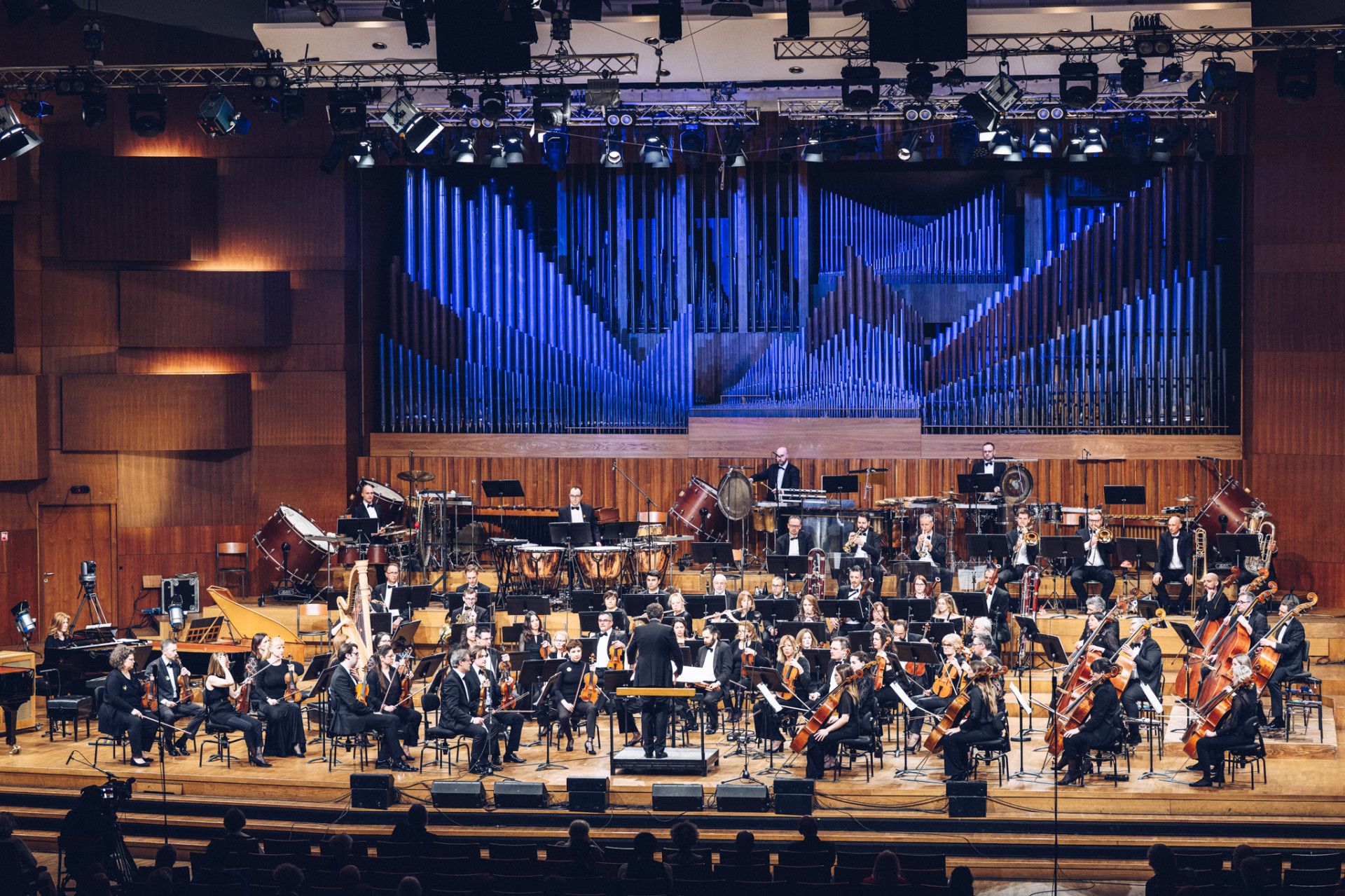
On 10/4 and in the Main Hall of the “Vatroslav Lisinski” Concert Hall, a concert (titled “Collage”) from the Croatian Radiotelevision Symphony Orchestra took place, in collaboration with the Croatian Composers’ Society (Hrvatsko društvo skladatelja), the MBZ and the Croatian Radiotelevision (HRT), and with the support of the Austrian Cultural Forum in Zagreb.
The concert opened with Danijel Legin’s Forgotten Memories, for symphony orchestra (commissioned by the MBZ 33), receiving its world premiere. The composition is based on the idea of attempting to musically capture the change and transmutation of memories left behind by the rupture of relationships. This was followed by George Lewis’s Your Network Is Unstable, for symphony orchestra, which is actually a reminder of the uncertainty and instability that increasingly govern life, modern society and networks. The work had an indefinable “American” sound in many places, consisting of individual components.
The next composition performed was former MBZ artistic director Margareta Ferek-Petrić’s The Orgy of Oxymorons, for piano and orchestra. It is a composition inspired by the orgiastic charm of oxymoron and contrasts, which penetrate any social prejudices and injustices, and find their way to free expression through contemporary art and music. It is worth noting that these were the premiere performances of the specific works by Lewis and Ferek-Petrić in Croatia, commissioned by the MBZ 33 and Radio Österreich 1, in collaboration with the ORF musikprotokoll festival. To the delight of every music-lover in the audience, the concert ended with a reference to an important point of influence on the history of avant-garde music: Luciano Berio’s much-celebrated Sinfonia, for 8 voices and orchestra! Berio, who was born 100 years ago this year, composed this particular work in 1968; a year marked by a series of historically significant socio-political upheavals in different parts of the world: for example the assassination of Martin Luther King (to whom Berio pays tribute through Sinfonia) in the USA, and the student unrest, demonstrations and strikes in Paris. The impact of these events is reflected in his Sinfonia. The third movement accumulates an extraordinarily large number of references to works iconic to the history of western classical music, creating a musical “collage”, with the Scherzo of Gustav Mahler’s Symphony no. 2, as its basis.
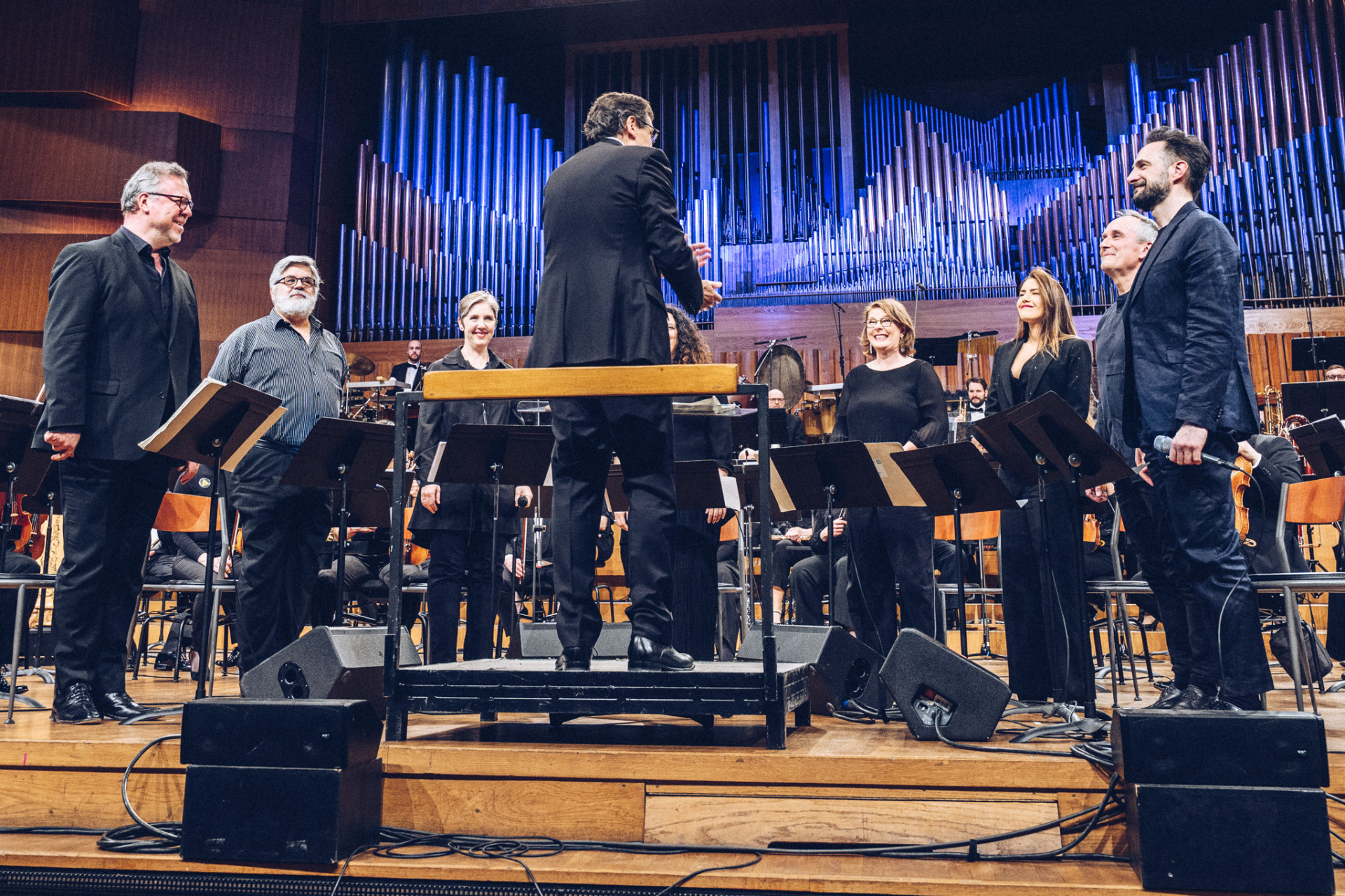
The HRT Symphony Orchestra, under the baton of Pascal Rophé, seemed to consciously avoid a flat or neutral interpretative reading of the works, aiming at an expressive quality in their performance. Maintaining a good level in terms of expressiveness was a commendable effort by the performers, given the challenges posed by some of the works included in the program. For example, Your Network Is Unstable was demanding for both the performer and the listener, as musical events must sound disorienting and simultaneously or in dense sequence with each other. It goes without saying that in such compositions, the orchestra enters into a constant pursuit of preserving the different sound events and colors of the instruments, as well as their articulation, in order for one to not overwhelm the other and in order for the desired –and really impressive in the case of Your Network Is Unstable (!)– ambiguity and uncertainty to be achieved. Exactly the same goes for Sinfonia, the particular nature of which requires additional attention to timing. Especially for Sinfonia, the expressiveness, with which it was performed, was important, as an indifferent performance would certainly not have been able to convey the multi-textured “collage” nature of the third movement, nor the varied meanings of the whole work in general. Thus, the audience’s interest was also maintained. Of course, the distinguished ensemble “Neue Vocalsolisten Stuttgart” also contributed to this, by rendering the score with theatrical qualities, despite the already many challenges that lurk within it. In general, the distinct orchestral colors were successfully highlighted. This of course also applies to the composition Forgotten Memories, and also to the composition The Orgy of Oxymorons with Maria Radutu (to whom the work is dedicated) trying to highlight –both musically and with her stage presence– the various timbral possibilities of the piano’s extended techniques. To sum up, this was a quite enjoyable concert, with an interesting program, and with expressive and honest interpretations.
The next day, on 11/4 and at the multifunctional space “Kontejner”, an experimental music concert from the artistic duo “Scapegoat” (Joshua Hyde, saxophone; and Noam Bierstone, percussion) took place, with the support of the Canada Council for the Arts. The works performed were the following: Justina Repečkaitė, Ciclo Continuo, for soprano saxophone and percussion; Mauricio Pauly, The Threshing Floor, for tenor saxophone, percussion and electronics; Pierluigi Billone, 2 Alberi, for alto saxophone and percussion.
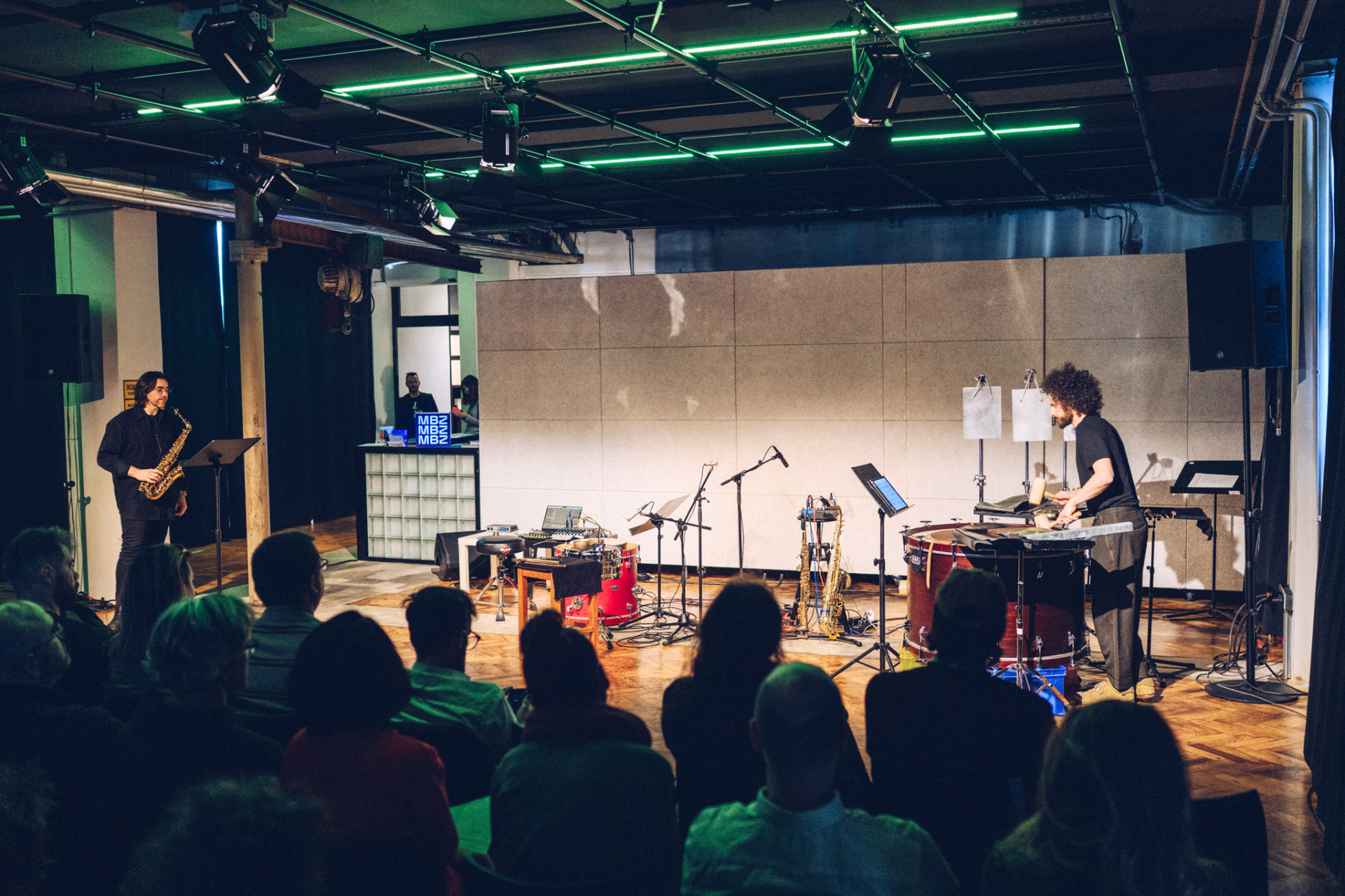
The protagonist of this concert was “sound” and its qualities. As expected, the atmosphere took on a character of meditation, with silence, intense repetition and long duration of sounds prevailing. Various possibilities of sound production were explored, such as the use of the snare drum as a resonant body of other objects. In terms of dynamics there were strong contrasts: really quiet sounds alternated with very loud ones.

Also very interesting was a concert, titled “Arco Straordinario”, from the Zagreb Quartet, which took place on 12/4, at the Journalists’ Institute (Novinarski dom).
The first composition to be performed was Srđan Dedić’s String Quartet No. 2. Dedić incorporated elements of algorithmic music, using computer algorithms, which he has been developing for over thirty years. The next work was composed by Frano Đurović and is titled Two bodies, one soul, for string quartet (world premiere – commissioned by the MBZ 33). With this composition, Đurović aims to cauterize social hypocrisy and selective public condemnation or tolerance, raising his concerns about the existence of freedom on multiple levels and in multiple contexts. This was followed by composer and architect Marko Slaviček’s Khrōmóphōnon V, for string quartet (world premiere – commissioned by the MBZ 33). Slaviček has been studying the music of Iannis Xenakis recently. The concept of “color” in music and the visual arts is the starting point of this work. The concert ended with Dai Fujikura’s String Quartet no. 3, “Aquarius”. The title is related to the age of Aquarius, which began at the time of this work’s completion. The composer’s inspiration is the elasticity of the sound of string ensembles, and the way this sonic substance can be perceived, with reference to the other senses (touch, taste, etc.).
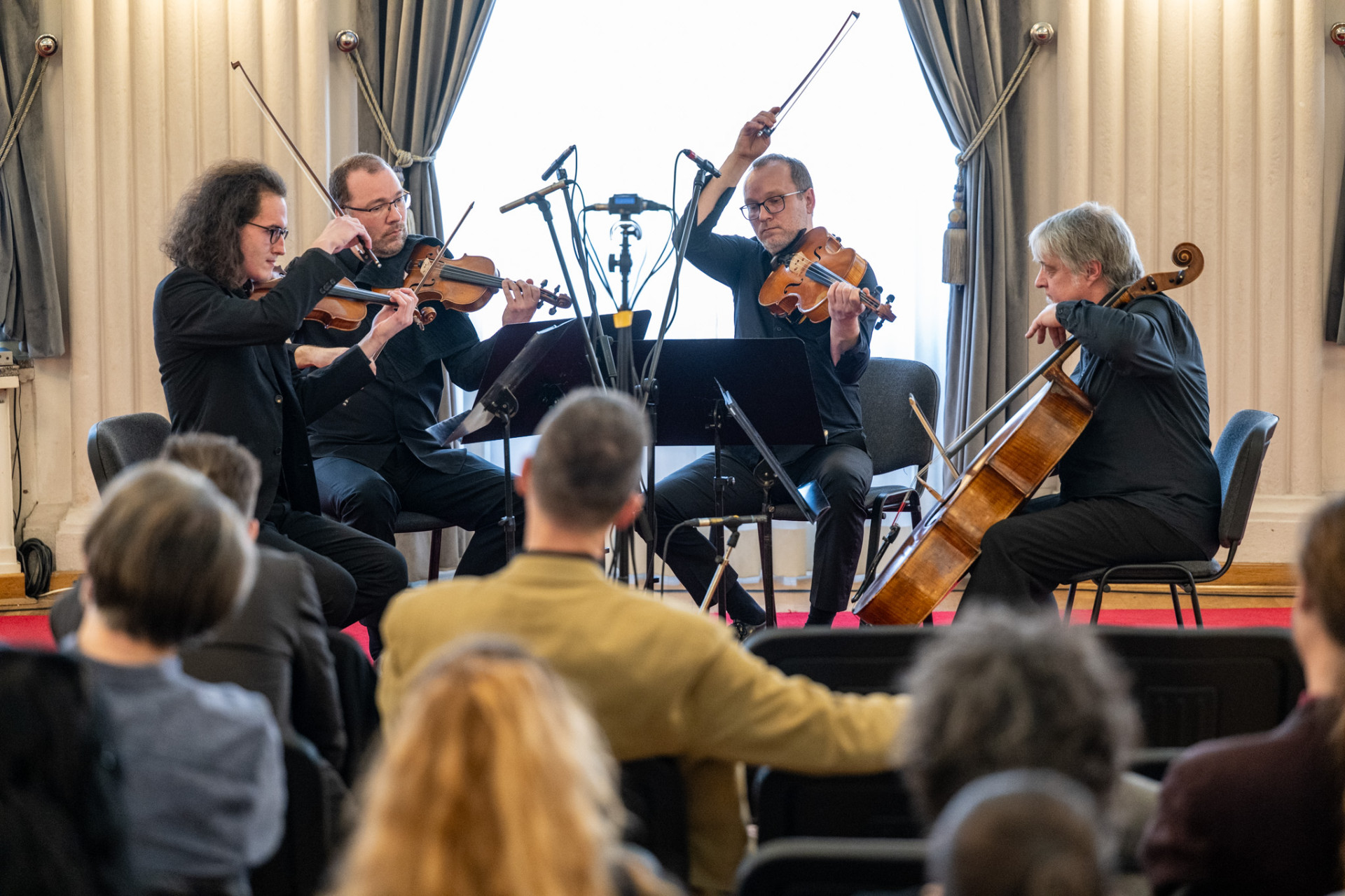
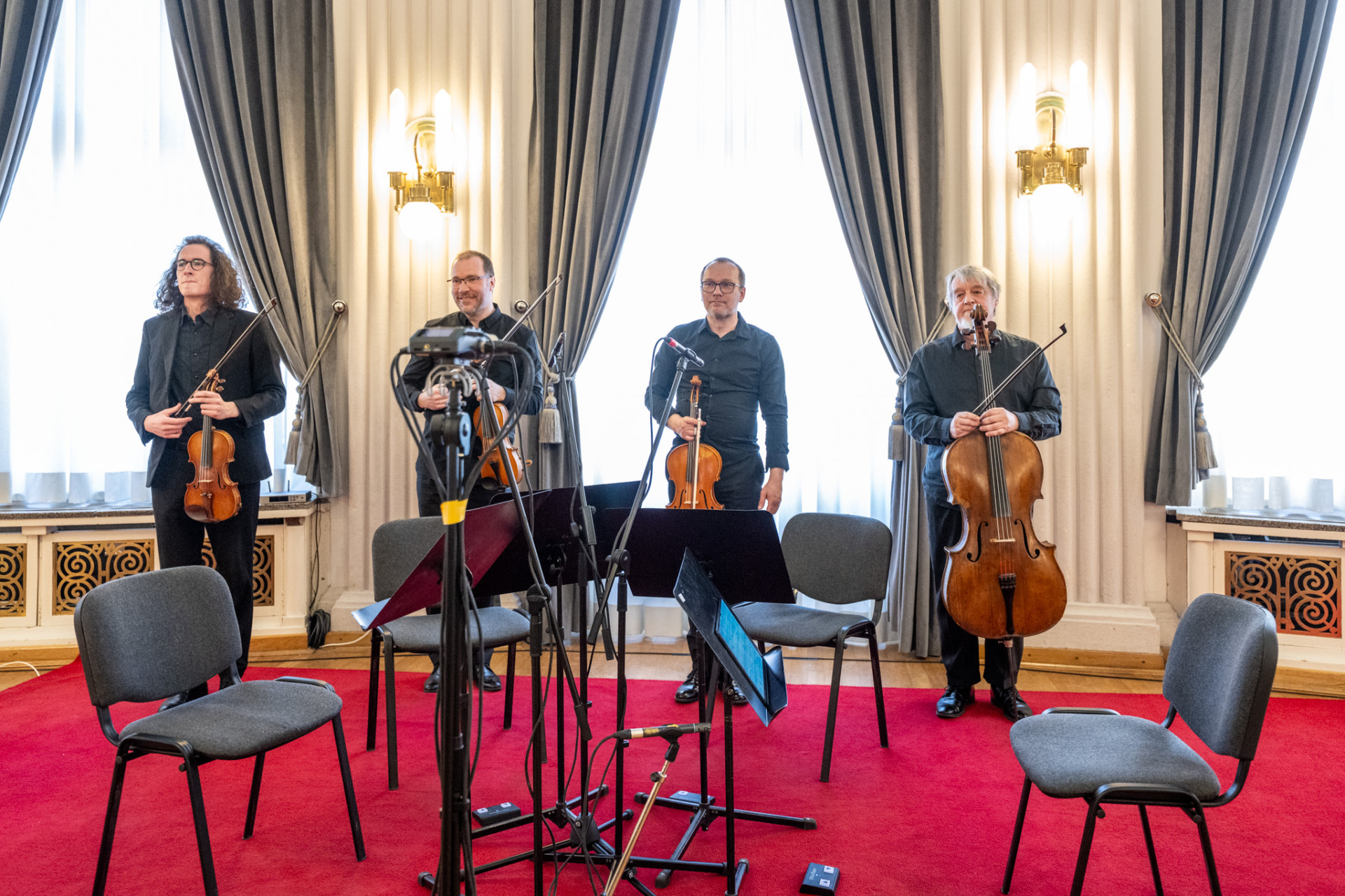
The works of the program had noticeable differences in compositional style and sound, attracting the attention and interest of the audience. The Zagreb Quartet, also contributed to the success of this concert. The members of the ensemble performed with elements of lyricism (where this was of course desirable or possible) and good phrasing, while at the same time trying to convey the different concepts and goals of each work (e.g. the contrasts, the timbral variations and iridescence, the plasticity of the sound, etc.). The harmonies and the emergence of the individual voices were also well rendered, with the sound of each instrument acquiring a distinct presence, where this was required.
Music Biennale Zagreb 33 overall presented a program with many and varied stimuli, making reference to both older and newer avant-garde music and providing samples of crystallization and raw experimentation. The festival seemed able to hold the audience’s interest, to raise and highlight contemporary and timeless concerns, and to be a platform for the production and performance of contemporary music, presenting local and world premieres.
*Elena Fiedeldey is a musicologist and a music critic.
——-ΕΛΛΗΝΙΚΑ——-
Περιήγηση σε πτυχές της σύγχρονης μουσικής: οι συναυλίες του Music Biennale Zagreb 33
Συνεχίζοντας την κριτική αναφορά στη φετινή διοργάνωση του Music Biennale Zagreb (MBZ 33), σειρά έχει η μουσική περιήγηση στο πλούσιο πρόγραμμα συναυλιών από τον χώρο του σύγχρονου μουσικού γίγνεσθαι.
Στις 10/4, στην κεντρική αίθουσα του Μεγάρου Μουσικής “Vatroslav Lisinski”, πραγματοποιήθηκε η συναυλία “Collage” της Συμφωνικής Ορχήστρας της Κροατικής Ραδιοφωνίας και Τηλεόρασης (HRT), με τη συνεργασία της Κροατικής Εταιρείας Συνθετών (Hrvatsko društvo skladatelja), του MBZ και της HRT, καθώς και με την υποστήριξη του Αυστριακού πολιτιστικού φόρουμ του Zagreb.
Στην αρχή εκτελέστηκε σε πρώτη παγκόσμια πρεμιέρα το έργο Forgotten Memories, για συμφωνική ορχήστρα, του Danijel Legin (με ανάθεση από το MBZ 33), το οποίο βασίζεται στην ιδέα της προσπάθειας μουσικής αποτύπωσης της αλλαγής και μετουσίωσης αναμνήσεων που αφήνει πίσω της η ρήξη των σχέσεων. Ακολούθησε το έργο Your Network Is Unstable, για συμφωνική ορχήστρα, του George Lewis, το οποίο αποτελεί μία υπενθύμιση στο ακροατήριο της αβεβαιότητας και αστάθειας που διέπουν όλο και περισσότερο τη ζωή, τη σύγχρονη κοινωνία και τα δίκτυα που αναπτύσσονται εντός αυτής. Το έργο είχε ένα απροσδιόριστο “αμερικάνικο” άκουσμα σε πολλά σημεία, το οποίο απαρτιζόταν από επιμέρους στοιχεία.
Το πρόγραμμα συνεχίστηκε με το έργο The Orgy of Oxymorons, για πιάνο και ορχήστρα, της πρώην καλλιτεχνικής διευθύντριας του MBZ Margareta Ferek-Petrić. Πρόκειται για μια σύνθεση εμπνευσμένη από την οργιώδη γοητεία του οξύμωρου και των αντιθέσεων, η οποία διαπερνά τις όποιες κοινωνικές προκαταλήψεις και αδικίες, και βρίσκει τον δρόμο της ελεύθερης έκφρασης μέσα από τη σύγχρονη τέχνη και μουσική. Αξίζει να σημειωθεί ότι τα συγκεκριμένα έργα του Lewis και της Ferek-Petrić εκτελέστηκαν για πρώτη φορά στην Κροατία, με ανάθεση του MBZ 33 και του Radio Österreich 1, σε συνεργασία με το φεστιβάλ ORF musikprotokoll. Προς τέρψη του μουσικόφιλου κοινού, η συναυλία έκλεισε με αναφορά σε ένα σημαντικό σημείο επιρροής της ιστορίας της avant-garde μουσικής: την περίφημη Sinfonia, για 8 φωνές και ορχήστρα, του Luciano Berio, από τη γέννηση του οποίου κλείνουν εφέτος 100 έτη! Ο Berio συνέθεσε το συγκεκριμένο έργο το 1968, μία χρονιά που σηματοδοτήθηκε από απανωτές ιστορικής σημασίας κοινωνικοπολιτικές αναταραχές σε διαφορετικά σημεία του πλανήτη, όπως η δολοφονία του Martin Luther King στις ΗΠΑ (στον οποίον άλλωστε ο Berio αποθέτει φόρο τιμής μέσα από τη Sinfonia) και οι μεγάλες φοιτητικές αναταραχές, διαδηλώσεις και απεργίες στο Παρίσι. Το αντίκτυπο αυτών των γεγονότων αντικατοπτρίζεται στο παρόν έργο. Στο τρίτο μέρος συσσωρεύεται ένας εξαιρετικά μεγάλος αριθμός αναφορών σε εμβληματικά για την ιστορία της έντεχνης δυτικής μουσικής έργα, δημιουργώντας ένα μουσικό “κολλάζ”, με το Scherzo από τη Συμφωνία αρ. 2, του Gustav Mahler, ως βάση.
Οι επιδιώξεις της Συμφωνικής Ορχήστρας της HRT, υπό τη διεύθυνση του Pascal Rophé, φάνηκαν να αποφεύγουν συνειδητά μία στεγνή ή ουδέτερη ερμηνευτική ανάγνωση των έργων, στοχεύοντας στην εκφραστική ποιότητα της εκτέλεσης. Η διατήρηση ενός καλού επιπέδου από άποψη εκφραστικότητας αποτέλεσε μία αξιέπαινη προσπάθεια των ερμηνευτών, δεδομένων των ιδιαίτερων απαιτήσεων ορισμένων έργων του προγράμματος. Για παράδειγμα, η σύνθεση Your Network Is Unstable ήταν απαιτητική τόσο για τον εκτελεστή, όσο και για τον ακροατή, καθώς τα μουσικά γεγονότα πρέπει να ηχούν αποπροσανατολιστικά και ταυτόχρονα ή σε πυκνή αλληλουχία το ένα με το άλλο. Όπως γίνεται αντιληπτό σε τέτοιου είδους συνθέσεις η ορχήστρα εισέρχεται σε έναν αγώνα προς διατήρηση των διαφορετικών ηχητικών γεγονότων και ηχοχρωμάτων των οργάνων, καθώς και της άρθρωσής τους, προκειμένου να μην καταπνίξει το ένα το άλλο και προκειμένου να επιτευχθεί η επιθυμητή –και εντυπωσιακή στο παραπάνω παράδειγμα– ασάφεια. Ακριβώς το ίδιο ισχύει και για τη Sinfonia, της οποίας η ιδιαίτερη φύση απαιτεί και επιπλέον προσοχή στον συγχρονισμό. Ειδικά για τη Sinfonia, η εκφραστικότητα, με την οποία ερμηνεύτηκε, ήταν σημαντική, καθώς μία αντίθετη στυγνή εκτέλεση σίγουρα δεν θα μπορούσε να αποδώσει την ανάγλυφη φύση “κολλάζ” του τρίτου μέρους, αλλά ούτε τα ποικίλα νοήματα γενικότερα όλου του έργου. Έτσι, διατηρήθηκε και το ενδιαφέρον του κοινού. Στο τελευταίο βέβαια συνέβαλε και το διακεκριμένο σύνολο “Neue Vocalsolisten Stuttgart”, τα μέλη του οποίου επιδίωξαν την παραστατική απόδοση της παρτιτούρας, παρά τις ήδη αρκετές προκλήσεις που ελλοχεύουν μέσα σε αυτήν. Σε γενικές γραμμές, τα διακριτά ορχηστρικά ηχοχρώματα αποδόθηκαν επιτυχώς. Αυτό φυσικά ισχύει και για το έργο Forgotten Memories, αλλά και για το The Orgy of Oxymorons με την Maria Radutu (στην οποία είναι αφιερωμένο το έργο) στο πιάνο να προσπαθεί να αναδείξει –μουσικά και σκηνικά– τις ηχοχρωματικές δυνατότητες των εκτεταμένων τεχνικών του συγκεκριμένου οργάνου. Συνοψίζοντας, η παρούσα ήταν μία ευχάριστη συναυλία, με ενδιαφέρον πρόγραμμα, καθώς και εκφραστικές και ειλικρινείς ερμηνείες.
Την επόμενη ημέρα, στις 11/4, στον πολυ-λειτουργικό χώρο “Kontejner”, πραγματοποιήθηκε συναυλία πειραματικής μουσικής από το καλλιτεχνικό δίδυμο “Scapegoat” (Joshua Hyde, σαξόφωνο· και Noam Bierstone, κρουστά), με την υποστήριξη του Συμβουλίου για τις Τέχνες του Καναδά. Εκτελέστηκαν τα έργα: Ciclo Continuo, για σοπράνο σαξόφωνο και κρουστά, της Justina Repečkaitė· The Threshing Floor, για τενόρο σαξόφωνο, κρουστά και ηλεκτρονικά, του Mauricio Pauly· 2 Alberi, για άλτο σαξόφωνο και κρουστά, του Pierluigi Billone.
Πρωταγωνιστής αυτής της συναυλίας ήταν σκέτος ο ήχος και οι ιδιότητές του. Όπως είναι λοιπόν αναμενόμενο, η ατμόσφαιρα προσέλαβε χαρακτήρα διαλογισμού, με τη σιωπή, την έντονη επανάληψη και τη μακρά διάρκεια των ήχων να επικρατούν. Εξερευνήθηκαν διάφορες δυνατότητες παραγωγής ήχου, όπως η χρήση του ταμπούρου ως ηχογόνα πηγή και αντηχείο άλλων αντικειμένων. Ως προς τις δυναμικές υπήρξε έντονη αντίθεση: ιδιαίτερα χαμηλοί ήχοι εναλλάσσονταν με πολύ δυνατούς.
Πολύ ενδιαφέρουσα ήταν και η συναυλία “Arco Straordinario” του Κουαρτέτου του Zagreb, που πραγματοποιήθηκε στις 12/4, σε χώρο του Ινστιτούτου Δημοσιογραφίας (Novinarski dom).
Το πρώτο έργο που ερμηνεύτηκε ήταν το Κουαρτέτο εγχόρδων αρ. 2, του Srđan Dedić. Ο Dedić ενέταξε στοιχεία αλγοριθμικής μουσικής, χρησιμοποιώντας αλγόριθμους υπολογιστών, τους οποίους ο ίδιος αναπτύσσει για περισσότερο από τριάντα χρόνια. Το επόμενο έργο συντέθηκε από τον Frano Đurović και φέρει τον τίτλο Two bodies, one soul. Με αυτό το έργο ο Đurović στοχεύει να καυτηριάσει την κοινωνική υποκρισία και την επιλεκτική δημόσια κατακραυγή ή ανοχή, θέτοντας τους προβληματισμούς του για την ύπαρξη ελευθερίας σε πολλαπλά επίπεδα και πλαίσια. Ακολούθησε το έργο Khrōmóphōnon V, του συνθέτη και αρχιτέκτονα Marko Slaviček, ο οποίος τον τελευταίο καιρό μελετά τη μουσική του Ιάννη Ξενάκη. Σημείο εκκίνησης του έργου αποτελεί η έννοια του “χρώματος” στη μουσική και τις εικαστικές τέχνες. Τα έργα του Đurović και του Slaviček (αναθέσεις του MBZ 33) ακούστηκαν σε πρώτη παγκόσμια εκτέλεση. Το πρόγραμμα ολοκληρώθηκε με το Κουαρτέτο εγχόρδων αρ. 3, “Aquarius”, του Dai Fujikura. Ο τίτλος σχετίζεται με την εποχή του υδροχόου, που ξεκινούσε την περίοδο ολοκλήρωσης του έργου. Έμπνευση του συνθέτη αποτελεί η ελαστικότητα του ήχου των συνόλων εγχόρδων, όπως ο ίδιος την αντιλαμβάνεται, και ο τρόπος πρόσληψης και περιγραφής αυτής της ηχητικής υπόστασης με σημείο αναφοράς τις υπόλοιπες αισθήσεις (αφή, γεύση, κ.λπ.).
Τα έργα του προγράμματος έφεραν αισθητές διαφοροποιήσεις ως προς την τεχνοτροπία σύνθεσης και το άκουσμά τους, τραβώντας την προσοχή και το ενδιαφέρον του ακροατηρίου. Σε αυτό συνέβαλε το κουαρτέτο του Zagreb, τα μέλη του οποίου ερμήνευσαν με στοιχεία λυρισμού (όπου φυσικά αυτό ήταν θεμιτό και εφικτό) και καλό φραζάρισμα, προσπαθώντας ταυτόχρονα να αποδώσουν τις διαφορετικές έννοιες και στόχους του κάθε έργου (π.χ. τις αντιθέσεις, τις ηχοχρωματικές εναλλαγές και ιριδίσματα, την πλαστικότητα του ήχου, κ.λπ.). Οι αρμονίες και η ανάδυση των ξεχωριστών φωνών αποδόθηκαν καλά, με τον ήχο του κάθε οργάνου να αποκτά ξεχωριστή παρουσία, όπου αυτό απαιτούνταν.
Το φεστιβάλ “Music Biennale Zagreb 33” παρουσίασε ένα συνολικό πρόγραμμα με πολλά και ποικίλα ερεθίσματα, κάνοντας αναφορά τόσο στην παλαιότερη, όσο και στη νεότερη avant-garde μουσική και παρέχοντας δείγματα αποκρυστάλλωσης, αλλά και ωμού πειραματισμού. Φάνηκε ικανό να κρατήσει το ενδιαφέρον του κοινού, να θίξει και να αναδείξει σύγχρονους και διαχρονικούς προβληματισμούς, και να αποτελέσει πλατφόρμα παραγωγής και εκτέλεσης σύγχρονης μουσικής, παρουσιάζοντας εγχώριες και παγκόσμιες πρεμιέρες.
