
Tracing the divine Vincenzo Bellini
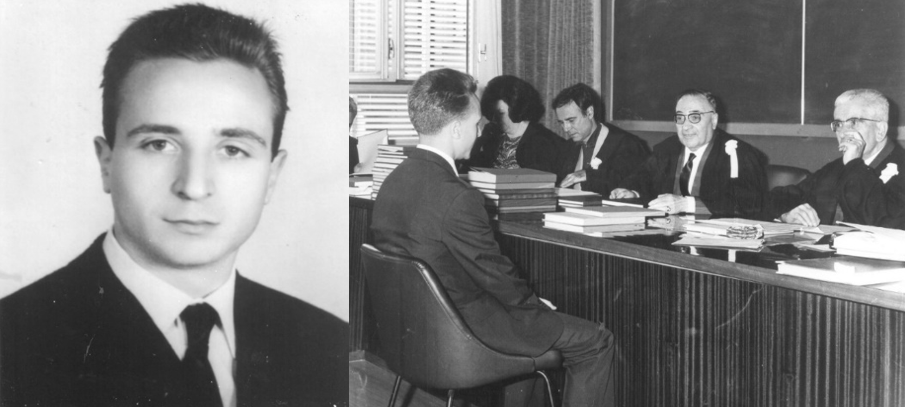
Interview with Carmelo Neri
by Constantine P. Carambelas-Sgourdas
Constantine P. Carambelas-Sgourdas poses a number of written questions to Carmelo Neri, renowned author of acclaimed books on Vincenzo Bellini, which have become a valid point of reference for scholars of the famous Catanese composer.
I have had the pleasure and privilege of communicating regularly, for more than ten years, with Prof. Carmelo Neri, who, almost exclusively, dedicates his research to the composer of La Sonnambula, Norma, I Puritani and other famous operas and songs, and have been since many years an observant and enthusiastic reader of his books and other publications. I therefore thought it valuable to ask him the following questions and share the answers with our readers.
Constantine P. Carambelas-Sgourdas: Professor Neri, do you remember the first impulse that made you take the important decision to study Bellini’s life and epistolography in depth?
Carmelo Neri: Since 1987, and during the following years, I had been a regular visitor to the Museo Belliniano in Catania. At first, I visited the museum in order to do some research on the composer Nicola Antonio Manfroce, since their library included various publications that could be very useful to me; later, consulting various books, I realised that many of Bellini’s letters were missing from the 264 published in the book by Luisa Cambi in 1943. This is how the idea of editing an updated edition of that collection of letters was born in me, which was published in Palermo in 1991, and, with the addition of 45 letters, I brought the aforementioned total to 309. Having then learned of many others not included in my own collection, I proceeded with a new edition in 2005, in which I included 404 documents, including several unpublished ones. It should be noted, however, that in this latest recounting I have included about twenty autographs of lesser importance by Bellini, such as tickets, receipts, musical announcements signed by him, and the like.
CPCS: Throughout your long and fascinating journey as a researcher and author of Bellini you have dealt with many letters sent by the master to numerous correspondents. Could you cite some containing particular expressions that offer variety, elegance and effectivenesss to the discourse?
CN: There are several, but a few examples will suffice: in one dated June 11, 1834, sent from Puteaux to the Marchesa Vittoria Visconti d’Aragona of Milan, first published by me in 1994 and referred to as unpublished in a program book of the Teatro Bellini in Catania, the great opera composer went so far as to state: «I am lonely: I have abandoned the world and have been abandoned by it, I live a peaceful but not a happy life»; in the same page he added: «I have been ill with bilious fever, which I overcame in three days, by dint of emetics: imagine the fun!». Sometimes, as in this case, he loved to resort to emphatic manners, and, making an overuse of exclamation marks, he sometimes used two or three in a row. In another unpublished letter, published by me in 2005, that Bellini sent from Puteaux on June 3, 1835 to Giovanni Ricordi, there are six lines in about twelve, and there are as many question marks. In it the maestro, with oratorical and pressing impetus, in the manner of Cicero grappling with Catiline, appearing very irritated, contested the Milanese publisher for a “Social account” that did not please him at all, because he was being charged expenses that he considered unjustified, including some incurred without him being notified.
CPCS: Your recent book under the title Letters from Vincenzo Bellini to Francesco Florimo (Algra Editore, 2022) enriches our knowledge concerning the public and private lives of these two fraternal friends. It is thanks to Florimo that a large part, and certainly the largest of Bellini’s legacy has been saved from oblivion.
Which do you think were the special qualities of the Calabrian music historian’s character that led the Sicilian composer to trust him and confine in him ever since they first met as students of the Naples Conservatory?
CN: It was certainly the good and generous nature, the innate kindness, and especially an undoubted diplomatic ability of Florimo that Bellini recognized as a truly special quality in a letter of July 14, 1835, writing to him: it was “a pity your family put you in music: you should have been a diplomat”. Bellini, who also esteemed him greatly for his skill as a musician, went so far as to declare that he always tried to imitate him, and that he was proud to have him as a friend. Aware that ingratitude is one of the greatest depravities of the human soul, he always showed him great gratitude for the immense services and for the precious advice he received; in this regard it should be remembered that it was Florimo who suggested that he set to music the subject of La Straniera, the opera which, performed at La Scala in Milan in 1829 with memorable success, consecrated Bellini as a maestro di cartello, predestined to have a glorious career.
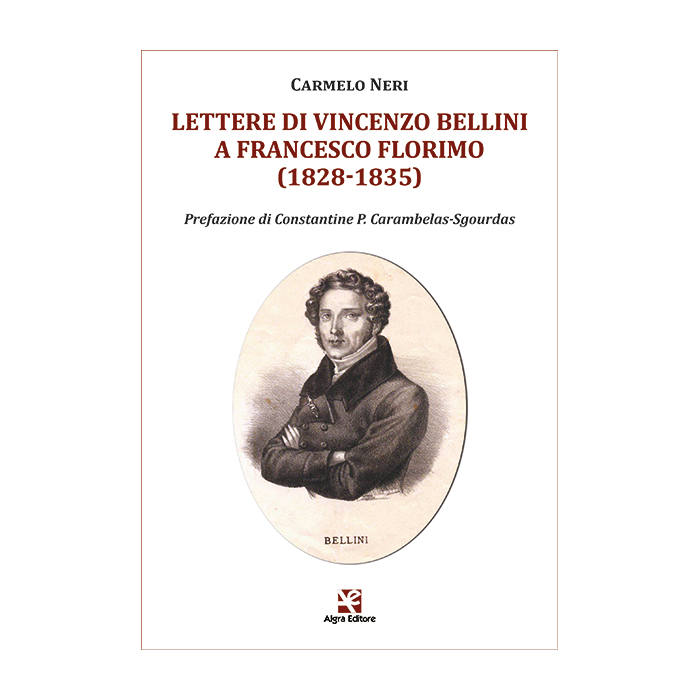
CPCS: In your latest book entitled Vincenzo Bellini, Historical Memories and Letters to Uncle Ferlito, including in the Appendix the “Testament of Francesco Florimo” (Edizioni Corab, 2025), among the various memoirs, you also deal with the disagreement that occurred between Florimo and the father of the composer, Rosario Bellini, after the death of his son. Furthermore, you also try to clarify the mysterious subject of the hundreds of letters addressed to Florimo which are missing from the Bellini correspondence. Could you summarize what exactly happened?
CN: Bellini’s father, a man of impulsive character, not having received in Catania the version of I Puritani intended for Malibran, which remained in Florimo’s custody after his son’s death, raged against him with serious accusations and exaggerated insults. Unfortunately, Vincenzo’s friend was unable to comply with this request, having made a commitment to Rossini, who was acting in the name and on behalf of the co-owners of the score (the Théâtre Italien in Paris and the publisher Eugène Troupenas), to retain the score until further notice. Furthermore, during the course of the dispute, Don Rosario, being poorly informed, blamed the alleged responsible for errors that did actually not exist. His anger subsided only after Rossini clarified in a letter the reasons that had led him to judge in a «light manner» his son’s friend, who had behaved with the utmost correctness.
The even more tangled affair of the “burnt” letters concerns only those that Bellini had sent to Naples from Paris and Puteaux. The recipient was forced to destroy some of them in order to exclude them from the collection of letters published in 1882 and did so to avoid upsetting a certain “person” mentioned in a writing by Michele Scherillo. Consequently, it is logical to think that even before 1869, when Florimo wrote in his friend’s biography that he was missing “over 400” from Vincenzo, this person could have contacted him, perhaps through an authoritative intercessor, and may have requested and received from him the letters written in those five years which are missing from Bellini’s correspondence from March 14, 1829 to February 14, 1834. The period of this unfortunate loss includes -and this is a coincidence that cannot be considered fortuitous-, the very period in which the love affair between the composer and Giuditta Turina was most intense.
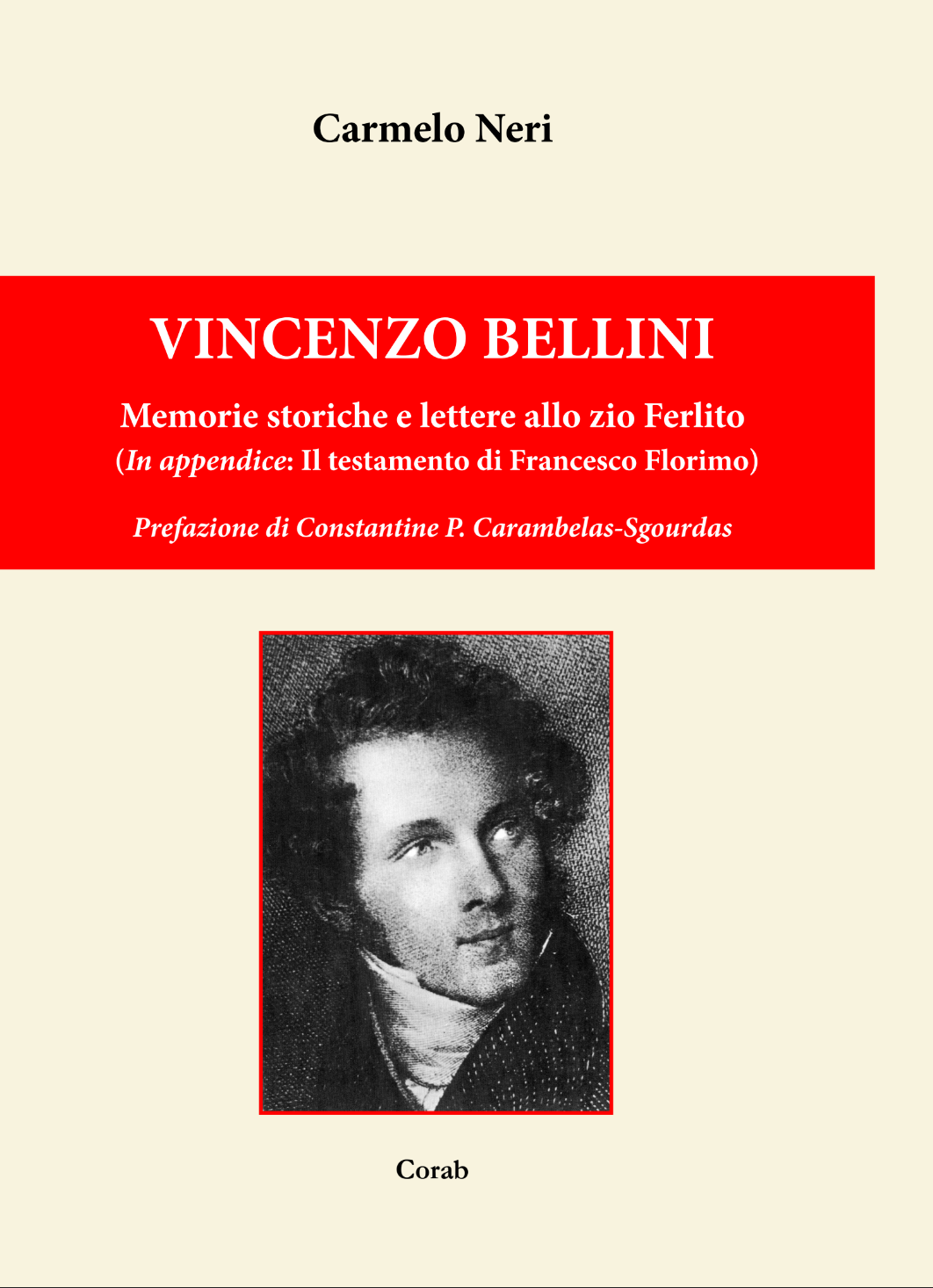
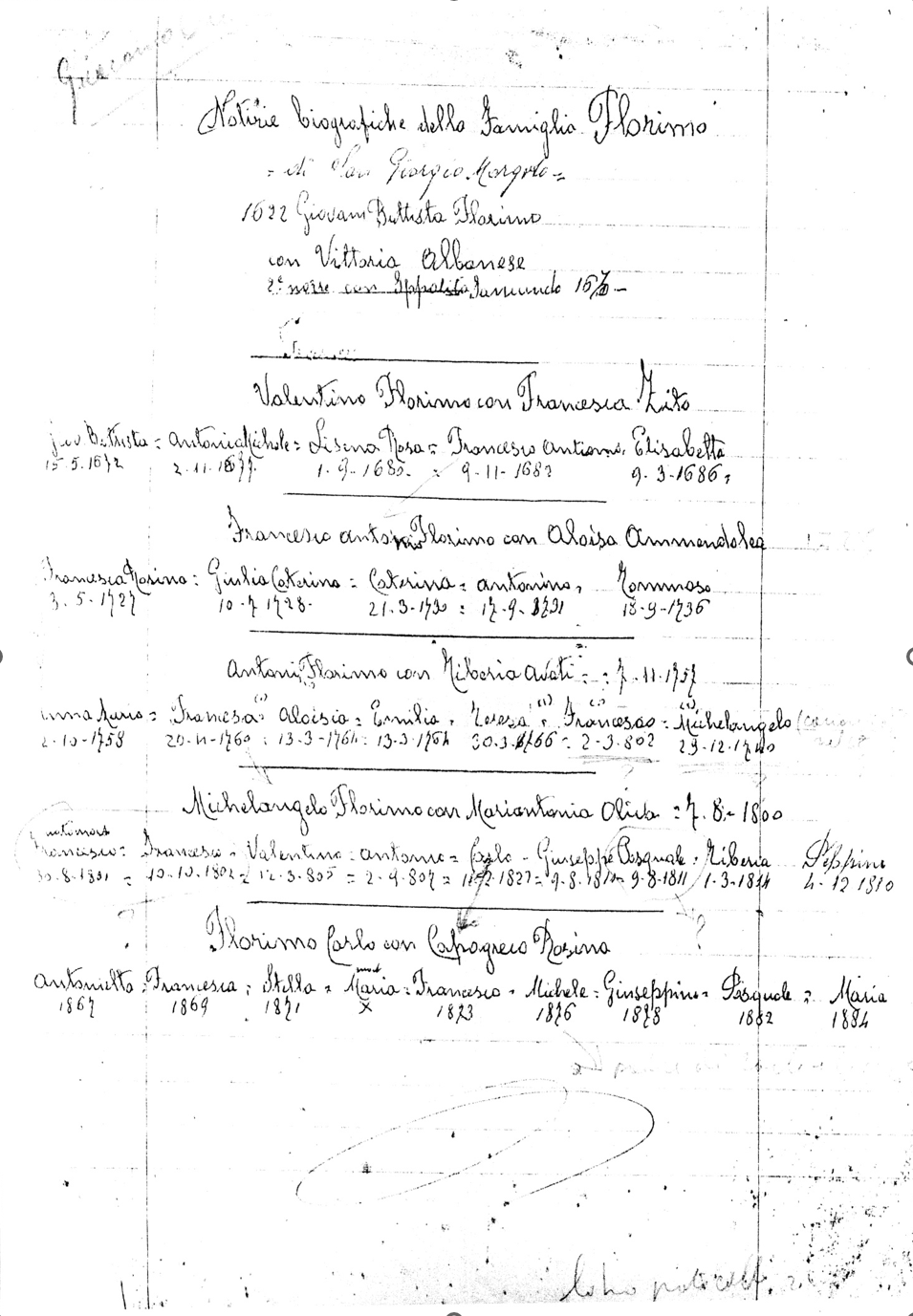
CPCS: In this new publication, we learn for the first time that Francesco Florimo was born on October 10, 1802, and therefore the date of October 12, 1800, previously indicated in all biographical profiles about him, is to be considered incorrect. What document now provides further confirmation of what you stated in the book was communicated to you over the telephone?
CN: Dr. Giacomo M. Oliva, a descendant of Florimo, who was born to Michelangelo and Maria Antonia Oliva, informed me over a year ago that the birth date in the information regarding the life of his illustrious ancestor is inaccurate. Later, when the book was already being edited, he sent me a copy of a manuscript, which I am only now able to reproduce: it is headed “Biographical News of the Florimo Family of San Giorgio Morgeto.” It also contains information that the marriage of the parents of the future historian and composer was celebrated on August 7, 1800, and that, after their firstborn, Francesco, “stillborn” on August 30, 1801, their second son was born on October 10, 1802, and was given, as was customary, the same name as the first. Dr. Oliva also pointed me to a valuable study by Giuseppe Raco, his cousin, entitled “The Florimo Family.” It states that the master’s father, the son of a “legista,” that is, an expert in legal matters, died on December 27, 1844, at the age of seventy-one; his wife, Maria Antonia Oliva, was still alive on that date.
CPCS: Bellini was very close to his family. In this latest book you transcribe and examine his correspondence with his uncle Vincenzo Ferlito, offering comments and numerous valuable explanatory notes. What was the nature of their communication, and what information do we receive from these letters?
CN: Since we know of a rather small quantity of Bellini’s letters to Vincenzo Ferlito, it is not possible to judge their epistolary relationship well. From what we read, one gets the impression that their correspondence was always in perfect harmony, but less assiduous than that with Florimo. Uncle Ferlito, on behalf of Don Rosario, carried out the delicate task of postal intermediary between the maestro and his family; the correspondence sent to him by his nephew is always full of interesting news on the progress of his work, his health, and his relationships with family, relatives and friends. Bellini, who saw in his uncle Vincenzo a second father, welcomed his suggestions with full trust, but sometimes avoided communicating events that could cause displeasure or concern.
CPCS: The loss of many letters has prevented us from reading what Bellini communicated to Florimo about the painful illness that struck him in May 1830. Do we now know anything new about this event?
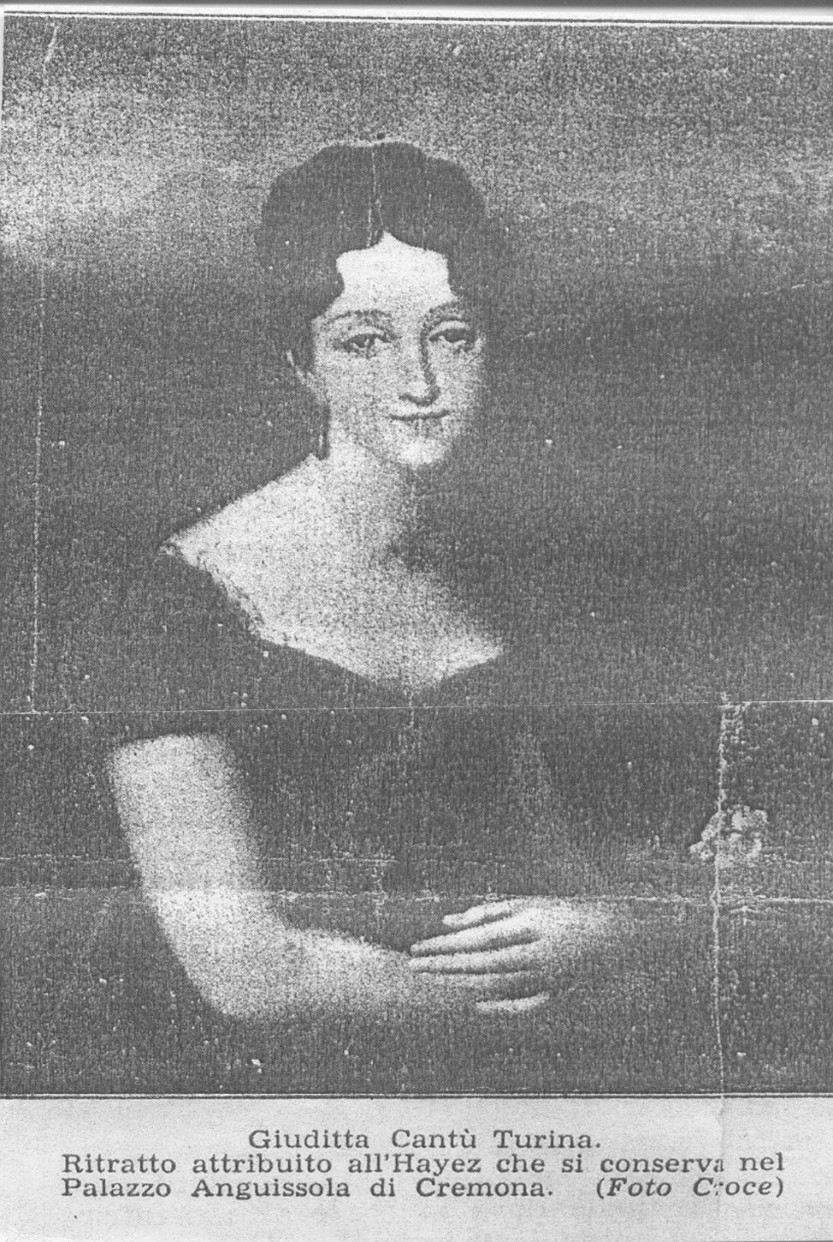
CN: Regarding Bellini’s serious illness in 1830, we still have no evidence to uncover the root cause of the illness that nearly brought him to the brink of death during that year. Furthermore, rereading the existing testimonies in his correspondence, it should be noted that the musician himself contributed to complicating the search for the truth. He did not want his romantic relationship with a married woman, whom he even visited at her husband’s house, to be known in Catania. He was forced to send uncle Vincenzo information that was not true, and made it more acceptable with a misleading story that even misled me. In fact, he told him that “the main cause” for his illness was the heavy workload he sustained while composing Capuleti in Venice, that he had suffered in that same city due to the “horrible” weather, and that he had “bad breath” due to “poor digestion”. Since these words refer to the previous winter, it is unthinkable that the inconveniences described had any effect on the severe gastric disturbances that manifested in him in Milan about two months later. Therefore, the justifications offered must be considered unfounded, as must the “curt reply” “Bellini died of consumption, from nothing but consumption,” written in 1845 by Giuseppe Verdi to a fellow citizen who had advised him “not to accept anything to drink from anyone” and not to forget what had “happened to Bellini.” The Catanese also reported (and here is another inaccuracy!) that he was left “without an appetite” after his return to Milan on April 13, 1830, and that he suffered from a loss of appetite for over a month; however, it is likely that he had it for a shorter period, and only after returning home from Casalbuttano (and not from Venice, as he implied to his uncle). To reach that town, where he stayed for about a week, he traveled over eighty kilometers in an uncomfortable stagecoach, and this confirms that he arrived in good health, otherwise he would have stayed in Milan. Furthermore, a letter of his to the publisher Artaria, dated «Casalbuttano 2: May [1830]», in which we read that he planned to return to the city «perhaps next Wednesday», that is, the 5th, confirms his presence in the Turina palace, where he saw Giuditta, his lover, and her sister-in-law Rosina Bossi, wife of Bortolo Turina; for Fortunato, their five-year-old son, he had promised to bring (and perhaps did bring) a small dog from Venice. In his Milanese residence, in Contrada San Vittore e Quaranta Martiri, as he wrote to his uncle on 15 July, on 21 May «a terrible inflammatory gastritis bilious fever broke out», but fortunately the immediate intervention of Dr. Antonio Prini, «doctor of the I.R. Conservatory of Music, district of Brera 1556″, who prescribed bloodletting and an emetic to induce vomiting, saved him from a miserable end. The treatment was quite long, and on July 1st he told his brother Carmelo that he still felt weak, and that this illness could “be his last” if he were not well cared for. About a month later, “in the summer,” Rosina Bossi also fell “very seriously ill” and died in Casalbuttano in September. This death, previously unknown, was revealed for the first time in Eduardo Rescigno’s Dizionario belliniano, published in Palermo in 2010. Another letter from the maestro, sent on July 15 from Moltrasio to Giuseppe Pasta, the famous singer’s husband, reveals that Rosina was in such poor health that there was already doubt as to whether she was among the “living.” And it is truly strange that Bellini, in two letters addressed on August 3 and 14, 1830, from Bergamo, where he was busy staging La Straniera, did not ask Giuditta, who was vacationing on Lake Como, for information about her sister-in-law, whose life was in danger. In the letter of August 14, he wrote that he considered “most” of her “continuous agitations” to be influenced by his vivid imagination; this suggests that Rosina was very worried in those days. The teacher, on the other hand, so as not to appear prey to bad thoughts, preferred to appear calm, and filled out that sheet of paper with caution, fearing the possibility that it might end up in the hands of his lover’s husband, who, as we read in the same letter, had already arrived in Moltrasio, or was about to arrive with his nephew Fortunatino.
CPCS: In your aforementioned book you refer to two important biographers of the composer from the older generation, Antonino Amore and Guglielmo Policastro. It is clear that you greatly appreciate their extensive contribution to a better knowledge of Bellini. What strikes you most in their method of research and writing?
CN: These two biographers have brought with their research valuable innovative contributions, which many scholars of Catania have benefited from. Policastro has made his small volume on the years that by Bellini spent in Catania more interesting by enriching it with old photos and information received from Ferlito’s descendants; one of them assured him that Vincenzo exhibited the physical characteristics of their family. One of the merits of Antonino Amore contribution, who in 1876 met Florimo in Catania, and knew all of Bellini’s brothers and sisters, is that he included in his book important unpublished letters written by the blond composer; if he hadn’t done so, we would have up to our days been deprived of many truths contained in them. These two biographers therefore deserve praise, especially because they had the foresight to draw important revelations on Bellini from well-informed people, such as his relatives and descendants. Both, eager to be understood by everyone, adopted a concise, simple and natural way of expressing themselves in their writings, always remaining respectful of historical truth.
CPCS: Having worked for decades on Bellini’s letters, you have acquired a very particular knowledge of his personality. How would you describe his character?
CN: Like Florimo, Bellini was an honest, good person, incapable of harming others. He never forgot his humble origins, and always felt the duty to help his large family, which was not in a prosperous economic situation, and for this reason he wanted to achieve a good result with all his works. Wanting to avoid the possibility of a fiasco, even when he became famous, he continued to apply himself with the utmost commitment to the tenacious and tireless study of established composers, so as to always meet with the public’s favor. He made some mistakes, and the most serious was that of not having listened to Florimo, when he tried to make him understand that his emotional bond with a married woman would be fatal for him. The last two years he lived in Paris forced him to assimilate the habits of the place, and he knew how to adapt very well to that new and difficult reality.
CPCS: Concluding, could you please tell me about your research on the composer Nicola Antonio Manfroce, who, like Bellini, was a pupil of Niccolò Zingarelli, and who also died at a very young age, in his case, at only twenty-two?
CN: I began studying Manfroce in 1967, when Prof. Salvatore Pugliatti, rector of the University of Messina, and holder of the chair of Music History, accepted my proposal to write a thesis on the composer from Palmi; he added that, if I could do something worthwhile, since at the time very little was known about the unfortunate musician, my work would be commendable. Concerning this genial composer, whose life and art in many ways recall that of Bellini, as I wrote in 2006, during an article entitled Parallel Lives: Nicola Antonio Manfroce and Vincenzo Bellini, published in the magazine Agorà of Catania, I carried out research in the libraries of Reggio Calabria, Palmi, Turin, Milan and Bologna. Having moved to Sicily in 1982, after spent almost sixteen years in Piedmont as a stationmaster with FS (Ferrovie dello Stato, the State Railways), I continued my activity as a railway employee, abandoning teaching, despite having obtained the required qualification.
I would not have published anything about Bellini had I not firstly dealt with Manfroce, and even after graduation I continued to write articles about the man who was called “the Calabrian Bellini”, a definition that suits him well, just as it is also true, according to the illustrious critic Giovanni Carli Ballola, that his music has the merits of “classical conciseness, of that beauty, of that incisive simplicity, which is never simplistic…”.
Francesco Florimo in his famous volumes on the Neapolitan musical school wanted to examine (and he did it just for him!) the score of Alzira, written at nineteen for the Teatro Valle in Rome, and of Ecuba, composed for the San Carlo in Naples at twenty-one.