

Photo by Wojciech Grzedzinski for NIFC
It is widely acknowledged that the International Fryderyk Chopin Piano Competition, open to pianists aged 16 to 30, is one of the top world music competitions and one of the most prestigious.
The first edition was held in Warsaw, in 1927, making it one of the oldest competitions, and has since taken place every five years. Dedicated solely to the music of the great Polish composer Frédéric Chopin and organised in an impeccable way by the Fryderyk Chopin Institute, it attracts the attention of hundreds of promising pianists from around the globe who send their applications. A number of legendary pianists from the past and many from the present, have been exciting winners and some have sat on the jury.
For the latest 19th edition, the Competition received no less than 642 applications, a record number indeed. 162 pianists did perform in the preliminary round and 85 made it to the main Competition.
The auditions of Stage I began on October 2 and the Finals ended on the 20th of the same month. During this long period the music and spirit of the incomparable master dominated Warsaw and the music scene globally. The three stages, the finals and the three concerts of the winners were transmitted live online and in HD quality, offering first class sound and image.
The participants had the opportunity to choose from superb pianos by C. Bechstein, Fazioli, Kawai, Steinway and Yamaha.
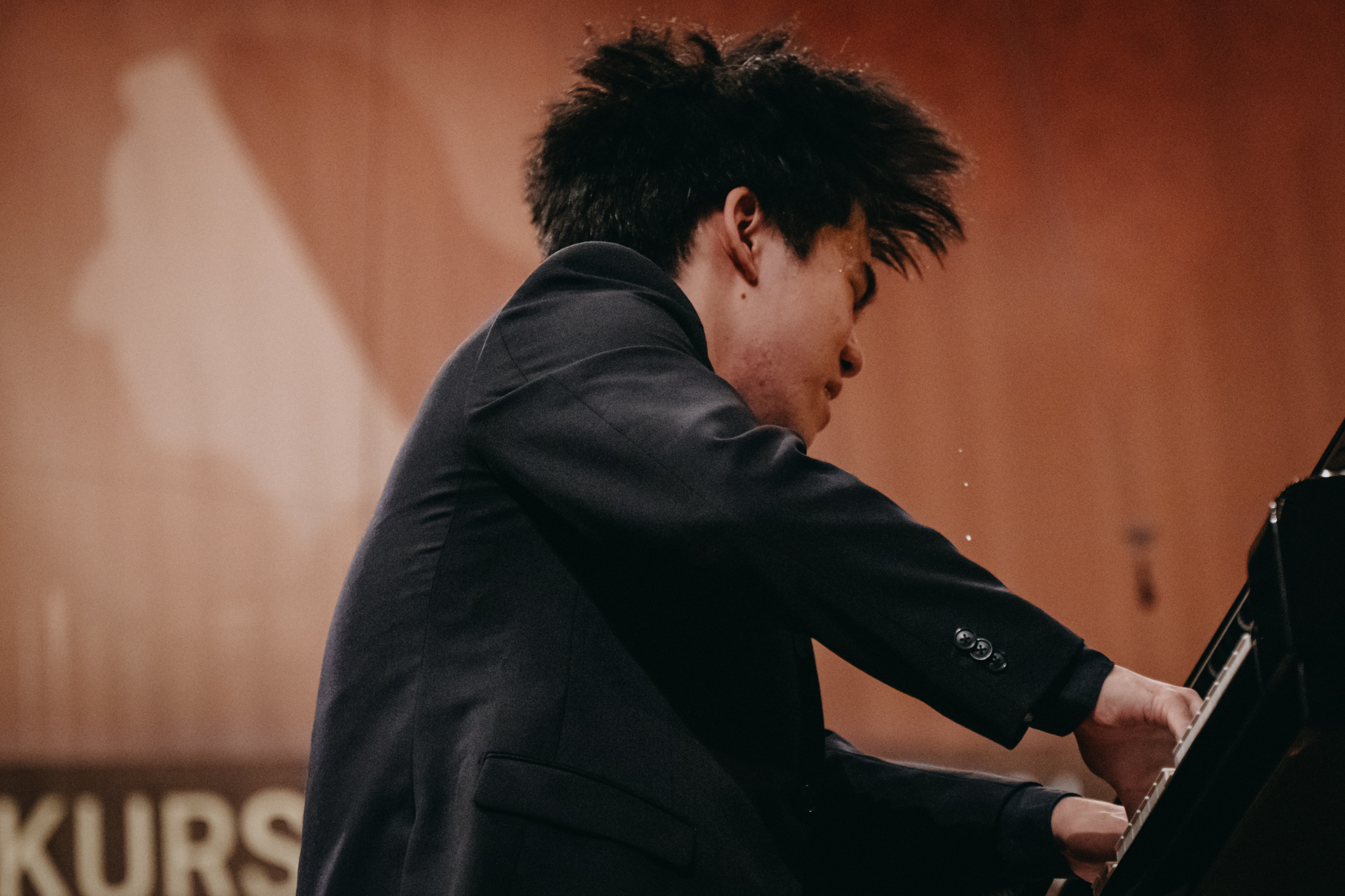
Photo by Wojciech Grzedzinski for NIFC
The 2025 edition had a jury of 17, chaired by American pianist Garrick Ohlsson, himself a winner in 1970, the year in which Mitsuko Uchida won 2nd prize and Piotr Paleczny, who was also on this year’s jury, 3rd prize. The other members were John Allison, Yulianna Avdeeva (former winner), Michel Beroff, Sa Chen, Akiko Ebi, Nelson Goerner, Krzysztof Jabłoński, Kevin Kenner (former winner), Momo Kodama, Robert McDonald, Ewa Pobłocka, Katarzyna Popowa-Zydroń, John Rink, Wojciech Świtała and Dang Thai Son (former winner).
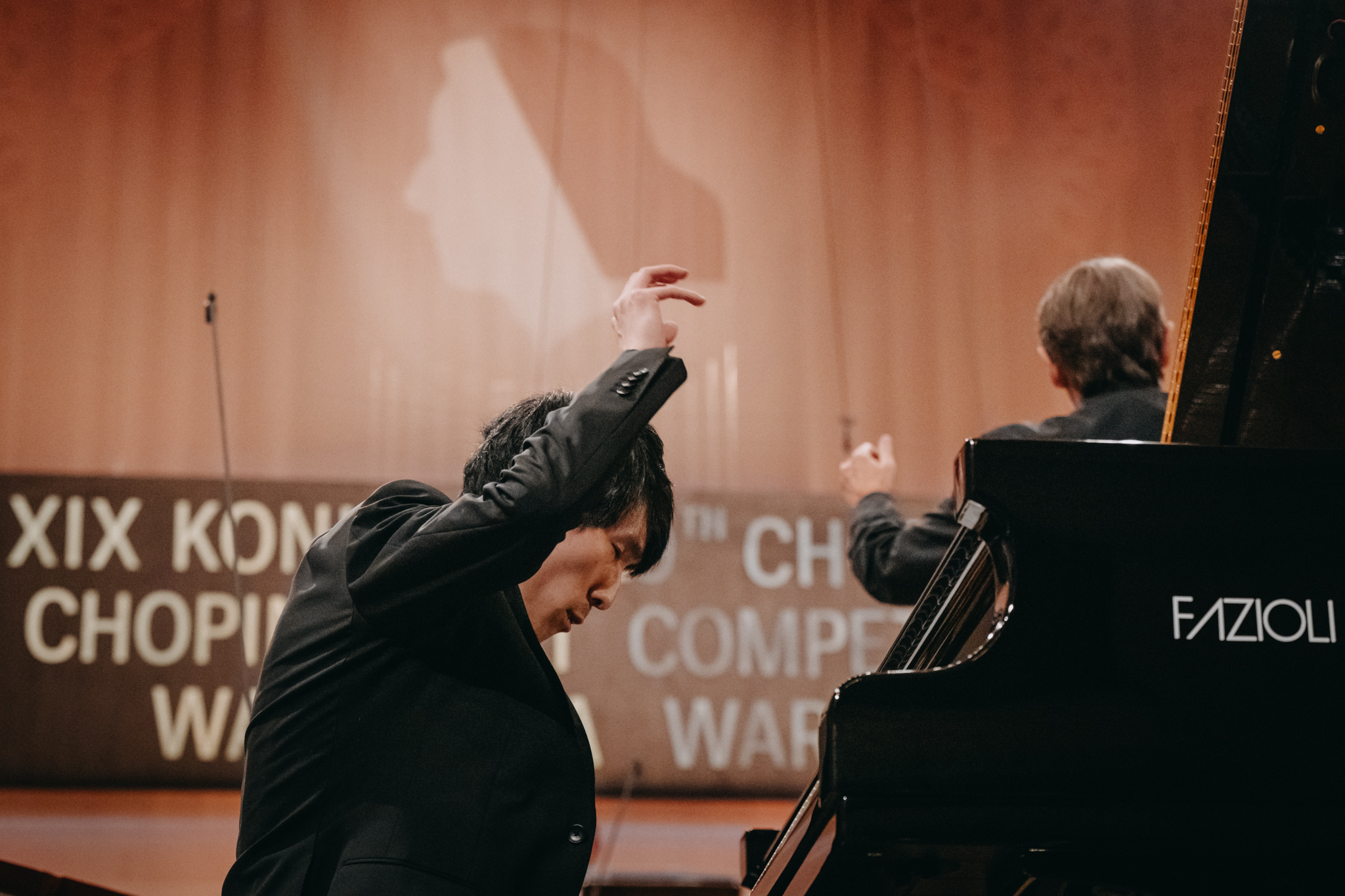
During the Competition’s finals (October 18-20, Concert Hall of the National Philharmonic, Warsaw), which will here be reviewed, 11 pianists performed. They all were required to play the Polonaise-Fantaisie, Op. 61, plus one of the two concertos.
On October 18 (Final round, day I), the first four finalists performed.
Tianyou Li (China, b. 5 April 2004) offered refined readings and some beautiful pianissimi. His sound quality and control were quite striking. He found the right contrasts of mood in both the Fantaisie-Polonaise and the Concerto Op. 11.
Eric Lu (United States, b. 15 December 1997) showed maturity and skill. He is already a well established artist who won the Leeds International Piano Competition in 2018 and a few years earlier (2015), the 4th Prize of the XVII International Fryderyk Chopin Piano Competition. His playing was responsive to the different aspects of the works; he commanded a marvellous cantabile and had a firm sense of direction. His technical means are interesting and I loved the refined way in which he graded the dynamics. The slow movement, Larghetto, of the Op. 21 Concerto was lyrical intense and beautifully shaped, with some moments of inner serenity.
Tianyao Lyu (China, b. 21 October 2008), the youngest participant in the final round, just 16 (she turned 17 after the finals), is astonishingly gifted and definitely one of the revelations of the Competition. Her delicate, agile and imaginative playing was admirable, as were her naturalness of rubato and purity of expression and tone. In her hands the long phrases of the Polonaise-Fantaisie and the melodic outline of the Concerto Op. 11 spoke in effortless simplicity and pianistic finesse, always sounding fresh and alive.
Vincent Ong’s (Malaysia, b. 12 April 2001) playing was committed, clear, persuasive and well articulated. I found that much of his assertive phrasing had a Schumannesque drive. I appreciated the way in which he underlined the contrapuntal writing in parts of the Polonaise-Fantaisie and his sensitivity to detail during the Concerto Op. 11.
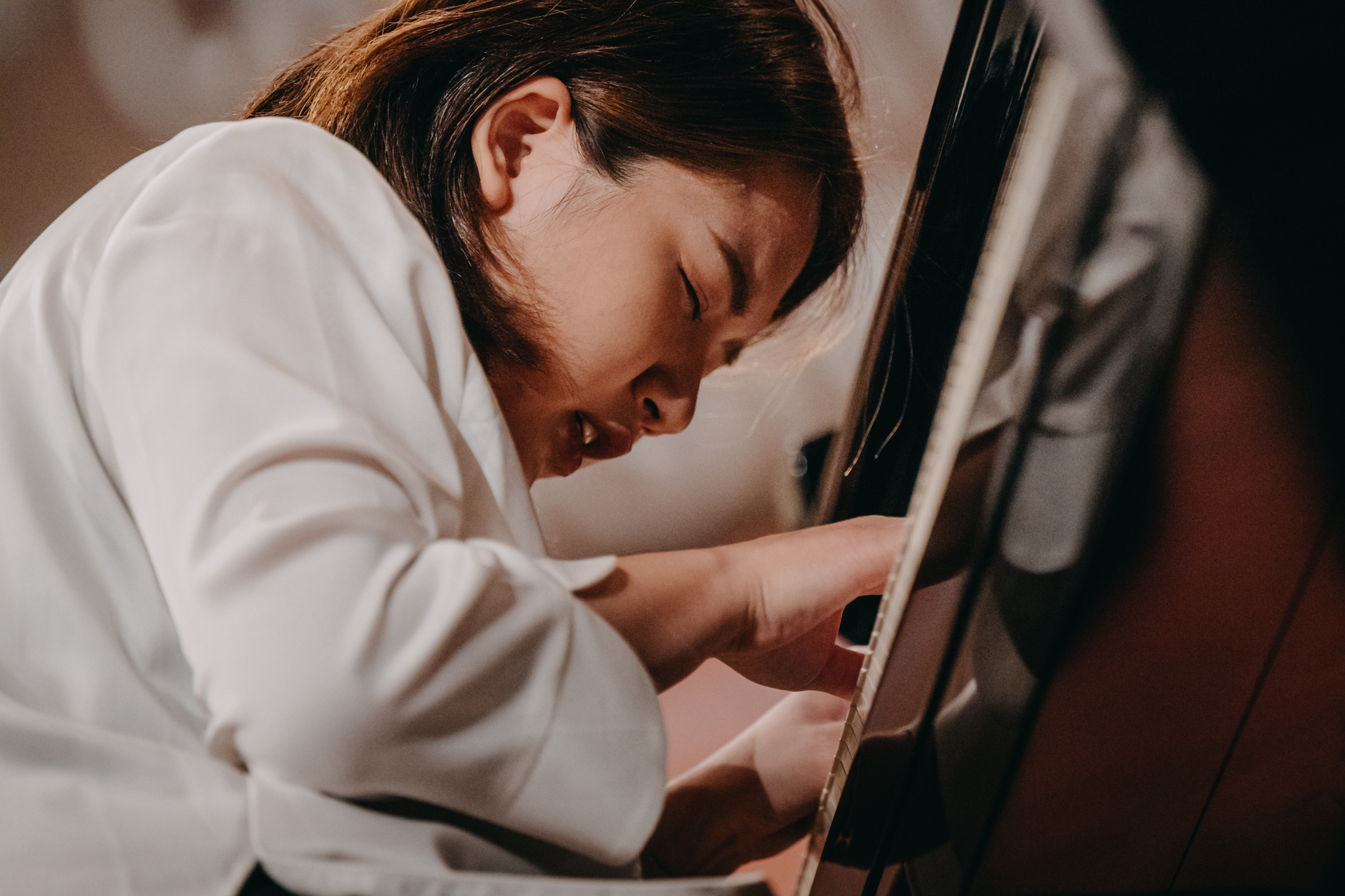
Photo by Krzysztof Szlezak for NIFC
The next day (19 October, Final round, day II), Miyu Shindo (Japan, b. 26 April 2002) underlined the drama, the yearning and passion of the scores. She opted for broad tempi in the cantabile sections and sung out with lyrical breath during the slow movement, Romanze-Larghetto, of the Concerto Op. 11.
Zitong Wang (China, b. 3 February 1999) offered direct and disciplined approaches, without any kind of exaggeration. She was insightfully reflective during the slow sections of both the Polonaise-Fantaisie and the Concerto Op. 11.
William Yang’s (USA, 13 May 2001) playing was effortless and concentrated, however I found that his accounts, especially that of the Polonaise-Fantaisie, were sometimes wanting in character and poetry.
Piotr Alexewicz’s (Poland, b. 9 April 2000) interpretations were idiomatic, thoughtfully controlled and well structured, especially that of the Concerto Op. 21.
On the last day of the finals (October 20, Final round, day III), Kevin Chen (Canada, b. 7 March 2005) proved to be a highly gifted, exciting and promising pianist who found moments of true inspiration in many phrases of the Concerto Op. 11. He certainly knows how to make the music very much his own and is musically and technically secure.
David Khrikuli (Georgia, b. 26 April 2001) has a warm sound and an interesting musical personality. He played the Concerto Op. 21 with authority. A few instances of insecurity were noted during the early part of the Polonaise-Fantaisie which in his hands was otherwise full of reflective moments.
Shiori Kuwahara (Japan, 11 October 1995), the oldest participant in the final round, is a solid and confident pianist, with a big sound and flair. She was captivating during the Concerto Op. 21.
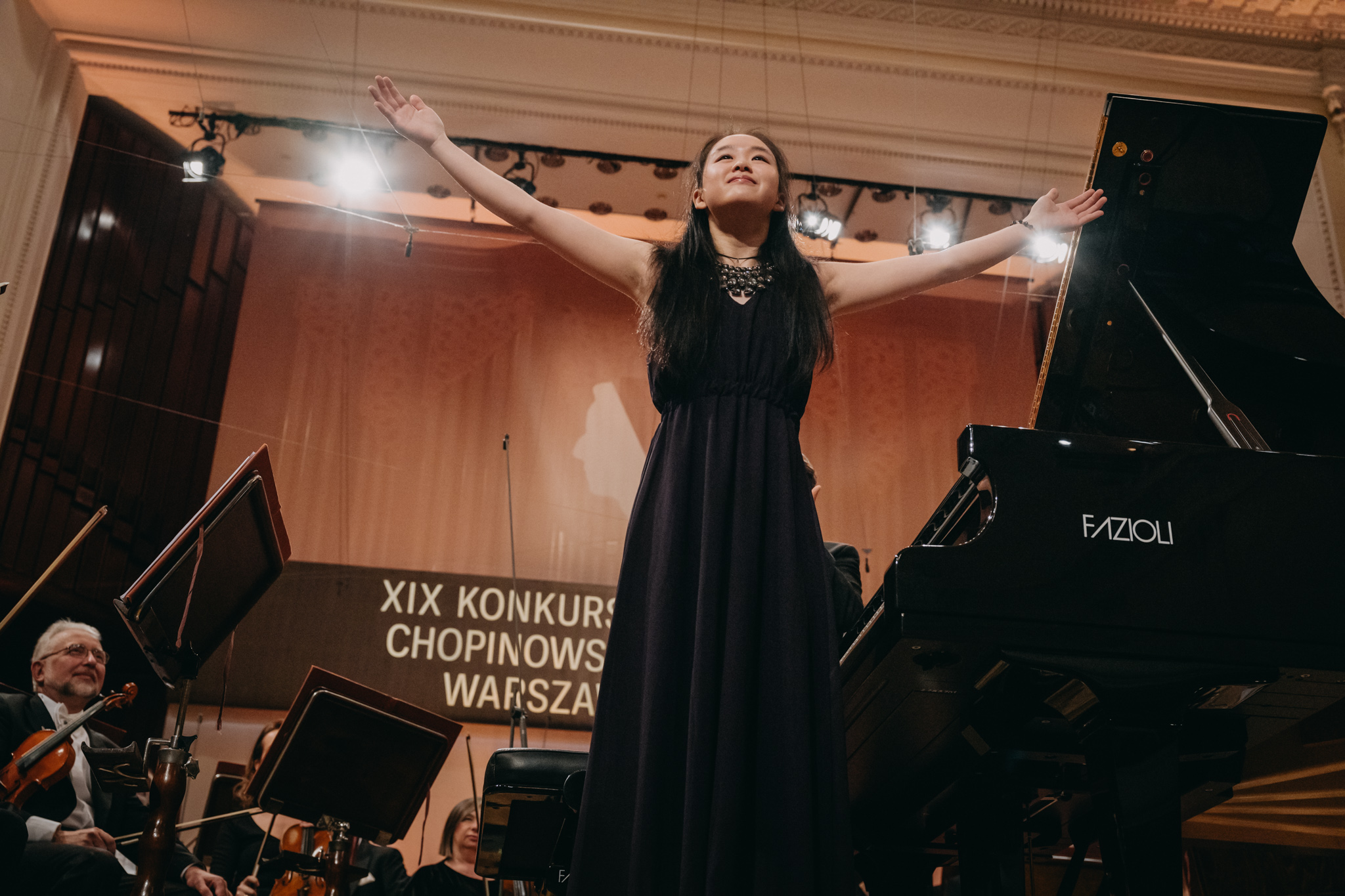
Photo by Wojciech Grzedzinski for NIFC
The Warsaw Philharmonic Orchestra under the baton of Andrej Boreyko was supportive towards each finalist providing committed, firmly shaped and rich in expression accompaniments. It is worth noting that a new edition of the Concerti scores was used, based primarily on the first French printed edition of Op. 11 and the semi-autograph Stichvorlage (i.e. the engraver’s copy) of Op. 21.
Following the last evening of the final round, it took the jury quite a while in order to decide on the verdict. The results were finally announced at 2.30 am. Eric Lu won 1st Prize, Kevin Chen 2nd Prize, Zitong Wang 3rd Prize, Shiori Kuwahara and Tianyao Lyu 4th Prize (ex-equo), Piotr Alexewicz and Vincent Ong 5th Prize (ex-equo) and William Yang 6th Prize. Special prizes were offered to Tianyao Lyu (Warsaw Philharmonic Award for the best performance of a Concerto), Yehuda Prokopowicz (Polish Radio Award for the best performance of Mazurkas), Tianyou Li (Fryderyk Chopin Society Award for the best performance of a Polonaise), Zitong Wang (Krystian Zimerman Award for the best performance of a Sonata) and Adam Kałduński (Bella Davidovich Award for the best performance of a Ballade).
Some of the audience members and followers may have not totally agreed with the results and the ranking of the finalists, but who could ever question the fact that the Competition did offer us the rare opportunity to listen to a number of extraordinary talented young artists?
Furthermore, on October 21, I attended the Award Ceremony and Prize-Winners’ Concert at the Polish National Opera. Jury president Garrick Ohlsson was absent due to illness. It was a musically rewarding evening with the participation of 10 pianists, who played on a Fazioli piano: in order of appearance, Adam Kałduński, Yehuda Prokopowicz, William Yang, Piotr Alexewicz, Vincent Ong, Shiori Kuwahara, Tianyao Lyu, Zitong Wang, Kevin Chen and Eric Lu. They produced well balanced and engaging readings, managing to communicate the beauty, depth and originality of Chopin’s works. They all seemed to be more relaxed after the tension of the finals. Eric Lu rounded up the Gala with a noble rendition of the Concerto Op. 21. As an encore he played with excellent refinement the Waltz in C-sharp minor, Op. 64, No. 2.
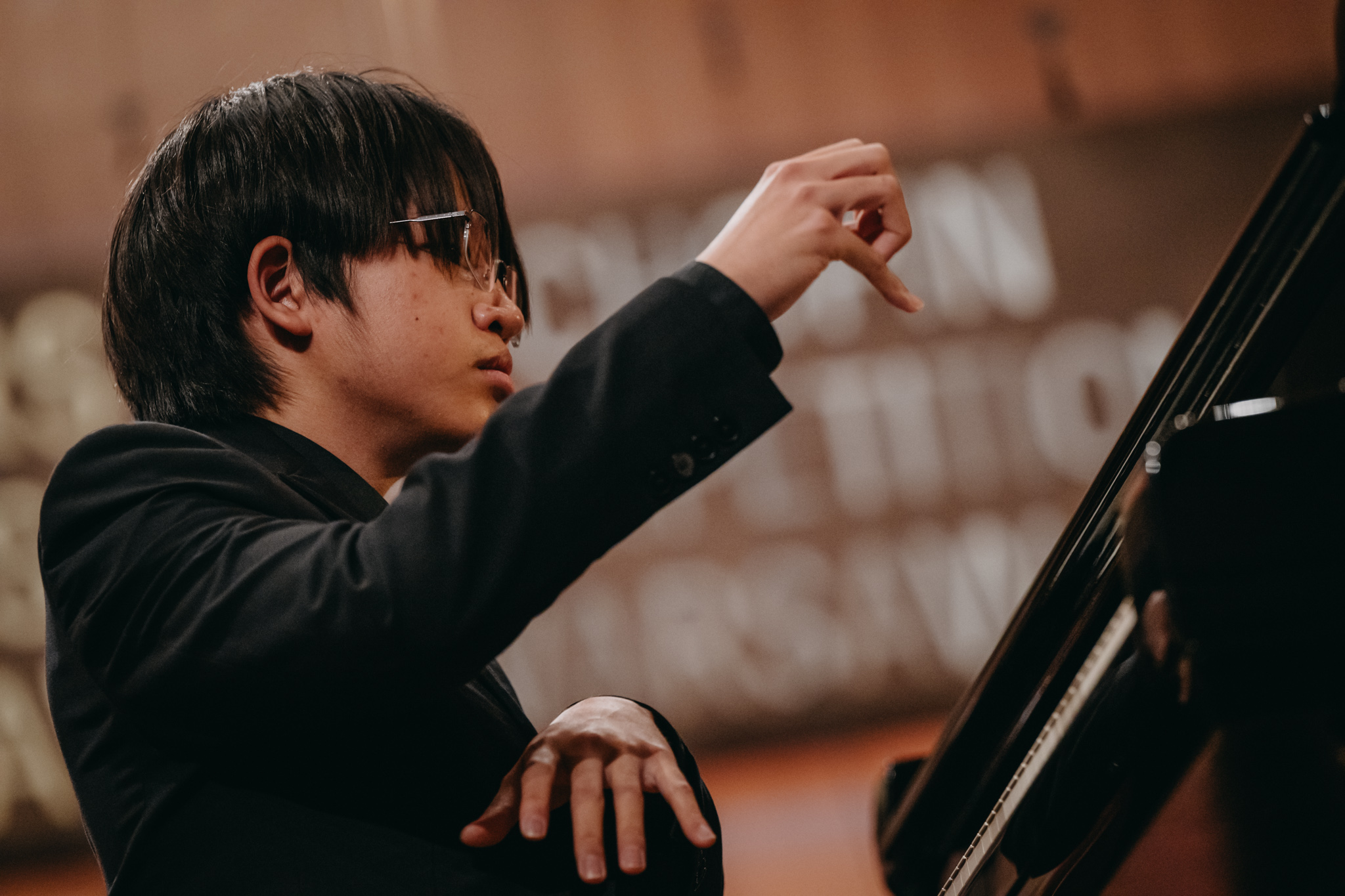
Photo by Wojciech Grzedzinski for NIFC
To summarize, Eric Lu (at 27 being the oldest 1st Prize winner in the history of the Competition), is unquestionably a brilliantly accomplished pianist and, as already mentioned, is well known to the international scene (not without reason some wondered why he actually decided to participate since he already has an international career and records for a major label, namely Warner Classics). I found myself relishing his thoughtful and at times introspective playing, his sense of control of climax and sensibility of phrasing. It has already been announced that Deutsche Grammophon will soon be issuing an album with a selection from the performances he gave during the Competition.
The other pianists who participated in the final round were quite outstanding in their own right. They had their own impressive moments and were generously applauded by the public. I was sorry for Shindo and Khrikuli, who left without a prize, even though they had offered some deeply felt renditions throughout the Competition.
Concluding, I do confess that I am very much looking forward to the finalists’ (and to some of the non-finalists’, e.g. to Yang Gao’s) next concerts and even more so to their recording projects. In the hectic and competitive world that we are living in, one should wish them all, good luck and hope that they will continue to offer sincere, heartfelt and distinctive readings while managing to balance sensitivity, intellect, impulse and control.
P.S. The reviewer wishes to thank the Fryderyk Chopin Institute, the Adam Mickiewicz Institute and last but not least, the Press spokesman for the Fryderyk Chopin Institute, musicologist-music critic Dr Aleksander Laskowski, for the invitation to attend and write about the final round of the 19th International Fryderyk Chopin Piano Competition and the Prize-Winners’ Concert. A moving visit to the Fryderyk Chopin Museum and to Chopin’s birthplace in Żelazowa Wola rounded up his unforgettable first visit to Poland.
