

Over several decades, regular attendance at concerts by the Berliner Philharmoniker across various European cities—from Athens to London and, inevitably, Berlin—has revealed an astonishing, unyielding orchestral quality, exquisite musicianship and impeccable technical precision. Throughout these years, the ensemble fruitfully absorbed the distinct guidance and personality of the conductor on the podium, whether under the leadership of Claudio Abbado, Sir Simon Rattle, or Kirill Petrenko. While the era of Herbert von Karajan concluded before certain generations could witness their collaboration live, the orchestra consistently maintains a deeply powerful identity across generations. This enduring character remains explicitly proven by an extensive recording legacy. Ultimately, these timeless, exceptional qualities offer as much interpretative revelation to the audience as they do to the conductors and soloists.
A recent visit to Berlin provided an opportunity to attend two contrasting programmes at the Philharmonie. Since its inception, Hans Scharoun’s iconic structure has distinguished itself as an architectural masterpiece; its optimal, pioneering acoustics invariably accentuate the most subtle sonic details of the venerable ensemble. Given that the hall is slated for a comprehensive, multi-year refurbishment starting in 2032 following its 150th anniversary celebrations, the orchestra is progressively working to secure an acoustically and logistically viable interim venue to navigate the temporary closure.
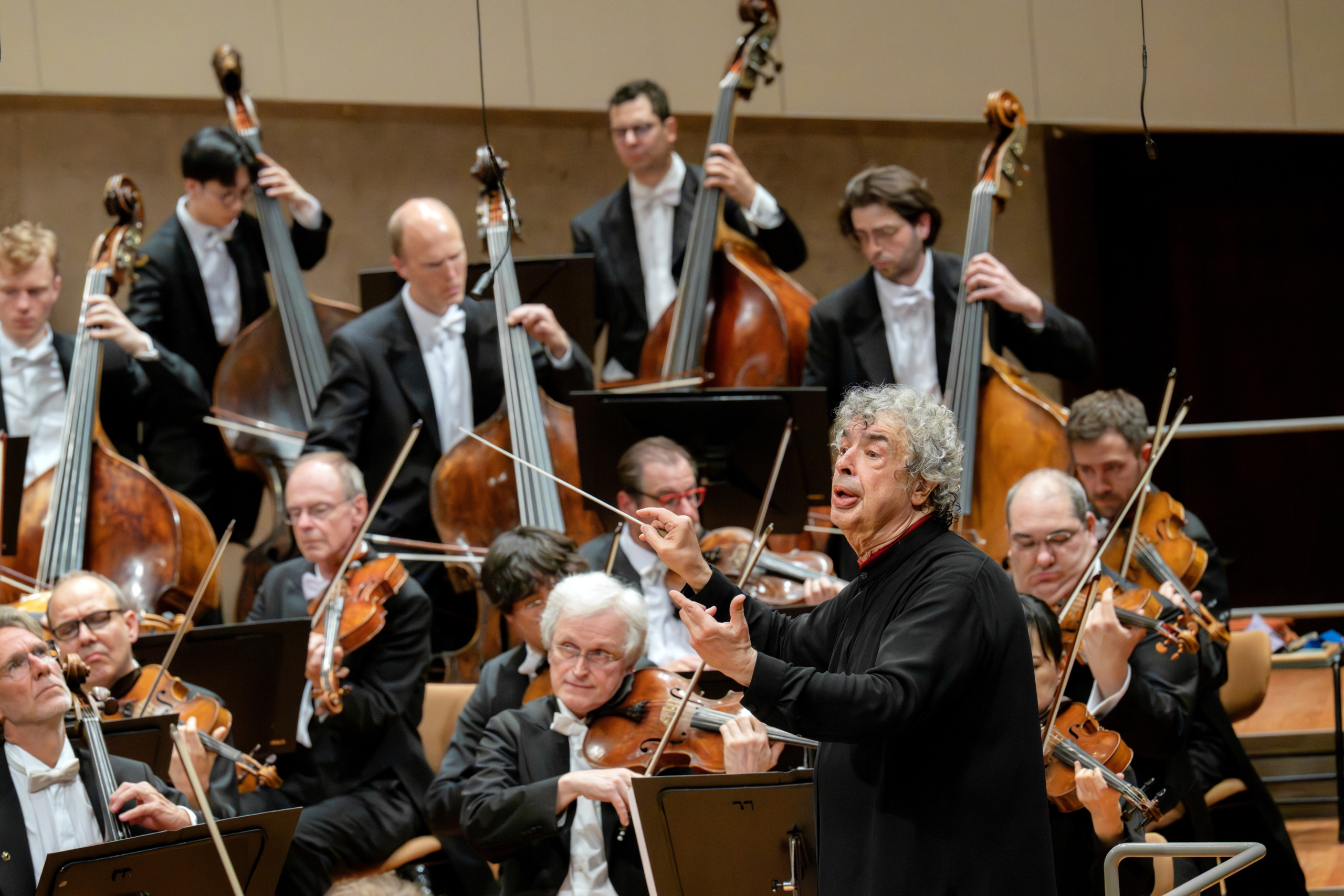
Standing at the podium on May 28 was Semyon Bychkov, whose history with the orchestra traces back to the Karajan era, when the celebrated maestro chose him as one of a select few. The occasion cast the mind back to the 1987 release of their debut recording on Philips Classics—a strong account of Dmitri Shostakovich’s Symphony No. 5 in D minor, Op. 47, recorded the previous year. Since that milestone, Bychkov has conducted the orchestra on numerous occasions, and the deep artistic bond between them was obvious in every bar.
Ludwig van Beethoven’s 1807 Coriolan Overture, Op. 62, opened the evening. The fortissimo chords of the Allegro con brio at the very beginning heralded an interpretation full of exuberant energy, rhetoric and drama. There was a profound aura of expectation and anguish in the piano theme that directly followed. Bychkov and the orchestra delivered an explosive, dramatically coherent performance that captured the full personality of the patrician commander Coriolanus, who, seeking revenge against his own people, led his enemies to battle against his own city. The beauty of tone during the legato playing of the strings in the lyrical second theme (E-flat major) and the overall cantabile feeling were deeply touching and telling.
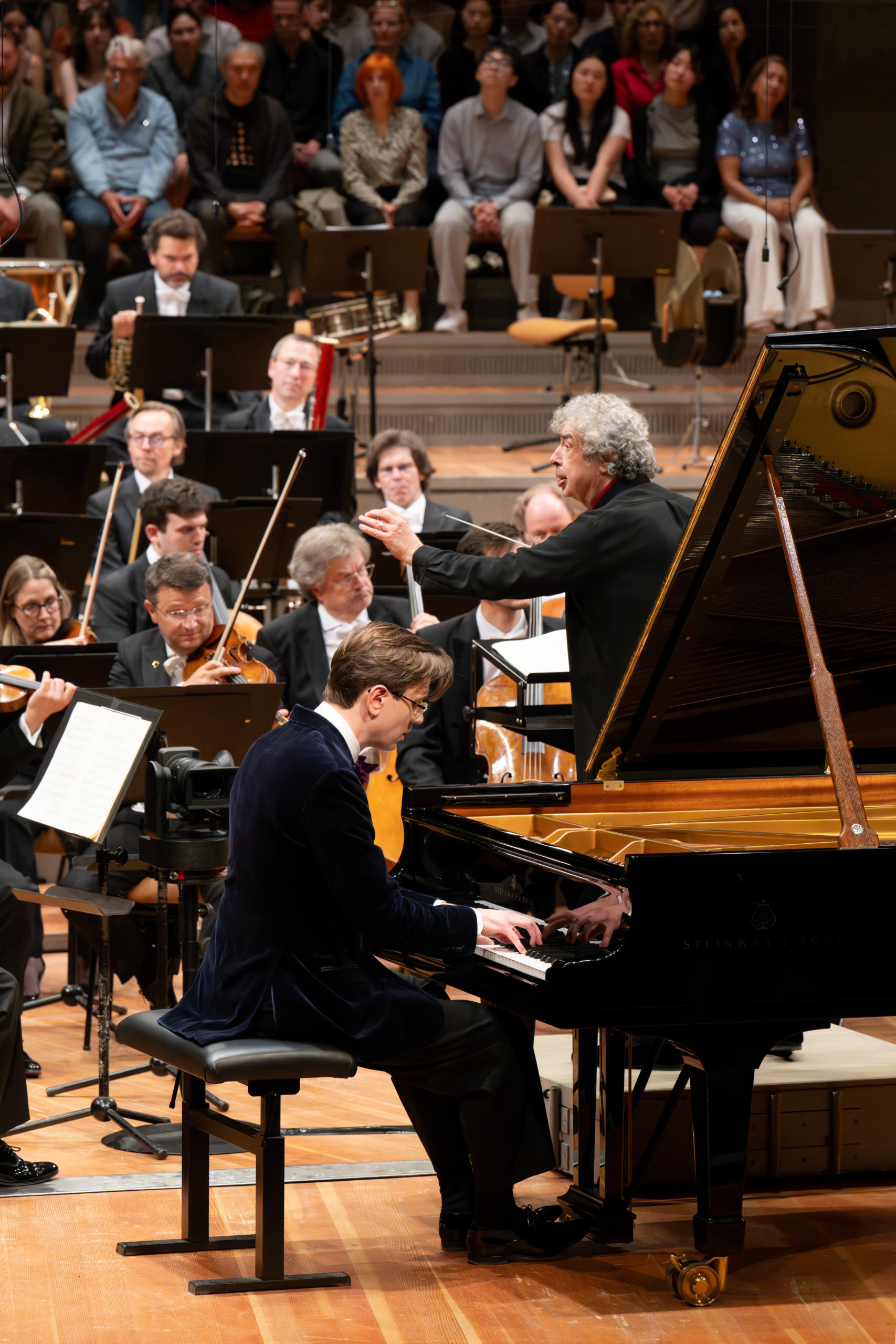
Following this, remaining in the universe of the same composer, Icelandic pianist Víkingur Ólafsson, making his orchestral debut with the Berliner Philharmoniker, offered a well-thought-out and deeply personal account of the solo part from the Piano Concerto No. 5 in E-flat major, Op. 73. He demonstrated an immense stylistic instinct and scope in his performance, and his articulation was always clear and crisp. In the faster outer movements, Allegro and Rondo: Allegro ma non troppo, one noticed plenty of drive and bold phrasing, while the slow movement, Adagio un poco mosso, was played with poetic feeling and sensitivity. The orchestra and Bychkov offered a majestic rendering full of Beethovenian breath, eloquence and optimism, while never diminishing the darker, often tragic sections. Throughout the central movement, a state of beauty and tonal refinement was omnipresent, yielding to an exhilarating flash of spontaneity in the finale. It was clear throughout that Ólafsson enjoyed every moment of his collaboration with the legendary orchestra and undoubtedly gave the very best of his fine artistry. As an encore, following a brief, heartfelt speech mentioning that he had always dreamt of performing with this orchestra and conductor, he offered his own recent, delicately shaped arrangement of Johann Sebastian Bach’s Air from the Orchestral Suite No. 3 in D major, BWV 1068. He dedicated this to the important Hungarian composer and pianist György Kurtág on his 100th birthday, which was celebrated on February 19.
The second part of the evening brought a reading of profoundly penetrating gravitas. Performed by the same forces decades after Bychkov’s January 1985 debut—when he replaced Riccardo Muti at only two days’ notice—this rendering of Shostakovich’s Fifth Symphony proved impassioned and full-blooded—evoking the charged atmosphere of that 1985 concert, which famously catalysed their historic debut album on Philips Classics. Remarkably, Bychkov had also conducted this very piece for his graduation exam at the Leningrad Conservatory in January 1974. His unique connection to the spirit of the great Soviet composer was forged during those conservatory years and deeply cultivated by his revered teacher, Ilya Musin, a close friend of Shostakovich. Furthermore, Bychkov had the rare opportunity to observe the master himself during concerts of his music in the Soviet metropolis during the 1960s.
Consequently, on this evening, the inner meaning of the work—composed in 1937 during Joseph Stalin’s reign of terror—unfolded with immediate dread, sorrow, and an ultimately hollow, pseudo-victorious Allegro non troppo finale. The careful pacing with which Bychkov and the orchestra built the psychological tension and immense climaxes across all four movements was exemplary. The dialogue between sections, the shaping of long phrases (particularly in the first movement’s Moderato), the sarcastic vein of the Allegretto, and the hauntingly sorrowful Largo were breathtakingly executed. The orchestra’s luxurious sound—the full, rich tone of the strings and the biting timbre of the winds—overwhelmingly filled the hall. The massive, at times almost Mahlerian structure, the theatrical moments, and the intimate emotional undercurrents were projected with idiomatic insight and staggering directness. As the symphony ended in coerced jubilation, Bychkov was visibly deeply moved, taking a few moments to collect himself before turning to the audience. This was the real thing—a truly seminal performance for our time.
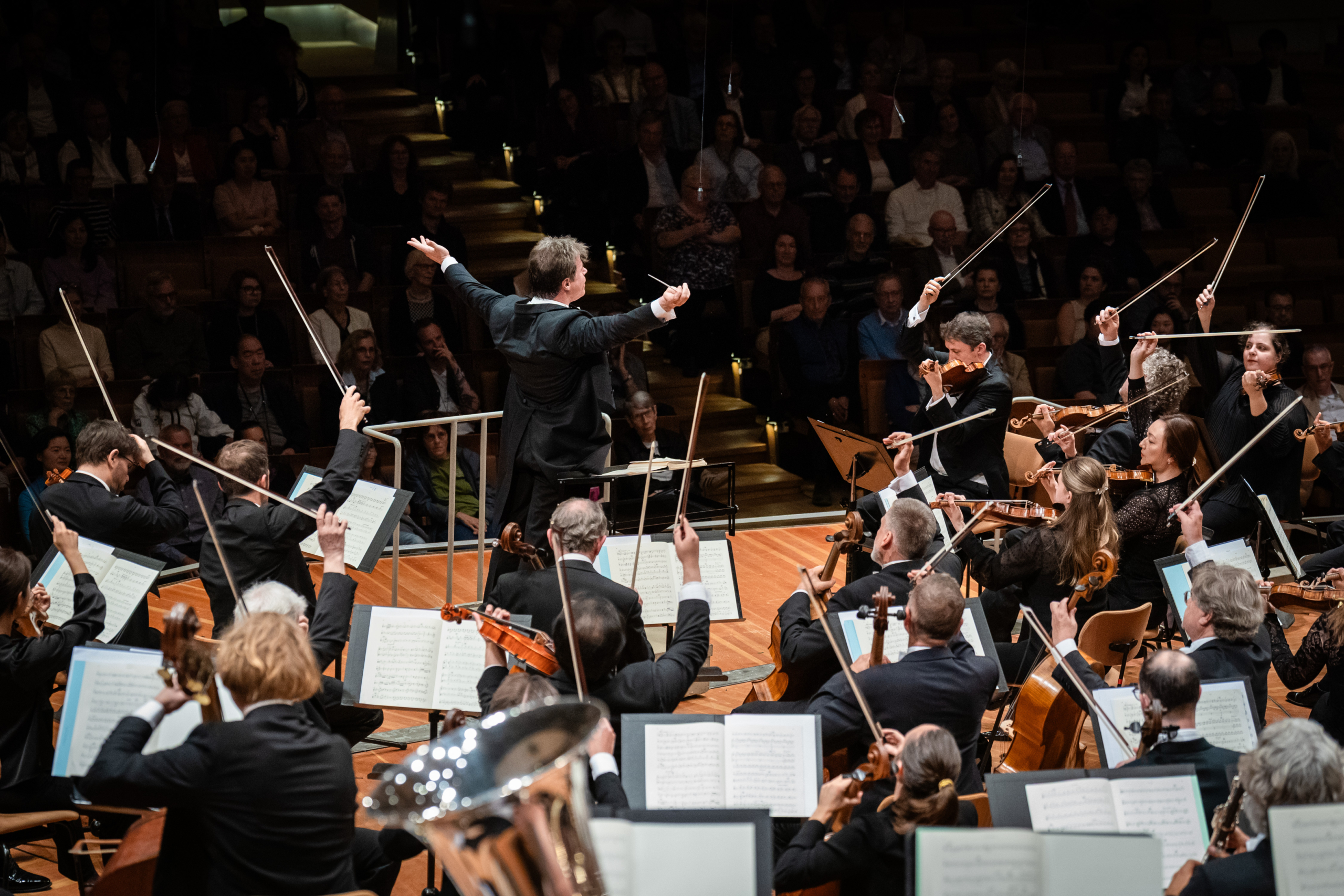
A return to the Philharmonie on June 4 brought the next concert of the Berliner Philharmoniker, this time under the direction of Jakub Hrůša. The orchestra was in dazzling form, offering a refreshingly unusual programme focused on a landmark exploration of 20th-century Czech modernism.
The evening began with a rigorous, rhythmically energetic reading of Vítězslava Kaprálová’s Suita rustica, Op. 19. Kaprálová was a remarkable composer and conductor who took private lessons from her compatriot Bohuslav Martinů and went on to lead the Czech Philharmonic and the BBC Symphony Orchestra. It remains deeply tragic that she passed away at the tender age of 25. The official diagnosis remains somewhat vague to this day, for while the historical cause was given as miliary tuberculosis, contemporary medical consensus suggests she most likely succumbed to typhoid fever. Her Suita rustica, originally commissioned by Universal Edition in London, is full of freshness, rhythmic vitality, and bold harmonic concepts, all of which were fully brought to light by Hrůša and the orchestra.
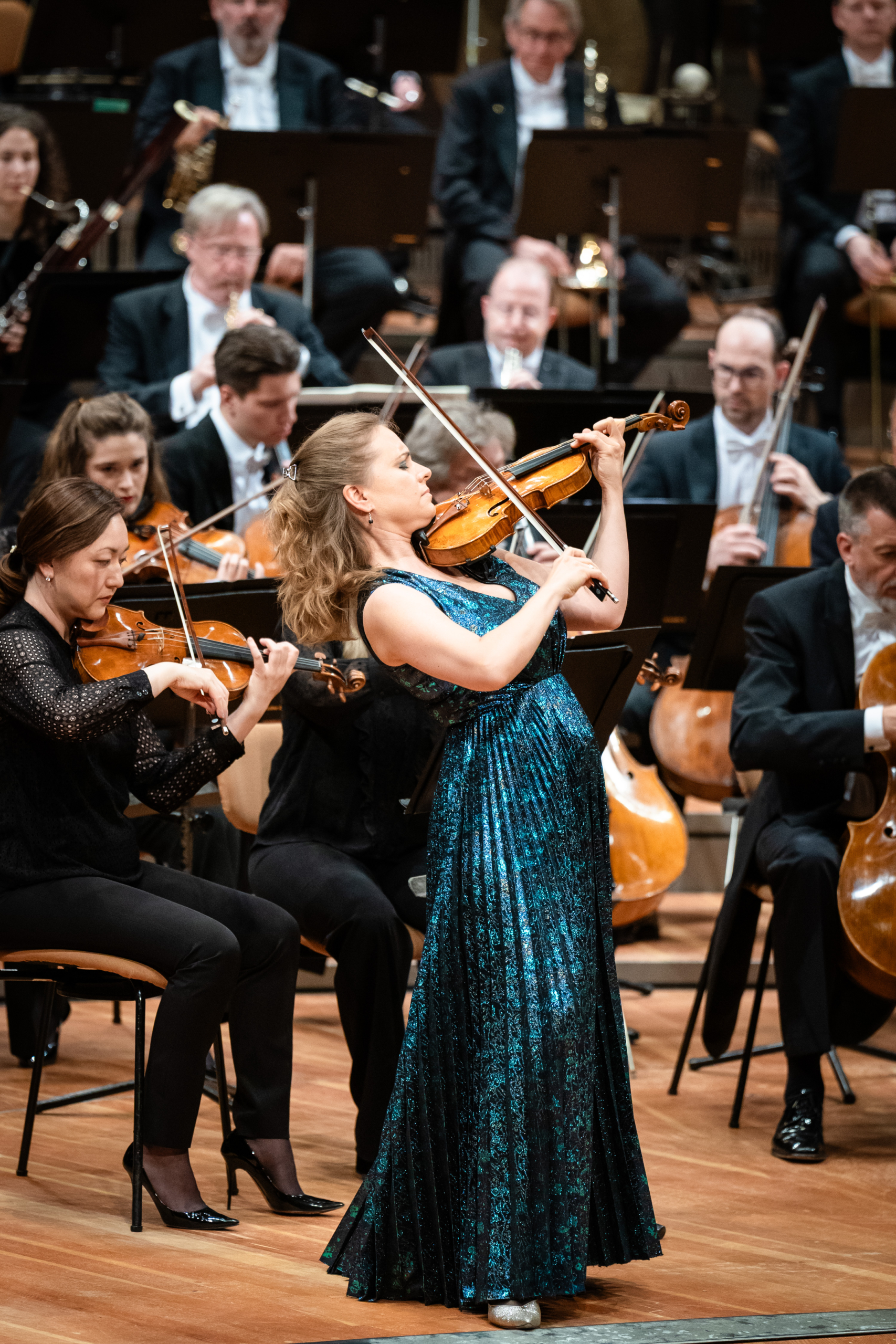
Next, violinist Julia Fischer brought exceptional technical clarity and expressive warmth to Josef Suk’s Fantasy in G minor for Violin and Orchestra, Op. 24. Completed in 1903, the piece was written during a profoundly happy period of the composer’s life, just a few years after his marriage to Otilie Dvořáková, the daughter of Antonín Dvořák. The work’s flowing, rhapsodic elements and evocative atmospheres were beautifully underlined.
Following an enthusiastic reception, Fischer offered a flawless encore of Niccolò Paganini’s Caprice Op. 1, No. 17. Her intelligent performance highlighted the meticulously executed contrasts of mood, dance-like rhythms, exceptionally rapid scales, perilous octave passages, and a brilliant blend of fluidity and virtuosic staccatos.
The second part of the evening brought a memorable performance of Bohuslav Martinů’s Symphony No. 1. Martinů was a prolific master possessing a highly singular approach to harmony, rhythm, and structure, seamlessly absorbing a diverse array of musical styles. Fittingly, Hrůša’s insightful new recording of the complete symphonies with the Bamberger Symphoniker for Deutsche Grammophon—released as a 3-CD box set and on digital streaming platforms—has just arrived. In every one of these symphonic jewels, one discovers astonishing delights and surprises, leaving the listener in constant admiration of the composer’s extraordinary imagination, taste, and peerless technique.
The Symphony No. 1 was commissioned by Serge Koussevitzky and dedicated to the memory of the illustrious conductor’s wife, Natalie; it was composed in 1942 during the dark days of World War II, when Martinů was already a mature artist of 52.
The Czech conductor led the Berliner Philharmoniker in a highly imaginative interpretation. The famous impressionistic, shimmering blur of sound that opens the first movement, Moderato—Poco più mosso, was pristinely executed, launching a spectacular performance. The motivic developments and the unique sonic architecture of this lovely work—particularly its contrasting harmonic language and exemplary chord combinations—were detailed with absolute precision. The third movement, Largo, heavily steeped in a dense chromaticism that outlines the profound sadness, grief, and tragedy of war, references the horrifying massacre of the innocent citizens in the Czech mining village of Lidice by the Nazis on June 10, 1942. This movement was given a deeply felt, devastatingly powerful presentation that unfolded like a true tragedy. The modal writing of the final movement, Allegro non troppo, was illuminated with immense care, perfectly capturing the radiant atmosphere of light and hope that defines this concluding section.
Hrůša conducted with unwavering commitment and command of architecture, expertly carving out the mesmerising sonic landscapes, monumental sound blocks, and exquisitely kaleidoscopic orchestration of the score. Playing with idiomatic sensitivity, intensity, tonal splendour and an unerring direction, the orchestra proved in every bar that Martinů remains one of the twentieth century’s most strikingly original symphonists.
