

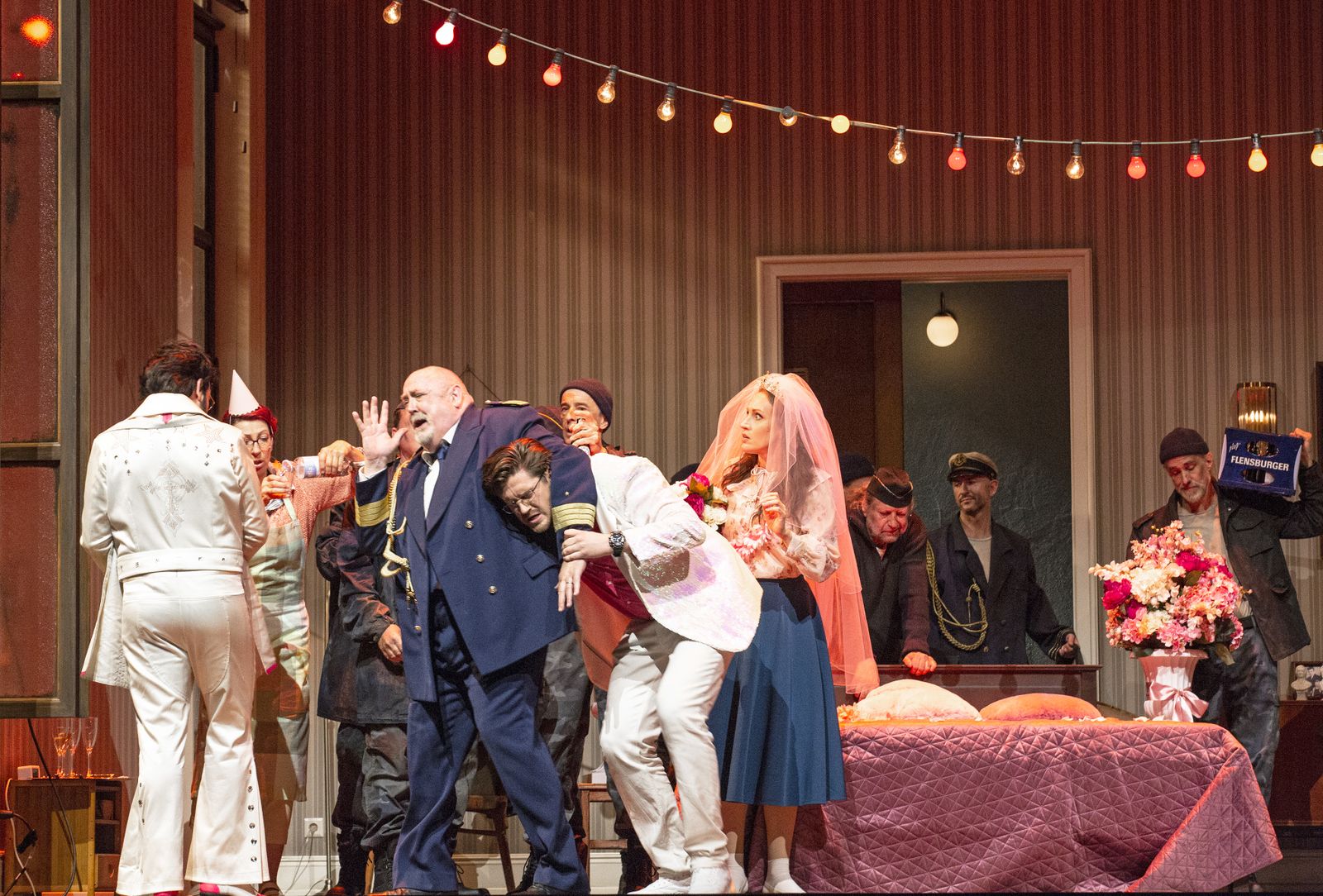
Following the untimely passing of his longtime librettist Hugo von Hofmannsthal, Richard Strauss found an inspired new collaborator in the eminent writer and avid autograph collector Stefan Zweig. Together, they forged Die schweigsame Frau (The Silent Woman), a work that ranks among Strauss’s most stellar operatic achievements. Featuring a libretto of exceptional dramatic power loosely adapted from Ben Jonson’s Renaissance comedy The Silent Woman, the opera premiered in Dresden on June 24, 1935, with Karl Böhm at the podium.
However, due to Zweig’s Jewish heritage, the Nazi regime swiftly banned the production. This censorship foreshadowed a far deeper personal tragedy. As totalitarian power escalated, Zweig was forced into exile, watching the disintegration of European culture from afar. Overwhelmed by despair for humanity’s future, he tragically took his own life in Brazil in 1942.
One can only imagine the artistic heights this partnership might have reached had circumstances allowed. Eleven years after it was silenced, the opera’s post-war revival at the Kleines Haus in Dresden—the very city of its ban—stood as a triumph for artistic freedom and a poignant tribute to Zweig’s enduring legacy.
To inaugurate his tenure as General Music Director of the Staatsoper Berlin, the distinguished conductor Christian Thielemann helmed a highly anticipated new production of the work in July 2025. It immediately established itself as a landmark staging, returning to the repertoire for five performances in May 2026. Having missed the initial premiere, I made it a priority to attend this season on May 25.
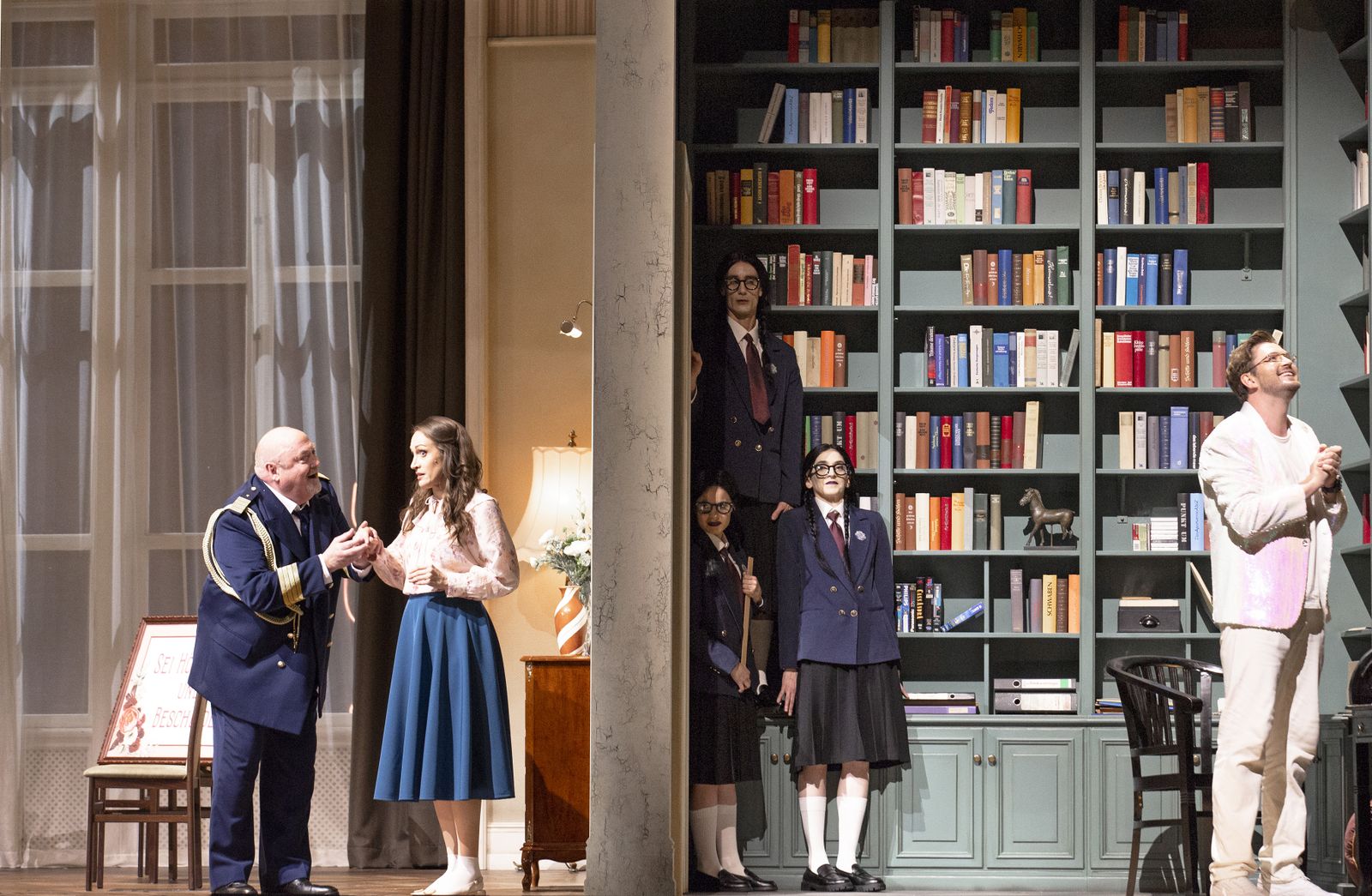
Stage director Jan Philipp Gloger, working alongside revival director Caroline Staunton, seamlessly transposed the narrative to the modern era. Their staging captured the relentless wit and humour of the piece while carefully illuminating the melancholy and isolation of Sir Morosus, an aging naval captain who craves absolute quiet.
Tricked by his barber into marrying a supposedly mute young woman, Sir Morosus finds himself entangled with a bride who is anything but silent. The production masterfully explored the core themes of human loneliness and the eccentricities that develop with age, enhanced by Justina Klimczyk’s striking costumes and Tobias Krauß’s dramatic lighting.
The entire ensemble performed with an infectious enthusiasm that completely captivated the audience. Bass Peter Rose delivered a deeply persuasive portrayal of Sir Morosus, utilising his rich, warm voice to convey both the captain’s gruff exterior and his ultimate benevolence. Throughout the performance, Rose displayed a marvellous chemistry with all of his fellow singers, grounding the comedy in genuine human connection.
As the housekeeper, the celebrated Wagner and Strauss soprano Evelyn Herlitzius shone as a consummate singing actress, leaving a lasting impression. Baritone Samuel Hasselhorn balanced gravity and levity with poise as the barber Schneidebart, his smooth voice flowing effortlessly. As the young lovers orchestrating the charade, tenor Siyabonga Maqungo (as the admiral’s nephew, Henry Morosus) and soprano Brenda Rae (Aminta) were thoroughly delightful.
Rae was magnificently unbearable as the loud, fiery shrew—a shocking transformation from the painfully shy countryside bride, “Timidia,” she initially portrays to trick the captain. All the while, she perfectly conveyed the character’s underlying unease and sorrow over the cruel prank she is forced to play.
The five supporting roles were filled by a dynamic cadre of emerging talents—soprano Serafina Starke (Isotta), mezzo-soprano Rebecka Wallroth (Carlotta), baritone Dionysios Avgerinos (Morbio), bass Manuel Winckhler (Vanuzzi), and bass Friedrich Hamel (Farfallo). Representing the present and recent past of the prestigious International Opera Studio at the Staatsoper Berlin, these promising young artists injected a youthful exuberance and professional polish into every measure.
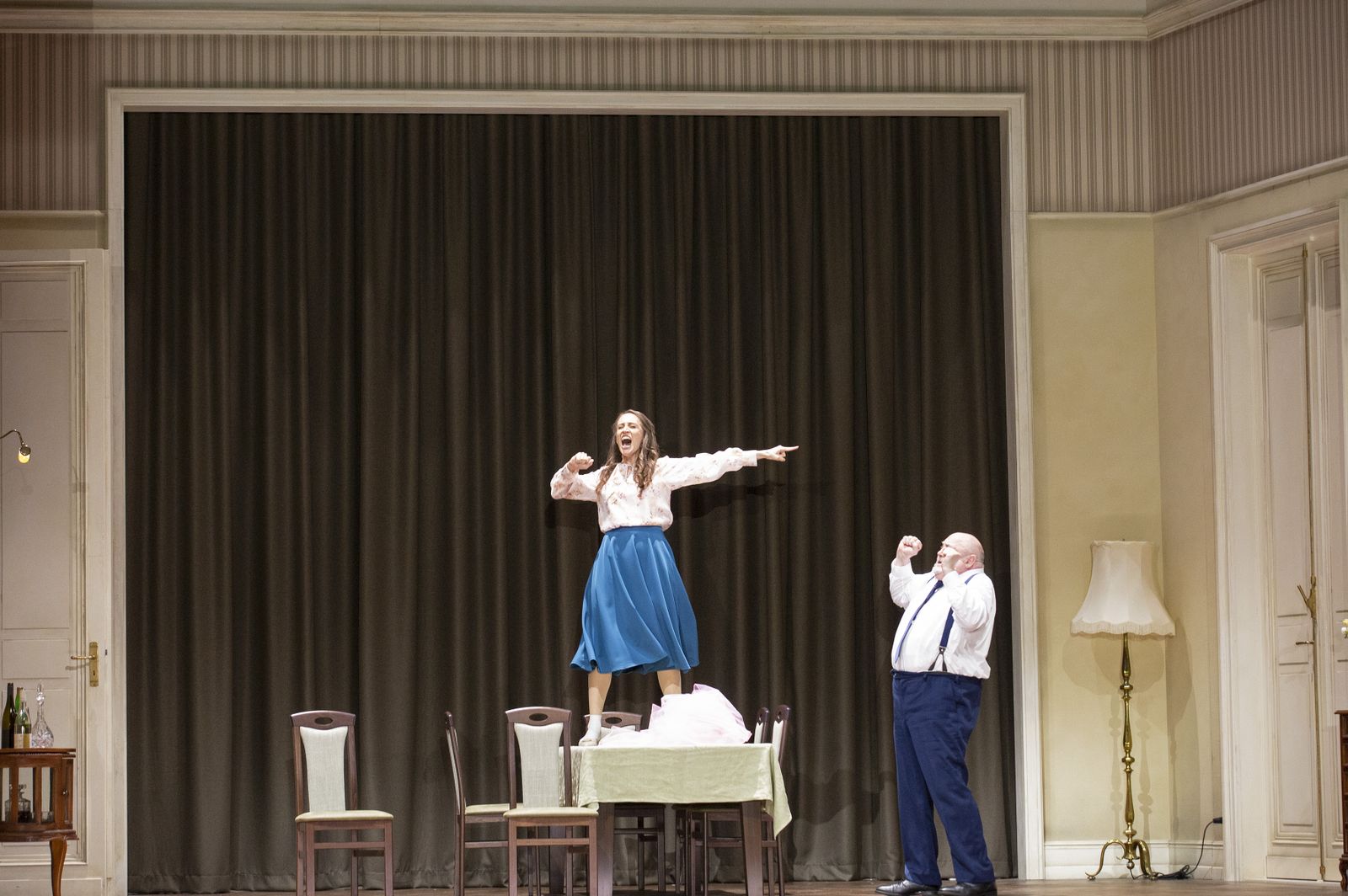
While the chorus was meticulously prepared by Dani Juris, the ultimate protagonist of the evening was the Staatskapelle Berlin under Thielemann’s authoritative direction.
Undeniably the foremost Strauss interpreter of our time, Thielemann shaped the intricate nuances and daunting complexities of the score with absolute precision. Every syllable of the superb libretto and every subtle detail of the orchestration were brought to light, with the score’s numerous musical quotations delivered with a sophisticated flair.
Strauss’s mature genius is manifest in his command of the conversational singing style, the working out of thematic material, his shaping of contrapuntal voice-leading, and, most notably, his treatment of melodic lines. Indeed, it is entirely evident that Strauss the inspired melodist is far from absent from the score; rather, his melancholic lyrical voice permeates numerous passages of the work. Even though his intention from the very outset was to secure a libretto that would offer the opportunity to compose a comedy—resolutely rejecting any proposal for a serious text—melancholic and philosophical elements frequently surface. We discern Strauss the thinker, an aspect that Thielemann illuminated with exceptional thoroughness, just as he did the composition’s Sprechgesang and the many sparkling, swiftly moving sections of virtuosic rigour.
Upon leaving the Staatsoper Berlin and reflecting on the performance, it was clear that this production did an immense service to Strauss’s masterpiece. Thielemann effectively demonstrated that this magnificent rara avis well deserves a permanent place in the standard Strauss repertoire alongside other much-loved operas such as Salome, Elektra, Der Rosenkavalier, Die Frau ohne Schatten, Ariadne auf Naxos and Arabella. Indeed, it warrants alignment with the definitive lineage of late masterworks within the comic genre, defined by Gaetano Donizetti’s Don Pasquale and Giuseppe Verdi’s Falstaff.
